Saturday, December 27, 2014

A walk through time: on the edge of Ribadesella town

4 comments:
We frequently walk around Ribadesella and never tire of the narrow, quiet streets and interesting buildings even though it is a very small town. It doesn't take much to see how the town has developed over the years and how the once, small cluster of sea-front fishermen and merchant houses has expanded as more land has been reclaimed from the sea and the estuary. The town has ancient roots and has been a settlement of sorts for at least the past 35,000 years, possibly much longer.


One walk we regularly take is on the edge of town along a narrow road that leads up to La Guia: a once important defensive position where cannon were  positioned ready to repel any unfriendly visitors. There is a small church and fortress dating back to the 1700s  that was built to provide spiritual and physical protection to the defenders. Today, the small chapel and remnants of defences remain. The chapel is now dedicated to Our Lady of La Guia, the patron Saint of fishermen and houses a small but wonderful collection of models of sea-going vessels.

Sociedad Etnográfica de Ribadesella SER


The vantage point of La Guia enables you to see the mouth of the River Sella as it winds its way through the lush landscape down to the estuary and into the Bay of Biscay. From here you can see the grand Indianos-style houses that were built on re-claimed land that borders the Santa Marina beach. The houses date mainly from the early 20th century when rich emigrant traders returned from the South Americas and built grand houses and estates. Many are now hotels but a few remain private residences.


Looking further up the Estuary there is a large expanse of rock which houses probably one of Ribadesella's greatest treasures: the caves of Tito Bustillo. Discovered in the 1960s, the network of caves and paleolithic cave art dates back at least 29,000 years. It is easy to imagine how small groups of humans occupied this estuary, with the caves offering protection and the sea and the rich flood plains offering up food in abundance. As an aside, in the next village to us about 5km from Ribadesella, they have recently discovered a bone pit containing fine examples of Woolly Rhinoceros, Hyena, Deer and Bison. The pit has undergone preliminary investigation and has now been sealed until finances can be secured to undertake a full archaeological investigation.


At the far end of Santa Marina beach along the promenade, there are some fine examples of dinosaur footprints in the sedimentary rocks that have been displaced by time and seismic land movement. Over 100 million years have passed since a small family group of dinosaurs passed over mud flats and left impressions for time to seal and eventually reveal.

 I often wonder what else lies undiscovered?


Scanning the landscape and pondering times gone by makes me wonder what footprints we might leave and how the archaeologists of future times might interpret our impact, presence our legacy.


Tuesday, December 23, 2014

Christmas has started...

11 comments:
Christmas doesn't really happen here in Asturias until this week, that is, the hype and madness that is associated with the run up to Christmas doesn't start until a few days before Christmas day. The street decorations, nativity sets, shop displays and Christmas tunes have been around for a couple of weeks but until this week, it wasn't really happening. It is a very different experience to Christmas in the UK, so quiet and very little of the frenzied must have mindset...thank goodness.


We drove to Oviedo this week to buy in supplies that we can't get here. Oviedo is about 50 minutes away by motorway. The roads were busier than usual and we must have seen... oh, at least 40 or 50 cars and vehicles....


The shops were well stocked with traditional Christmas foods and prices of key items such as seafood had risen sharply. The market was busier than normal with customers waiting patiently to be served their joints of meat, fruit and vegetables, fish and shellfish.


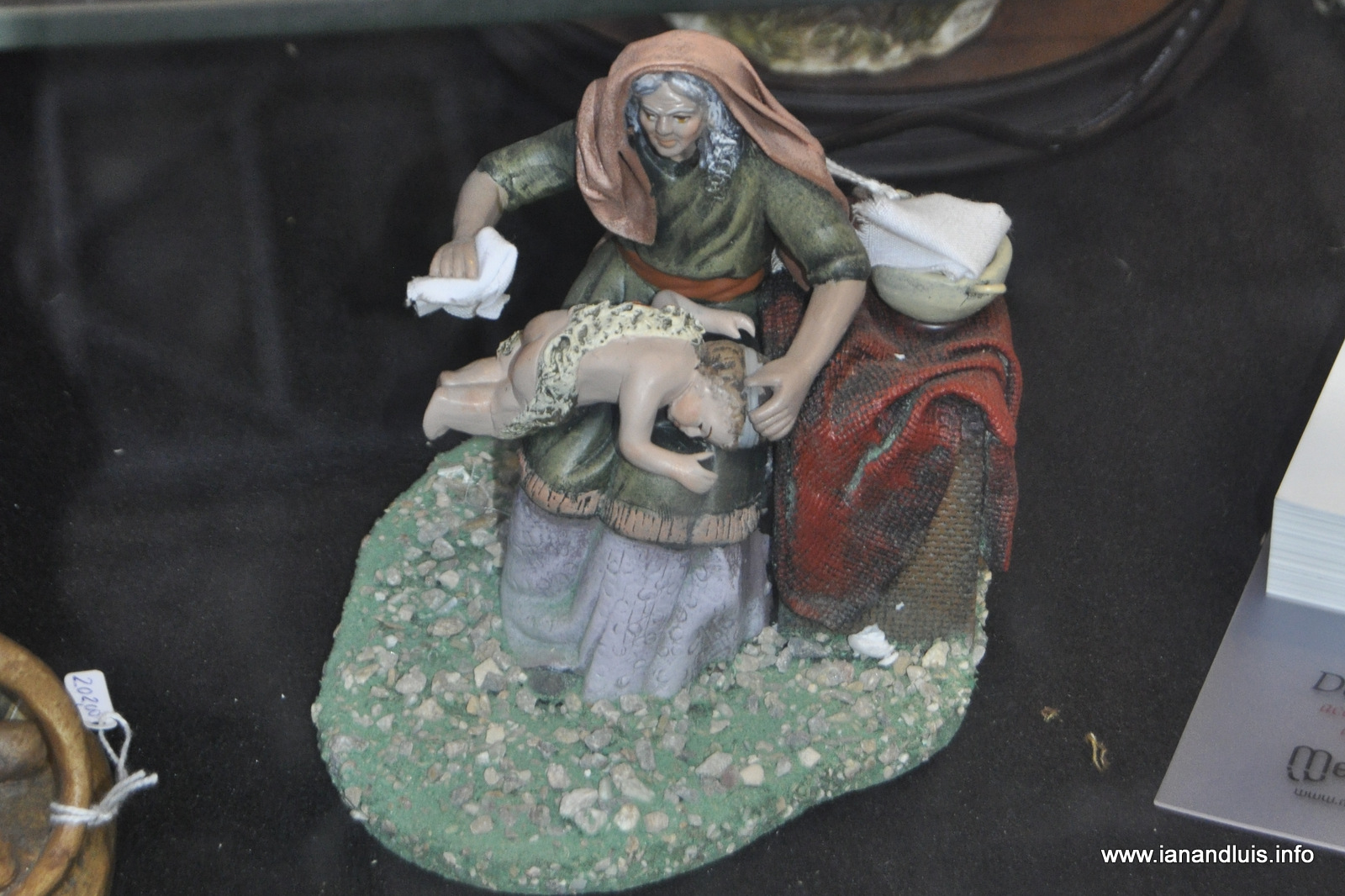
There was the usual display of Nativity sets outside Oviedo's wonderful Cathedral. Many shops in the area are dedicated to selling figures, miniature buildings, scenery and electrically operated effects that are built into nativity scenes in every church, many homes and numerous shop windows around town. One piece particularly amused us, it was a woman wiping a babies bottom - animated of course, with her arm moving up and down in a wiping bum sort of way...only in Spain.


There were a couple of Christmas markets and fairs open which we visited. There were sited near the central park. One was the usual bought in jewelry, leather goods, clothes and gifts which wasn't really up to much but the other was an Artesan Fair where craft workers display their creations with a few offering live demonstrations. There were some lovely items including pottery, jewelry, treen, games and puppets.


There was a demonstration in the city by Bomberos (fire-fighters) who were rallying support to prevent cuts in services, all was calm and many people were signing their petition.


The main event for many families will be Christmas Eve when a family meal is cooked. Some people will give presents on Christmas day but for the majority, presents will be given on the Epiphany on the 6th of January when the three Kings bring their gifts to baby Jesus. There will be grand parades in most towns and cities on the evening of the 5th January.

We take this opportunity to wish all of you who take the time to visit our blog, a very Happy Christmas and a healthy and prosperous 2015. We aim to keep telling tales from Asturias next year and hope you continue to pay us a visit from time to time either here on the blog or if you're passing....

Best wishes

Ian and Luis  


Sunday, December 21, 2014

Photo walk in Gijon

2 comments:
We decided to visit Gijon, about 40 minutes away along the coast from us. On a Sunday there is a large outdoor market and it was also an opportunity to visit any Christmas markets and see the decorations. A very different experience to what we would have seen in the UK. Here are a few photographs with captions...

A velveteen mannequin of a boy on the second-hand market

The glorious red squirrels in Parque Isabel la Catolica

The promenade

Winter - ah, the smell of mothballs

Traditional marzipan crocodiles and monsters - the price tag for the small one read €78

A Morrocan style walkway through a water feature in Begonia Square


A rather subdued Christmas market

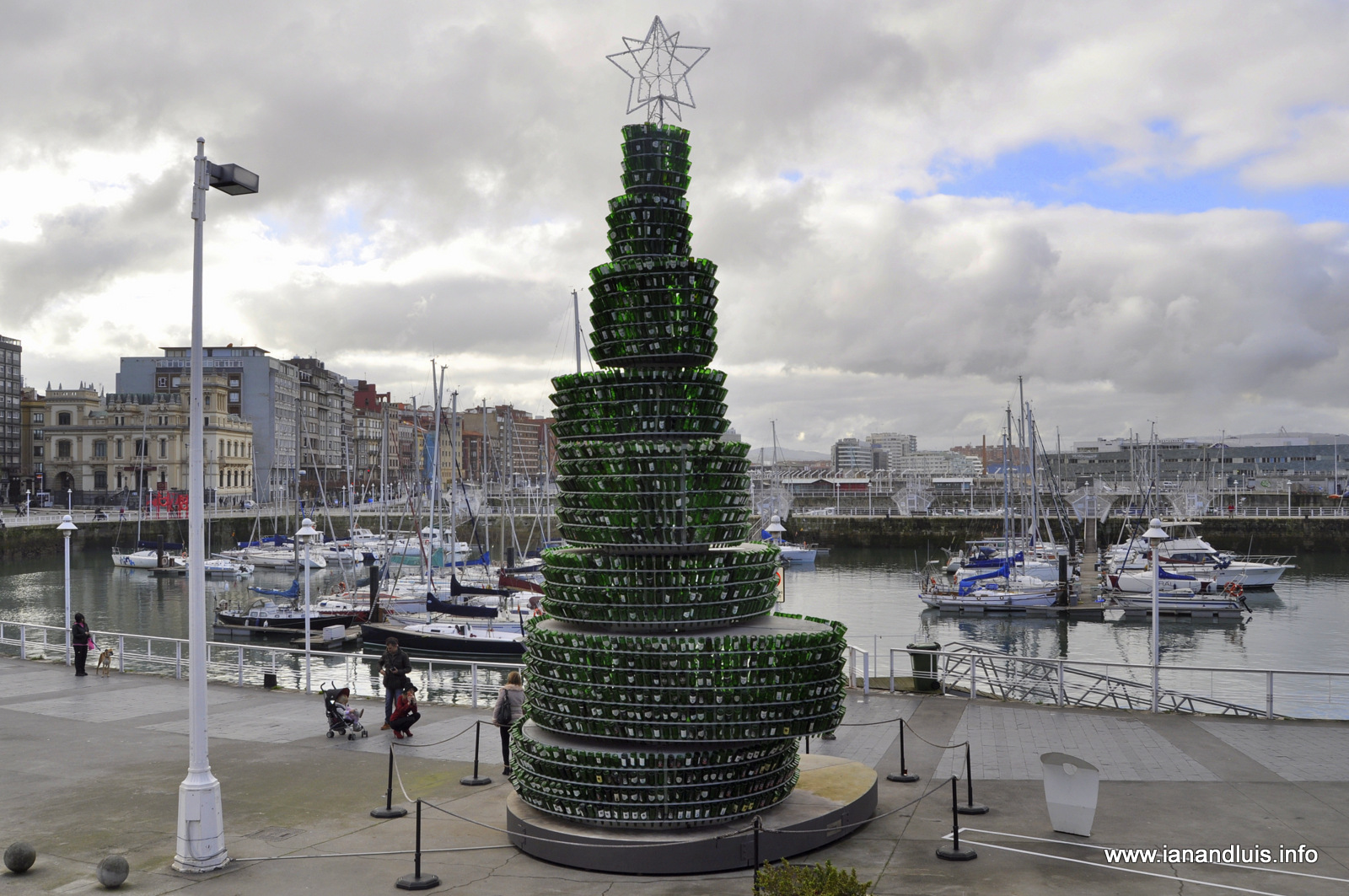
A revolving Christmas tree made from Cider bottles...

Surfers waiting for the next big wave in the bay

A swimmer preparing to battle the cold, cold water.

Having fun on the winter beach, dogs are not allowed on the beach in Summer

A Rhea in the parque we called him Chris

Chris' dinosaur-like feet

Friday, December 12, 2014

The winter pantry

6 comments:
With winter just around the corner it is always comforting to know that the pantry is full, that there are fresh vegetables in the garden and that the freezers are packed with this year's crops. Despite the long drought of summer we have had a good year for growing crops and where possible we have feasted on fresh from the plot produce, shared excess with friends and preserved or composted the remainder.


The vegetable plots are still producing well and we are currently harvesting large white bulbs of Florence fennel, swede, carrots, ruby chard, winter lettuce, leeks, the last of the beetroot and bundles of fresh herbs. Still to come anytime soon is celeriac (one of our favourite vegetables), flower sprouts, cauliflower and broccoli.


Luis has just returned from his sister's (Rita) where twice a year they slaughter the pigs and process the meat into joints, cured ham, chorizo, salami and black pudding. In Spain this is known as the matanza. We have written about this in the past and you can read about it here if you want to know more and see pictures of some of the work. We are always offered goodies to bring home but being vegetarian we of course decline apart from a couple of packs of chorizo we keep in stock for visitors. Rita always sends loads of food for us as she produces enough to feed half of Castilla y Leon. This time we have 4 dozen eggs, 20 butternut squash, 30 jars of tomato pisto, sack of red peppers, 15 kilos of quince, cabbages, pears.... (we won't be going hungry).


We also have a wonderful rich Christmas cake baked by my Aunt in the UK which we will continue to nourish with a tot of brandy from time to time and coffee and walnut cakes and a box of delicious chocolate biscuits my Mum sent...I doubt they will last long.


Whilst in Castilla, Luis bought locally produced honey (30 Kilos) which we use mainly in place of refined sugar. At 5€ a kilo it is such good value and we know for certain it has not been adulterated with glucose syrup. He also bough quite a few kilos of chickpeas, lentils and beans which are grown in that region and that we know to be of good quality and freshly dried. Ruben, Luis' younger brother brought us 10 kilos of sweet unwaxed and undyed oranges and 5 kilos of manderine oranges he sources direct from growers in Murcia, the oranges are so sweet and what we don't eat will be made into jam.


All in all our winter pantry is at full capacity and our gifts of food, what we grow and what we forage will sustain us, our visitors and our friends over the coming winter months. We have a lot to be thankful for and an awful lot to look forward.


And finally, a photograph of Luis and his new niece, Ruben and Veronica's daughter, Sara (8 weeks). So cute...


Monday, December 08, 2014

Caqui, Hachiya, Sharon Fruit, Persimmon...

4 comments:
We really look forward to this time of year when the local Caqui trees offer up their bright orange, plump fruit. There are one or two trees growing locally yet not many people eat the fruit. This means that we are often gifted a basket full in various stages of ripeness.


The Caqui (as it's known in Spain) is full of vitamins, minerals and tannins and is considered as the divine fruit. There are two types, the astringent and non-astringent varieties. The ones that grow in Spain are mainly the astringent variety which need to be picked when unripe and left to ripen slowly. Eat them before they are fully ripe and you'll probably never eat another, indulge when they are at their best and you'll never get enough of their soft, sweet and delicate perfumed taste. The secret is to eat them when the outer skin becomes easily pitted and the flesh inside is very, very soft and jelly-like - a stage known as bletted. Scoop out spoonfuls of divine fruit.


Many people we know have seen them on the supermarket shelves, or in a basket at the green grocers but few have taken the opportunity to buy and try. It's the same with many fruits and vegetables that are unfamiliar. I suppose it's because we don't know how to prepare them or how to use them in cooking or when they are ready to eat? We were the same with the caqui. We ow know that not only are they delicious when ripe but they are also very versatile and can be used in a wide range of dishes including sweet tarts, chutney, jams, cakes, biscuits... and so on. More ideas can be found here: Recipes


If you do see them around please try one but remember, you have to leave it to blet for it to be loved...

Further information about varieties and health benefits can be found here: Health Benefits

Thursday, December 04, 2014

Distractions on a deserted beach

5 comments:
Returning to Asturias after an extended period spent in the UK, one thing I look forward to is walking on one of Asturias' many unspoilt and deserted beaches. Apart from a few weeks in summer the beaches here are peaceful, free from crowds and perfect for letting your thoughts to and fro in rhythm with the ebb and flow of the tide.


We have had lots of wet weather of late and the temperatures have dropped but it doesn't stop us making the most of briefest of sunny spells and seeking distraction on our local beaches.


A walk on the beach is the perfect opportunity to find exciting pebbles, sea glass, driftwood and shells.


The ripples in the sand form tantalising patterns mirrored by the strata of nearby exposed rocks.


Birds fly low along the water's edge and flocks of gulls rest in the warmth of the later afternoon sunshine.


Despite the changing landscape of daily life, there is comfort in walking with the tides as they ebb and flow, taking away deritus and returning unsullied sands ready for the next footsteps to pass by lost in distraction.


Monday, December 01, 2014

Working with a chainsaw - evaluating the Log Master

2 comments:
Last week we spoke about the acquisition of a new bit of kit - a Log Master. We have now used it and here is what we think.


Before our evaluation, just to let you know, we have no commercial interest in this product, just a personal wish to stay as safe as possible and as free from injury whilst using dangerous equipment. You should always carry out your own research, read instructions and take note of health and safety issues before using any tools or machinery.

We tend to process a lot of wood each year despite buying the bulk of it already cut to an appropriate length. We are often gifted fallen or dying trees which need processing or we have to cut our previously purchased wood in half to fit the smaller log burner which is sited in the studio (this saves buying two different lots).

The trees we fell are processed on site then transported back home where we will cut and spilt them into an appropriate size. Up until now we have cut the wood to size using a home-made saw horse for supporting the logs and branches as they are cut with a chainsaw. This has always been a two man operation, one to hold the logs/branches and one to operate (with two hands) the chainsaw. No matter how many health and safety precautions you take e.g, the right protective gloves, clothing, the correct position and posture, the regular and correct maintenance of the chainsaw etc, there is always a feeling that something unexpected could happen and accidents could occur especially if you have a momentary lapse of concentration. In short, we were never totally happy working this way.


On coming across the Log Master, I was encouraged by the sturdy metal saw horse that came complete with a guarded clamp/mount for a standard sized chainsaw. In essence this would allow a one handed operation of the chainsaw leaving one hand to hold the log secure in the saw horse. The addition of a guard protecting the top of the chainsaw was an additional draw as this would minimise the possibility of broken chains causing serious injury. Anyone who has used a chainsaw for an extended period of time, will recognise that is does put a strain on your back, hopefully, a one handed operation will also minimise this.

The review:

Setting up the Log Master - The sawhorse and clamp feel a good weight and well made. Putting together the various elements was straight forward enough with minimal tools required. The instructions were clear and photographs helped. The only slight hurdle was positioning the clamping mechanism correctly to ensure the chainsaw could pivot fully but this was soon sorted. We made sure the chain was sharp, the chainsaw refuelled and filled with oil before mounting. Positioning the chainsaw in the clamp was easy enough but it was helpful to have a second pair of hands to hold the chainsaw in position whilst the clamp was being tightened. Making sure the clamp handle did not interfere with the operation of a the pivot was also something that became obvious early on.

We cut the wood on rough ground near the wood store so the addition of adjustable legs was a bonus which ensured the saw horse and chainsaw were stable. We were also able to adjust the height of the sawhorse to a comfortable level to avoid working with a bent back.


Using the Log Master - The chainsaw was mounted so starting up was a different experience but nothing we couldn't manage. Our chainsaw tends to be temperamental when cold and you need to keep it on low revs for a while until warmed up so we couldn't just leave it ticking along in the clamp. Saying that, once it was warm we could walk away and leave it running whilst loading the next log. The cutting action felt very different as well with one hand and on a vertical pivot action. It was noisier than usual but that was probably due to the saw horse and guard being metal whereas before our sawhorse was wooden. The pivot was self-limiting which ensured you could not cut through the cutting guide. We both used the chainsaw and Log Master and found that it felt safer, easier to use individually and together, put less overall strain on the back and once used to the pivot movement, it was an efficient way of cutting.

Conclusion - We both felt much safer using the Log Master although in our excitement we forgot to wear goggles and a face guard... which in it's own way gives us an important message: Don't be lulled into a false sense of security. With the mounted chainsaw, guard and one handed operation it is easy to forget that the chainsaw is one dangerous piece of kit and should be treat with respect at all times. We both feel it was a good investment (just over £100) and would recommend it to anyone who uses a chainsaw for domestic wood cutting. It cleaned down easily after use and with the chainsaw removed, folded flat for easier storage.


Stay safe - stay warm...