Showing posts with label Amphibians. Show all posts

Saturday, June 27, 2015

In the still of the night at La Pasera

12 comments:
In the still of the night when we are asleep, the garden continues to host an array of wildlife we rarely see or think about... What happens in your garden at night?


As dusk falls, the birds call out the end of the day before roosting in bushes, trees and crevices. The bats take flight and feast on the abundant mist of midges, flies and moths and the owls fly low from perch to perch in search of mice, voles and frogs. The frogs begin their chatter and the toads sing out loud announcing their presence to passing mates. Meanwhile the snails and slugs exit their daytime refuge and take advantage of the cooler air and dew that settles on the grasses and plants, easing their journey to feast on luscious greens and petals.


Excitement grows for Wentworth and Gawber as they tune in to the music of the night. A rustle here, a flutter there, a call in the distance, both Wentworth and Gawber finely tune their senses to ensure their safety and maintain their territory. A large male stag beetle signals its presence with a loud whirring noise as it navigates the garden only to be chased by two curios and playful cats.


Every so often we sit in the darkness on the terrace and experience the sounds and sights of the night. It is amazing to think that within a few meters, creatures great and small are feeding, travelling to and fro and, on constant alert for friend or foe. It is clear that we only ever experience a fraction of the abundance of life that uses our garden.



Here is a short compilation of night-time infrared videos filmed in the wildest parts of our plot. It features, badgers, deer, fox, pine marten, hedgehog, wild boar, a raton and of course, cats. When we view the films we can often see the reflections of curious cats eyes watching from a distance. The final scene is a lovely reminder that our domesticated cats bridge the life in the garden we know and the life we rarely catch a glimpse of...


ANIMALTALES

Thursday, November 27, 2014

Autumnal jobs around the garden - the working area

2 comments:
Every season brings with it the need to keep on top of work in and around the garden. Autumn is especially busy for us. Surrounded by mature trees, we have many fallen leaves to collect which provide us with leaf mold for the following year. The colours of autumn are especially vivid this year prompted by an extended warm and dry period followed by cooler and damper weather.


Our main working area in the garden is down by the potting shed. When we first came here we built a partition hedge/fence around it made out of coppiced twigs, branches and logs: an idea we saw first used at Worsborough Reservoir in Barnsley, UK. This has worked well for us and has not only provided a natural looking compound around the working area but also a haven for wildlife including slow worms, beetles, lizards, birds, amphibians, mice and many moths and other insects which are so important in maintaning the natural balance in and around our vegetable beds and small orchard. We call this creation a fedge for want of a better word.


The fedge has served us well and each year we add more and more surplus branches and used bean poles and such which over time rot down and provide a valuable habitat - a functional and manicured wood pile. From time to time we have repaired it with new supports cut from coppiced hazel and last year we added discreet iron bars to help hold its shape and substance.


This year we will have a lot of coppiced hazel to add to the fedge so we decided to purchase some treated posts which will increase the height of the fedge and enable us to add a lot more material.


At the same time of renovating the fedge we decided that the leaf bin needed replacing as it had begun to rot and break apart. Fortunately we had a few pallets in stock from recent building work so with a bit of tweaking, a few nails and a staple gun we were able to produce a replacement leaf bin which is much stronger, slightly bigger and that will last us a good few years.  We will need to think about replacing the compost bins next year and we still need to re-treat the shed with preservative but for now, the working area is once again fully functional and will serve us well in the coming weeks as the autumnal garden jobs are tackled.


More creatures from our garden can be found on Smaller Tales from Toriello

Thursday, June 12, 2014

The march of the midwife toads

16 comments:
The midwife toads (alytes obstetricans) are on the move. They were spotted carrying their eggs, navigating the limestone rockery, trailing plants and inquisitive cats. Here in Spain they are currently listed as 'Near Threatened' on the ICUN Red-list (International Union for Conservation of Nature).


We are lucky that the midwife toad is plentiful here at La Pasera, the rockery is a perfect habitat for them as there are many moist crevices where they can hide from the heat of the day. Most of the year we can hear them sing out once the afternoon sun starts to set. Their high pitched whistle-like sound: poo...poo...poo is repeated every one or two seconds and other toads will join in, signalling their presence.


If you are unfamiliar with this toad it may come as a surprise to learn that it is the male of the species that carries the eggs; up to 170 eggs at a time, sometimes originating from different females. They have peculiar mating habits with the female and male engaged in a mating ritual, the male inserting a toe into the females cloacae thereby enabling the release of eggs which he then sticks his legs through, sprays them with urine and sperm and carries them for 3-6 weeks until he finds a safe spot to release the eggs.


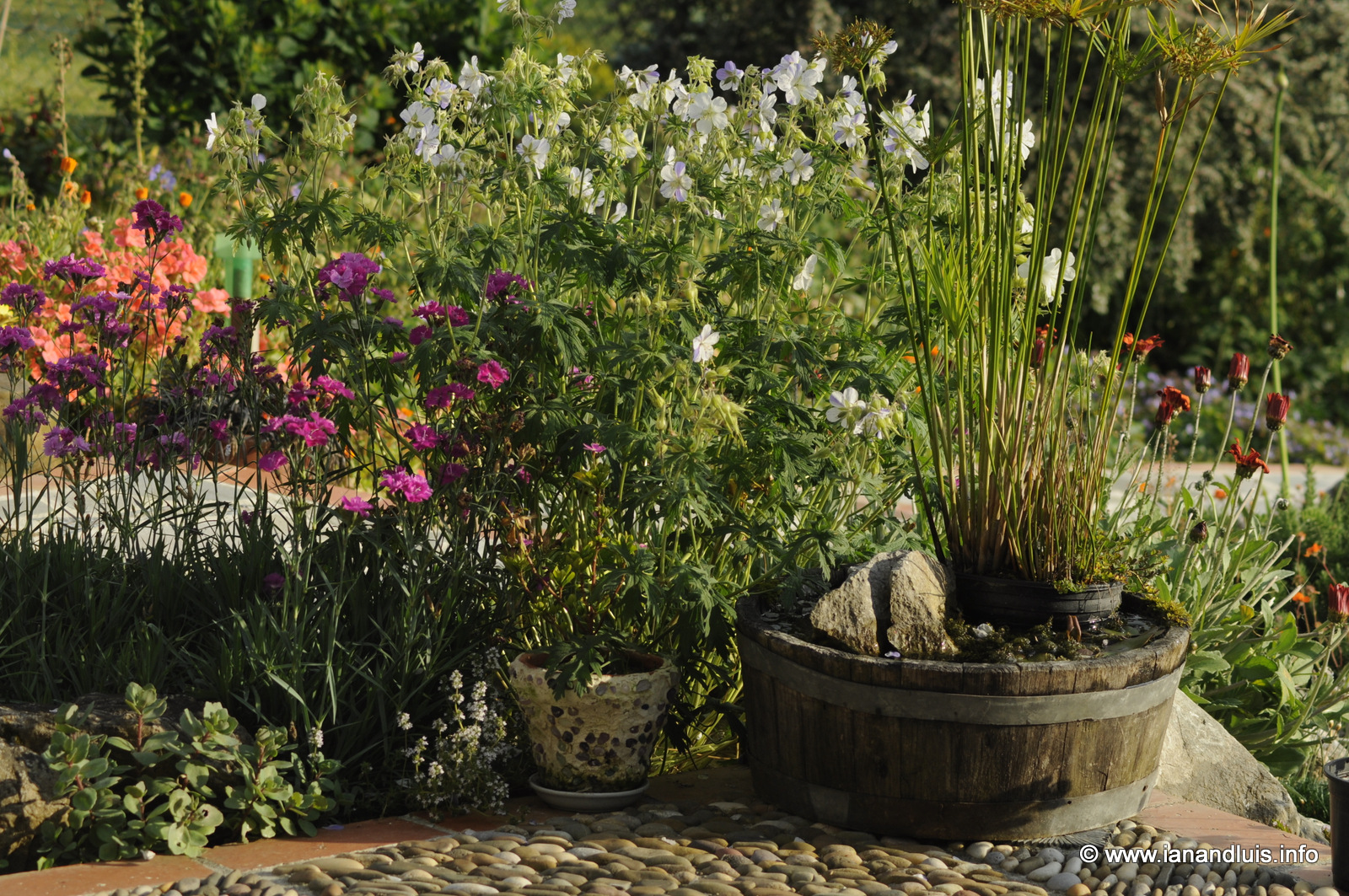
We have several water sources in the garden but the one the midwife toads prefer is a small half barrel filled with water, plants and a rock. It is permanently teaming with tadpoles thereby ensuring the next generations of this wonderful creature.


The midwife toad is small, 4-6 cm in length with the males being slightly smaller than the females. They live approximately 5 years if not consumed by their natural predator, the viper or large birds. Their diet is mainly spiders and beetles with a few flies and worms when available.


Further information can be found here:

IUCN Red-List


ANIMALTALES

Friday, May 09, 2014

The flower garden in May

4 comments:
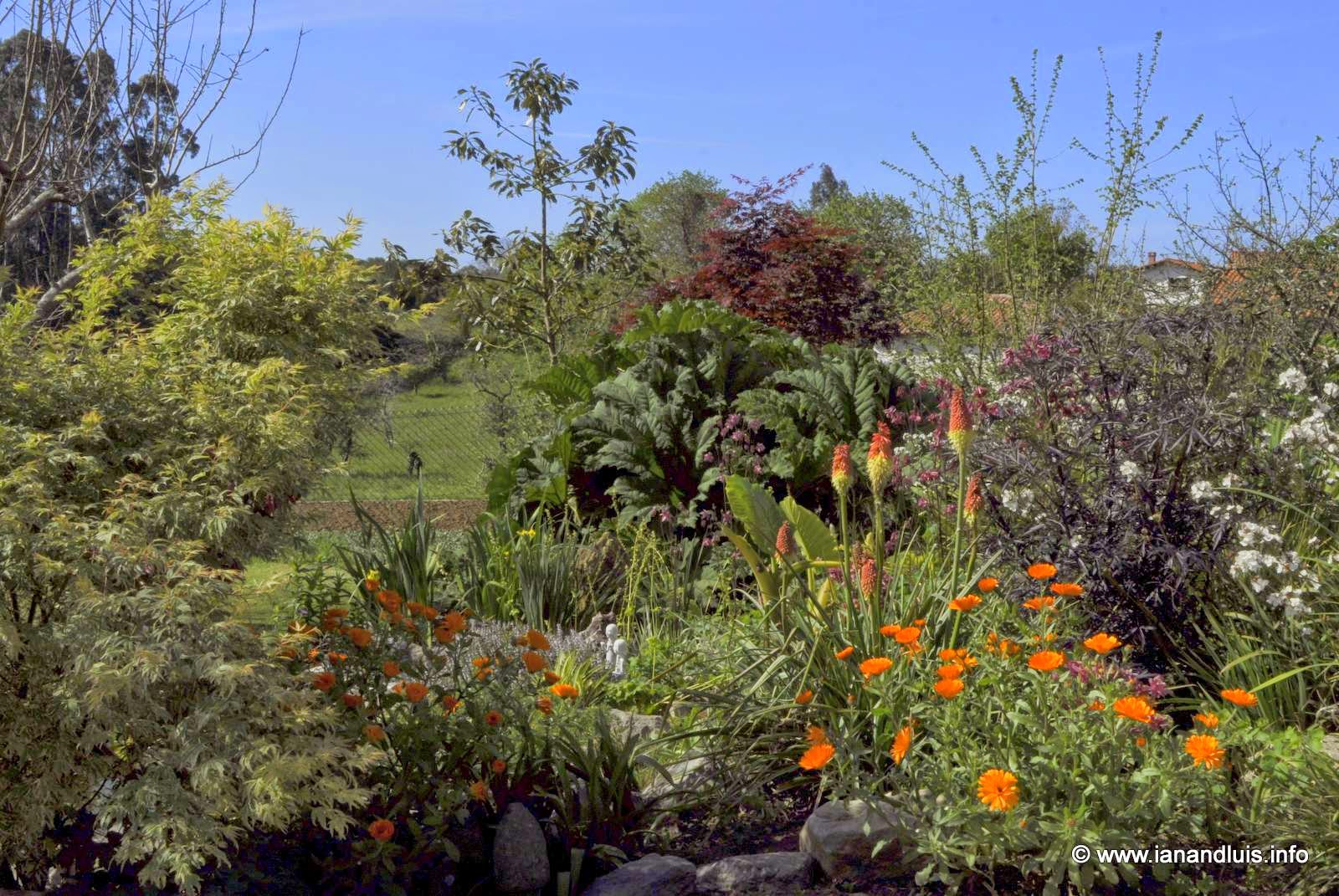
May is generally one of the best months for the flowers here in Asturias. The country lanes and meadows are ablaze with wild flowers and grasses attracting an abundance of pollinators.


The garden has several areas that are given over to flowers, shrubs and trees. We have tried, where possible, to keep the planting scheme low maintenance by using perennials and biennials however foxgloves, other biennials and self seeders do rather make order in the borders impossible.


We aren't expert gardeners by any means and have learnt over the years through trial and experiment, doing and daring. What I hope we have created is a peaceful space which we can enjoy along with the many insects, birds, amphibians and reptiles that will help maintain a balance in our small plot.


The herb garden at the front of the house is coming into its own now the plants are established and we are gathering plenty of rhubarb, fresh herbs for cooking and fresh herbs and flowers for infusions, drying and hand cream.


We use the garden a lot, walking around it several times a day and sitting in one of several areas we have created, each with a different feel and atmosphere. The back garden is tranquil and a great place to sit and take in the views or rest and contemplate, accompanied by the sound of the water fountain, bird song, shadows cast from the setting sun and the distant ring of cowbells.


Don't forget to check out our other wildlife photo blog at Smaller Tales from Toriello

Thursday, August 22, 2013

Smaller tales from Toriello

No comments:
We both take photographs and enjoy showing them on our various blogs. We get some brilliant feedback from people both in the comments and via messages or email and would like to thank all of those who take time to do so.


The garden at La Pasera is about 1500 sq meters and comprises various areas of manicured borders, rockery, wild areas, vegetable beds and orchard. The amount of life in the garden never ceases to amaze us both and we are constantly surprised by the variety of flora, fauna and insect life we see on a daily basis. There are far too many photographs to feature on Tales from Toriello so we have started another blog Smaller tales from Toriello where we will feature some of the photographs we take in and around the garden at La Pasera.


We hope you enjoy the new blog and subscribe to posts or share these pictures on your own blog, twitter or facebook. The permanent link can be found above. If you don't already do so, take a closer look in your garden whenever you get the chance, you just might be surprised what you find.


Wednesday, August 07, 2013

The Midwife Toad makes an appearance - amphibians

2 comments:
We have seen and heard many toads of all shapes and sizes in and around La Pasera. Our midwife toads sing nightly. With their high pitched woop, woop, woop sound resonating at regular intervals we can more or less locate their presence in the rockery, bog garden, fedge or dry-stone walls. Their song is easily distinguished from that of the frogs and other toads which croak or rattle for several seconds at a time.

Common Toad

Our most distinguished visitor up to now (although they are all rather special) has been a St Anthony's Tree Frog (European tree frog - Hyla arborea) which we have only seen a couple of times and only managed to photograph once, after a storm, where it suddenly appeared clinging to the house wall. They are so small and well camouflaged it is no wonder they are hard to spot.


Whilst working in the garden yesterday we came across this wonderful Midwife Toad; so called because it is the male of the species that carries the eggs on his back. We found him in a bag of rubble which we are using for building so we carefully relocated him to a newly created small pond we have constructed in the wild area of the garden. He sat around for a few minutes and then quickly made his way into the water and disappeared under a half sunken tree stump.

Midwife Toad


We have noticed tadpoles appearing in a half barrel of water and plants we have on the terrace. Some of these tadpoles have been there for many months and are very slow to grow. We now know that these are the off-spring of the midwife toad. Let's hope they grow up with ravenous appetites for slugs.


Here is a short film from wikimedia of the Midwife Toad's call:   Link

If you click on the pictures you should be able to see bigger versions of them or a slide show of images.