Showing posts with label plants. Show all posts

Tuesday, April 21, 2015

Dear Deer...

32 comments:
Dear Deer,

The other day whilst chatting to friends on Skype I spotted you out of the corner of my eye from the study window about to take a drink from our garden pond. It was lovely to see you in daylight as we normally only ever see you and other members of your herd on the trailcam at night and sometimes in the early morning as the mist is lifting.


With your slender frame, bright dark eyes, and your growing antlers you looked very handsome and quite relaxed given the time of day (late afternoon). You took a small drink from the pond but then moved on to the birdbath which you seemed to prefer. I wondered if you were the same deer I had to rescue from a farmer's dog a few weeks earlier when you were running around and around the garden seeking an escape route? It was fortunate I managed to stop the dog in its tracks by running between you both.


We often see you in the meadows surrounding La Pasera and it was only the other morning when three of your herd grazed the bottom field whilst we watched on and finished our breakfast. There is a lot to eat around the fields and meadows so whilst I don't mind you nibbling the odd raspberry leaf in our soft fruit bed, I really do draw a line at nibbled mange tout and orange tree leaves.


I never saw your sibling until you wandered down towards the winter lettuce and started jumping playfully. You make a splendid pair I must say. I managed to open the window without too much noise but only had my compact camera available but I think I got some reasonable shots of you both. I noticed that you also like one or two of our garden plants...


We realise that April is a more relaxed time for you now that the hunters have stopped harassing you with their dogs and guns, and that you are generally less stressed but if you continue to munch away on our food we might just have to put up some barriers to keep you out. I really wouldn't like to do that, so please take note. We loved your curiosity when you spotted the ceramic hare and wondered what you would make of the cats if you came across them?


You are welcome to visit as your forebears have done over the years but stick to the meadows for your snacks. Take care and safe journey little ones.

Best wishes

La Pasera

ANIMALTALES

Friday, October 17, 2014

Beans - from plant to plate

2 comments:
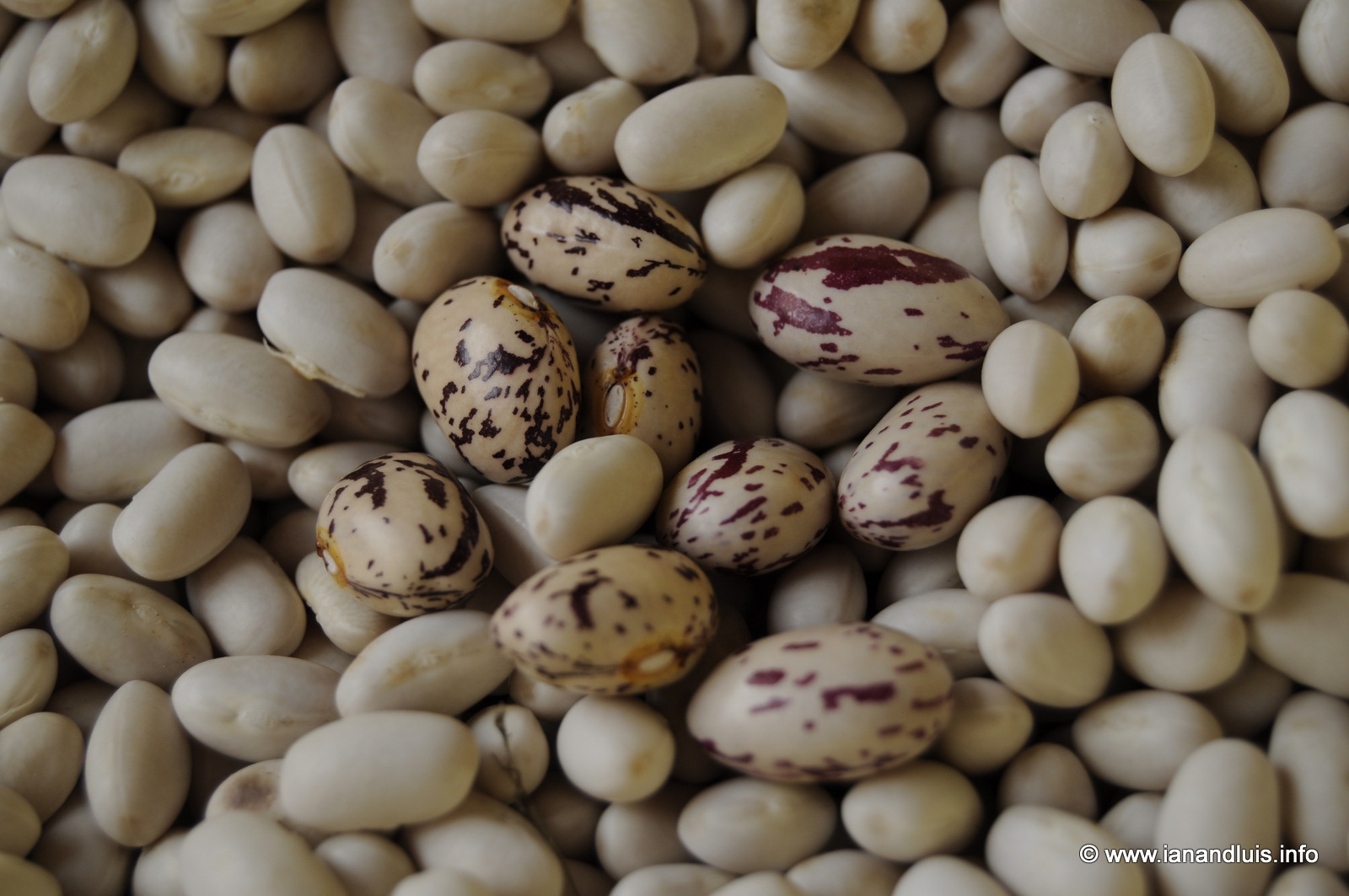
Beans are big here in Asturias, not in a huge way but in usage in all kinds of cookery. One of the traditional dishes is Fabada which is white beans with chorizo, black pudding and fat. Really not our cup of tea but very popular amongst the tourists and served in most restaurants. Being vegetarian, beans provide us with much needed protein and a stock that can be used all year round.


We sow our own bean seeds (dried from the previous year) in April indoors. These are then transplanted into soil when they germinate and put outside to grow on. We are fortunate in so much that we do not have frost and by April there is an ambient outdoor temperature throughout the night and day.


The young plants are put in the ground around the end of May. They are initially supported by an 'A' frame structure we construct out of locally sourced hazel. As they grow we may add additional support by introducing twiggy pea sticks.


Apart from ensuring that the plants wind their way through the support, they need very little attention apart from looking out for black fly which can be a problem if not caught early. We treat the black fly with soapy water with an additional spray of diluted alcohol if necessary: this usually works well.


The beans are eaten fresh as in green runner beans and dwarf kidney beans and what we don't use we leave on the plant to dry. When the outer casing is parchment-like we harvest, shell and leave to dry in the sun for a week or so. The dry beans are then frozen for 24 hours to kill any bugs and then re-dried before storing.


Our favourite dishes include home-made beans on toast, mixed vegetable and bean cassoulet, white bean and black olive pate, in salads and, bean and chestnut casserole. How do you eat yours?


The discarded bean plants are composted to provide much needed nutrients for the soil.

The insects are busy doing their work in the garden and helping, in their own unique way, the cycle of life, death and regeneration. More creatures from the garden can be found here:  Smaller tales .


Thursday, May 15, 2014

Should we restore or plant this pine chest?

4 comments:
Each year we demonstrate chair caning, rush work and seat weaving at a street market (Rastrillo) organised to raise funds for charity. Last year we bought an old pine chest for €20. It is zinc lined and fairly intact apart from a piece of wood missing from one of the base rests which can be easily repaired.


It has old woodworm and has been painted white in the past although some of this is now wearing off. The pine is of good quality and I know that if it is stripped, waxed and polished it will make a wonderfully rich, handy little seat with storage for a sheltered spot on the terrace.


Alternatively, I was thinking of leaving it pretty much as is apart from drilling a few holes in the bottom and planting up with a mixture of trailing plants and accessories with the lid propped open - a sort of shabby chic garden planter. I realise that even with the zinc liner, the pine on the base will only last a few years.


I don't particularly want to use and have to dispose of harsh chemical strippers and it would possibly damage the surface if sanded down to remove the paint. I wonder if there is a green paint stripper?

The chest below was my Grandad's tool box and covered in layers of paint and varnish. I restored it many years ago and it has made a characterful coffee table for the lounge. Hmm...what to do?


Over to you....seriously looking for advice and guidance on this one. Maybe you have other ideas...What would you do?

Saturday, March 22, 2014

How we grow onions

2 comments:

Onions are a vegetable we simply adore and with the exception of last year when due to adverse weather conditions we lost the entire crop, we tend to be self sufficient throughout the year. We use lots of onions in salads, cooking and in the home-made pickles and chutneys we enjoy and share with friends and family.


Growing onions is relatively easy as they are a fairly trouble free vegetable provided that you use a rotation system so that you avoid growing them in the same spot for at least 3 years. The rotation system we follow at La Pasera means that it is on the fifth year that we plant them in the same spot. Avoiding growing them in the same spot on consecutive years helps to minimize the chances of onion fly infestation not only destroying your crop but also of your soil becoming depleted of specific nutrients.

Onions can also be susceptible to downy mildew in particularly wet seasons as it was the case here at La Pasera last year. In spite of applying a fungicide based on horse tail they failed to thrive and we lost the entire crop so this years we are hoping for a better growing season. Time will tell.


Onions can be grown from seeds sown by late September, alternatively you can buy onion plants or small bulbs (onion sets). We normally buy young onion plants at the local weekly market from a local grower who grows varieties that will better withstand our temperate but humid climate during the Summer months; besides, the little plants are already used to our local climate conditions as opposed to those grown in other parts of the country.

We grow four hundred onions, enough to see us through the season and to share with friends and family after they get strung in mid Summer. We find that the red and white onions (150 of each variety) keep very well and usually are ready to be harvested by mid July while the early ones will start cropping in May.

This year we will soon start cropping the ones the planted in November, so far they look great.


We aim to have dug the green manure in the bed where we plan on planting the onions by late January or early February. After 3 weeks we also dig in our own compost. This ensures a good supply of nutrients and will maintain soil humidity during the hotter Summer months.


We also collect some bags of very well rotted farm manure from a farmer who lives in a nearby village. This is a very crumbly and black substance with lots of worms that will provide fertility to the small onion plants and also helps to improve the soil structure.


Planting onions is a job I enjoy in spite of the effort and few hours it takes to complete. The day we plant the onions, we use some wooden planks  to avoid compacting the soil by walking on it and after creating a shallow drill we add some of the well rotted farm yard manure before we water the soil with rain water we collect from the shed roof. The onions will then be gently pushed into the wet ground before their roots get covered with soil. This is the only time we will water the onions as the rain fall will provide the moisture the onions need. Local farmers say that onions are a crop that should not benefit from rain fall during August. In other words, in Asturias it is advisable to harvest the onions before August. Ours have never lasted past mid July.


This year, both Wentworth and Gawber came down the vegetable garden as I was working and provided me with a good excuse to have a break. Wentworth enjoyed rolling over the soft soil before going onto the shed's roof and Gawber filed his nails on a wild cherry tree before going hunting and coming back to present me with the land vole he had caught.


Wednesday, January 01, 2014

Making a bottle garden.

4 comments:
Many years ago I had a wonderful bottle garden that had been thriving for nearly a decade until it was watered almost daily by a house sitter who knew no better. Bottle gardens, of course, rarely need watering if ever and if the balance is right they sustain their own micro climate.


Recently I acquired a medium size bottle and decided to have a go at another bottle garden. It is about half the size of the Carboy I used to have but never-the-less it is big enough to work if I get the balance right. The beauty of this one is that it has a wide neck and therefore plants and soil are easy to place inside.


You need a good layer of drainage, here I am using old marble and granite chippings leftover from Luis' mosaic work. Charcoal is also required to keep the contents fresh. A good layer of bought potting compost is placed on top of the drainage and charcoal then the plants are added. Usually we would not buy potting compost but home-made is likely to be less sterile therefore causing an increased risk of bacteria or mould.


We chose two Pileas and a low growing evergreen we are not sure of (possibly a type of fern). Three plants is more than enough for this bottle garden. We have also incorporated a lovely piece of rock crystal we found locally. Watered sparingly and the lid secured, it shouldn't need watering again and if it steams up with condensation, the lid can be removed until clear then re-applied. Once it fills out a little it should look the part.


The bottle garden will sit on the bedroom balcony along with our small collection of orchids so that we can enjoy it as we sit and read in the morning sun. The next house plant project is to create another Bromeliad tree, similar to the one in the photo below. These were with me for many years until the excess watering incident and several house moves.


Wednesday, July 17, 2013

Limestone in the garden and extending the limestone rockery

2 comments:
One thing we are not short of in Asturias is limestone. Around here the dry stone walls of the past are made almost exclusively of limestone but alas, they are falling into disrepair and no longer being maintained. There is an abundance of limestone bedrock that surfaces in many fields and pastures. Some has been cleared over the past few hundred years whilst others are left as they are far too problematic and expensive to clear or remove. Pastures or fields and hills that are littered with protruding bedrock are know as Cuetos. We are fortunate to have a couple of areas in our garden.


When we came to La Pasera we inherited quite a bit of dry-stone walling most of which has not been rebuilt as yet, mostly just repaired where necessary. We also had access, from good neighbours, to as much limestone as we needed to build a rockery. We built the first section about 3 years ago but recently decided to extend it and attempt to re-create a naturalistic looking limestone gully and rockery.


Some of the rocks weighed much more than a human so we had to manoeuvre them using a wheel barrow, levers and gravity. We're pleased with the finished rockery and once the plants have established in the nooks and crannies, it will begin to look even better. We now need to move on and pave the winding steps and terrace area which will be another few months work.


There are many fissures, cavities and pockets of air in the rocks and it is an ideal habitat for lizards, toad, beetles and crickets. We will plant a few native plants and also encourage naturalisation of ferns, mosses and alpines. The rockery is south west facing so it is hot with deep pockets of shade.


Monday, June 17, 2013

The potato harvest

No comments:
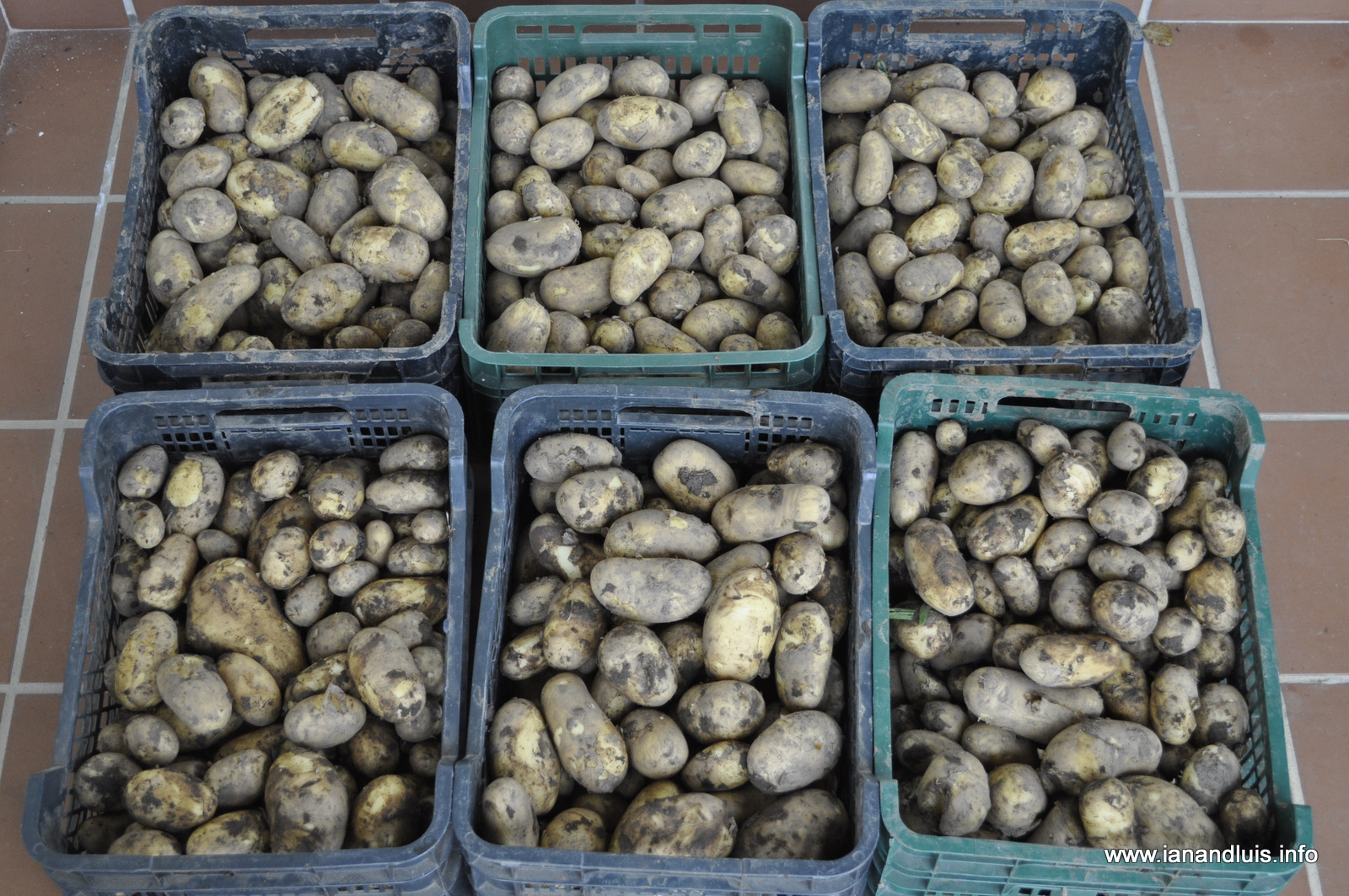
The recent spell of wet weather followed by warm, humid conditions has not been good for our potato crop. We spray with a natural fungicide made from horsetail macerated in water. This is effective to a point but it will never be as good as the strong chemicals from a commercial product. We take this into account and expect that when blight hits, we harvest.

The potatoes will be dried off, cleaned and stored but the tiny new potatoes will be devoured within the first few days, absolutely delicious with a knob of butter and some chopped fresh mint.


If we harvest soon after the first signs of blight then the crop is unaffected and we can enjoy good quality newly dug potatoes. This year has been a successful crop with early planting in late February making a total of 16 weeks in the ground. The variety was Spunta and we planted 100. We have little choice here so we usually buy whatever seed potatoes are available from the local agriculture cooperative.


Elsewhere in the garden the Air Hyacinth is coming into blossom and looking great. We started out with one very small clump; a gift from a lady in the village. This has grown and been divided many times. They are the easiest plant to grow with little care apart from clearing dead fallen leaves that get trapped in winter. We have several large clumps dotted around and always try and split them and pass on whenever we can. My parents have one in the UK but they take it into the conservatory during winter as it would die given a hard frost.


Wednesday, May 29, 2013

Miniature gardens and bonsai

2 comments:

Miniature gardens are special. Stand-alone microcosms with their own eco system and in the main self-reliant. Here at La Pasera we have several miniature gardens that we have created from scratch using driftwood, left-over concrete, roof tiles or broken pots.


The front boundary wall has a collection of 12 or so miniature concrete gardens all in differing stages of development and evolution. Any spare concrete we have left at the end of building work is mixed with gravel. A mould is loosely prepared in bare earth and the concrete shaped then covered with more earth. This gives the finished receptacle a residue of nutrients that encourage mosses and lichens to grow. We also insert a short piece of bamboo through the base of the pot which will be removed when dry to leave a hole for drainage. Left for a week or so in the soil they will harden after which they can be cleaned and planted.


We find succulents survive well in these shallow pots and rarely need watering. Similarly with old roof tiles, succulents work well. With roof tiles, we cement a few pebbles on at either end, fill with soil, plant and decorate with fine washed gravel.


Do you remember the piece of driftwood we collected from the beach? (story here) This has also been planted and a miniature garden created that will develop and grow over-time.


On a recent trip to town we spotted an unusual piece of studio pottery on a second hand stall, we bought it for a couple of euros with the intention of filling it with house leeks and siting it on the terrace.When we got it home, on closer inspection, we noticed a signature and date; needless to say after a bit of research we found a potter on Flickr that we think is the artist. We have sent email to him and hope he can confirm or not if he is the artist, In the meantime we will keep it safe just in case it is worth a mint (one can live in hope).


We also have a large glass bottle that we need to plant, similar to the carboys you find in the UK. Really not sure what to plant in it yet so any suggestions would be welcomed. I used to have a bottle garden many years ago until it was watered every day by an over-enthusiastic friend who was looking after the house whilst I was on holiday. Bottle gardens never or very rarely need watering after the initial setting up.


We just have the one bonsai tree but would like to grow more. We have plenty of native trees and shrubs that could be miniaturised but bonsai do take a bit more looking after than your regular miniature garden.