Showing posts with label Architcture. Show all posts

Sunday, August 02, 2015

The holiday season in Asturias

5 comments:
Asturias is a popular destination during the heat of the summer in Spain. Many Spanish people come during the main holiday period of last two weeks of July, August and beginning of September. Many leave their town and city based apartments where the summer temperatures rarely fall below 30 degrees Celsius, to come to the milder and more tolerable northern coast; Spain's Natural Paradise, Asturias.


The once quiet towns and low-key cities now buzz with extra traffic, more pedestrians and busy terrace cafes and bars. The beaches that are mainly deserted for 10 months of the year become a mosaic of sun chairs, beach umbrellas, beach towels and sand castles. The hundreds of peaceful walking routes become punctuated with walkers, ramblers, cyclists and runners, the gentle hum of the mountains ring out with cattle bells and camera shutters and the subdued markets come to life with extra stalls and animated stall-holders eager to sell their wares to passing tourists.


As you wander around the small fishing villages, farming communities and hidden towns, the aromas of cured ham, grilled fish and seafood, still cider and barbecued meats float through the air with unprecedented regularity and the haze of wood smoke intensifies the tapestry of greens, golds and blues that are typical of summer here in Asturias. During the next few weeks we will see and hear a proliferation of fiestas, music festivals, street theatres and recitals, all geared up to entertain and bemuse both the locals and the incomers; something for everyone.


It is great to see this influx of visitors during the summer months and although it can upset our normality, we realise that the economy needs it. What always confuses us is why Asturias is so quiet during the remainder of the year? We appreciate that it is the main holiday period for many Spanish workers but we feel that there is no-where better to visit in Autumn or Spring and even Winter than this beautiful region of Spain. OK the weather can be unpredictable particularly in Spring and sometimes in summer but cooler and wet weather fronts rarely last for long and after all, that is why Asturias is so green and lush. With mountains, woodlands, pastures and coast, larger cities and quaint villages all easily accessible within half an hour no matter where you stay, Asturias really does cater for all tastes.


Below are a couple of videos that show some of the beauty of Asturias, the first is a video from the hotel we first stayed in on our first time in Asturias (worth a visit) and the second is one I have featured before of the Cares Gorge; the most iconic walk in Asturias. Who knows we just might meet here one day....?


Winter walk along the Cares Gorge, Picos De Europa, Asturias and León, Spain from Tomas Millar on Vimeo.
A walk along the Ruta Del Cares in Northern Spain. Posada de Valdeón - Caín (León) to Puente Poncebos (Asturias) - Courtesy of www.casausborne.com.

Filmed using:
DJI Phantom Quadcopter
GoPro Hero 3
H32D Gimbal

Saturday, December 27, 2014

A walk through time: on the edge of Ribadesella town

4 comments:
We frequently walk around Ribadesella and never tire of the narrow, quiet streets and interesting buildings even though it is a very small town. It doesn't take much to see how the town has developed over the years and how the once, small cluster of sea-front fishermen and merchant houses has expanded as more land has been reclaimed from the sea and the estuary. The town has ancient roots and has been a settlement of sorts for at least the past 35,000 years, possibly much longer.


One walk we regularly take is on the edge of town along a narrow road that leads up to La Guia: a once important defensive position where cannon were  positioned ready to repel any unfriendly visitors. There is a small church and fortress dating back to the 1700s  that was built to provide spiritual and physical protection to the defenders. Today, the small chapel and remnants of defences remain. The chapel is now dedicated to Our Lady of La Guia, the patron Saint of fishermen and houses a small but wonderful collection of models of sea-going vessels.

Sociedad Etnográfica de Ribadesella SER


The vantage point of La Guia enables you to see the mouth of the River Sella as it winds its way through the lush landscape down to the estuary and into the Bay of Biscay. From here you can see the grand Indianos-style houses that were built on re-claimed land that borders the Santa Marina beach. The houses date mainly from the early 20th century when rich emigrant traders returned from the South Americas and built grand houses and estates. Many are now hotels but a few remain private residences.


Looking further up the Estuary there is a large expanse of rock which houses probably one of Ribadesella's greatest treasures: the caves of Tito Bustillo. Discovered in the 1960s, the network of caves and paleolithic cave art dates back at least 29,000 years. It is easy to imagine how small groups of humans occupied this estuary, with the caves offering protection and the sea and the rich flood plains offering up food in abundance. As an aside, in the next village to us about 5km from Ribadesella, they have recently discovered a bone pit containing fine examples of Woolly Rhinoceros, Hyena, Deer and Bison. The pit has undergone preliminary investigation and has now been sealed until finances can be secured to undertake a full archaeological investigation.


At the far end of Santa Marina beach along the promenade, there are some fine examples of dinosaur footprints in the sedimentary rocks that have been displaced by time and seismic land movement. Over 100 million years have passed since a small family group of dinosaurs passed over mud flats and left impressions for time to seal and eventually reveal.

 I often wonder what else lies undiscovered?


Scanning the landscape and pondering times gone by makes me wonder what footprints we might leave and how the archaeologists of future times might interpret our impact, presence our legacy.


Monday, October 06, 2014

If you go down to the beach today....

3 comments:

You're in for a big surprise... Well at least on the beach at Cuevas del Mar here in Asturias. This beach is about 5km from La Pasera and we occasionally walk to it from our house along the cliffs and through villages and country lanes. The area is peppered with caves (hence the name), many of which are shouting out to be explored.

The beach hit the local news this year as the severe spring storms devastated the sand, taking most of it out to sea and leaving very little apart from pebbles. This small beach is popular during summer as it's a quiet bay is ideal and safe for swimming. The locals campaigned for sand to be brought in as they were concerned that having no sand would affect the holiday trade. It is estimated that it could take up to 5 years for the sand to return naturally.

Earlier in Summer

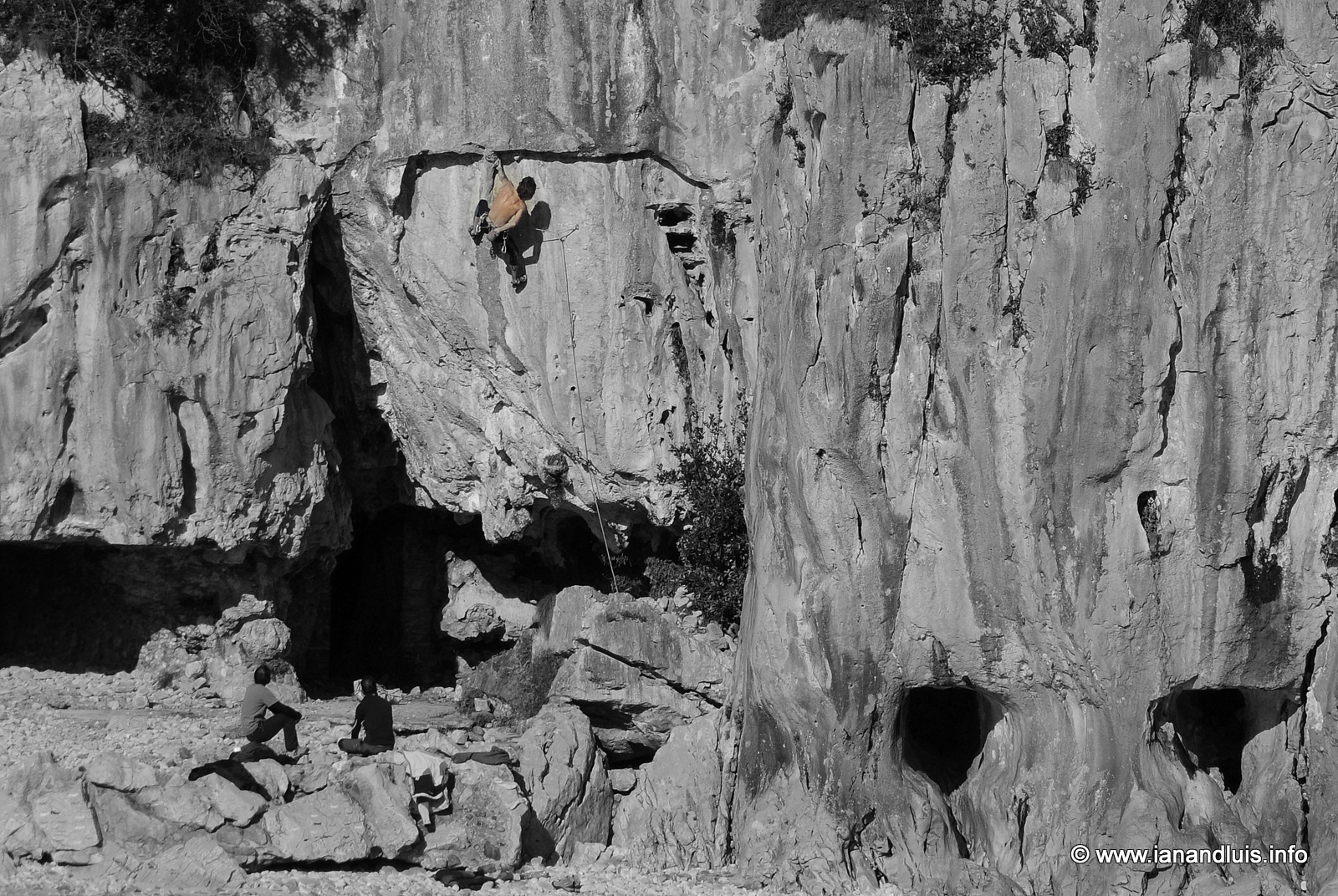
The beach also has an interesting history with several pebble lined caves, steps and barbeque which was once a beach bar several decades ago according to locals (in the photograph with the climber). Climbers also use the cliffs on the beach for fine-tuning their skills.


The lack of sand hasn't deterred someone from making best use of their time on the beach, we don't know who built all these but we admire their patience and creativity. All rather splendid and needless to say Luis + Pebbles = Happy. I have to say his effort was rather good but don't take my word for it, judge for yourself. 


Sunday, July 13, 2014

An Asturian tale...

1 comment:
Follow my blog with Bloglovin

We read that there was to be a celebration of the recent restoration of a 13th century romanesque church near Ribadesella in the area of Monte Moro: Iglesia De San Salvador.  What was more interesting was that the church had well preserved wall frescoes from the 16th Century not discovered until the civil war in the 1930's. A trip to see them was planned...


The church has recently been renovated and partially restored mainly due to the perseverance of local people who for the past 78 years have struggled to get their simple but significant church protected from further decay.


The story goes that the church was built in the 13th century to serve the local agricultural population from the nearby villages of Sardalla, Dezangos, Nocedo and Tresmonte which nestle in the rich green pastures and mountains just off the coast. As well as addressing religious affairs, the church would have served as a meeting place to discuss local issues and for trading goods and local gossip.


In the 16th century, a priest, bishop or wealthy patron commissioned a series of wall frescoes depicting God as the saviour, the last supper, the passion of the Christ, the ascension to heaven and the wrath of the devil. As most people were unable to read or write, the frescoes served as strong symbolism to reinforce the word of the church.


Some time between the 16th and the 19th century, the frescoes were covered in a lime wash, probably to disinfect the building following an outbreak of disease that was decimating the local population. The meeting place was recognised as a possible source of contamination. An extension to the original church and bell tower was added in the 19th century.


The frescoes faded from memory until 1936 when the church was partially destroyed by fire during the Spanish civil war. Parts of the lime wash began to crumble and expose elaborate wall paintings underneath.


The local parishioners continued to worship in the church despite the roof of the extension being open to the elements. If it rained, they would open their umbrellas and continue with their prayers.


The church has been renovated but there is still work to do. A new roof has replaced the charred remains of the extension, some of the frescoes have been further revealed and cleaned but there is much more to do and reveal. Drainage has been improved around the church to reduce humidity in an effort to preserve the delicate paintings and the walls have been rendered on the outside.


The rear of the church floor remains covered in very uneven limestone flags whilst the original building's floor has had a horrible scree of concrete lain. I only hope this is a temporary fix as it really does detract from the naive beauty of this piece of Asturian history. Apparently, on excavation, graves were found from the main doorway through to the alter. When money permits, further restoration work will be done to the frescoes and further renovation work done to the church. Let's hope the floors are restored as opposed to renovated, concrete just doesn't work.


Wednesday, April 23, 2014

Simple pleasures...

6 comments:
It was Luis' birthday this week and we celebrated in the way we have become accustomed: each choosing what you want to do for your own day. We stopped buying presents many years ago and believe that if we really want something and can afford it, we buy it at any time of the year, the same applies for Christmas. It fits in with our thinking that: life is short; we should all make the most of what we have; less is often more. Somehow, we seem to need less and value simpler pleasures.


The day started well with our friend Birgitta arriving with a glorious chocolate-covered birthday cake with candles. Later in the day we visited Birgitta and Manfred with the cake and took tea in their garden, chased chickens, fed geese and harvested salad leaves.


Luis chose to visit Santa Cristina de Lena, a pre-romanesque church south of Oviedo and to have a picnic lunch and short walk... A bit of background might help here if you do not know about pre-romanesque architecture (which I didn't until coming to Spain). Pre-romanesque architecture is found only in Asturias and is also known as the Asturian monarchy architecture.


We parked the car and walked the rough track that leads to the church which is sited on a hill jutting out from a larger hill/mountain. As we approached, tethered goats and their young kept the grassy entrance and hedges that led to the church, cut and managed. Two elderly ladies sat chatting and told us that this was their daily walk before lunch. A perfect spot for a catch up and intrigue...


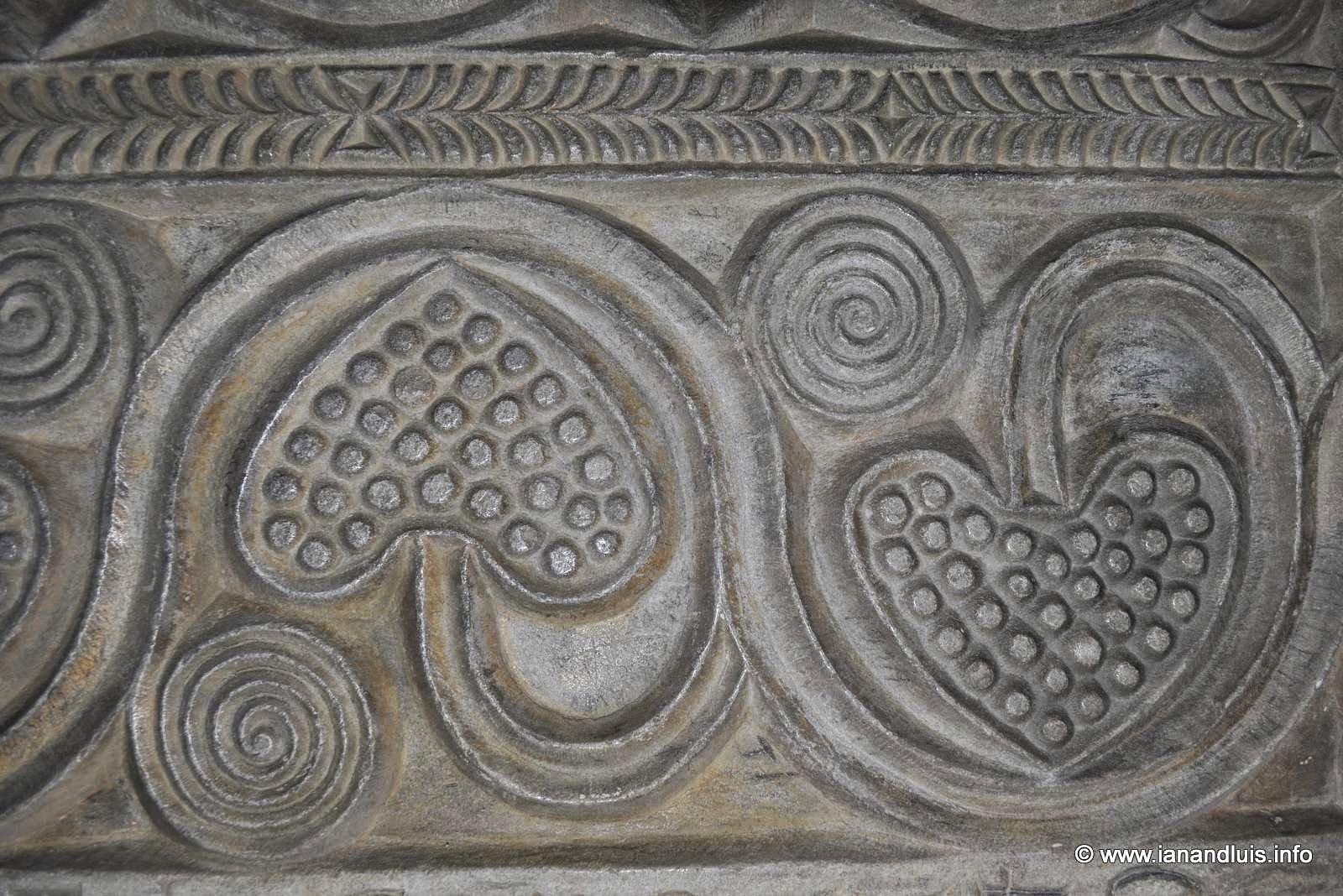
The church was attended by a guide who helped point out the features we should look for, chiefly the stone carvings that adorned the pillars, medallions and walls.


Originally, the church would have be painted and highly decorated with brightly coloured murals, motifs and religious texts; reflecting the beliefs and loyalties of the times. This no longer exists and the church has had two known major renovations in the 1800's and, just after the civil war in Spain (1936) when it was badly damaged by artillery.


I am personally not into churches but you cannot but admire and appreciate the grace, simplicity and tranquillity of an 8th century sanctuary. It is not hard to imagine a distant time when the ecclesiastical elite and the noble families met for worship and intrigue amongst other things.


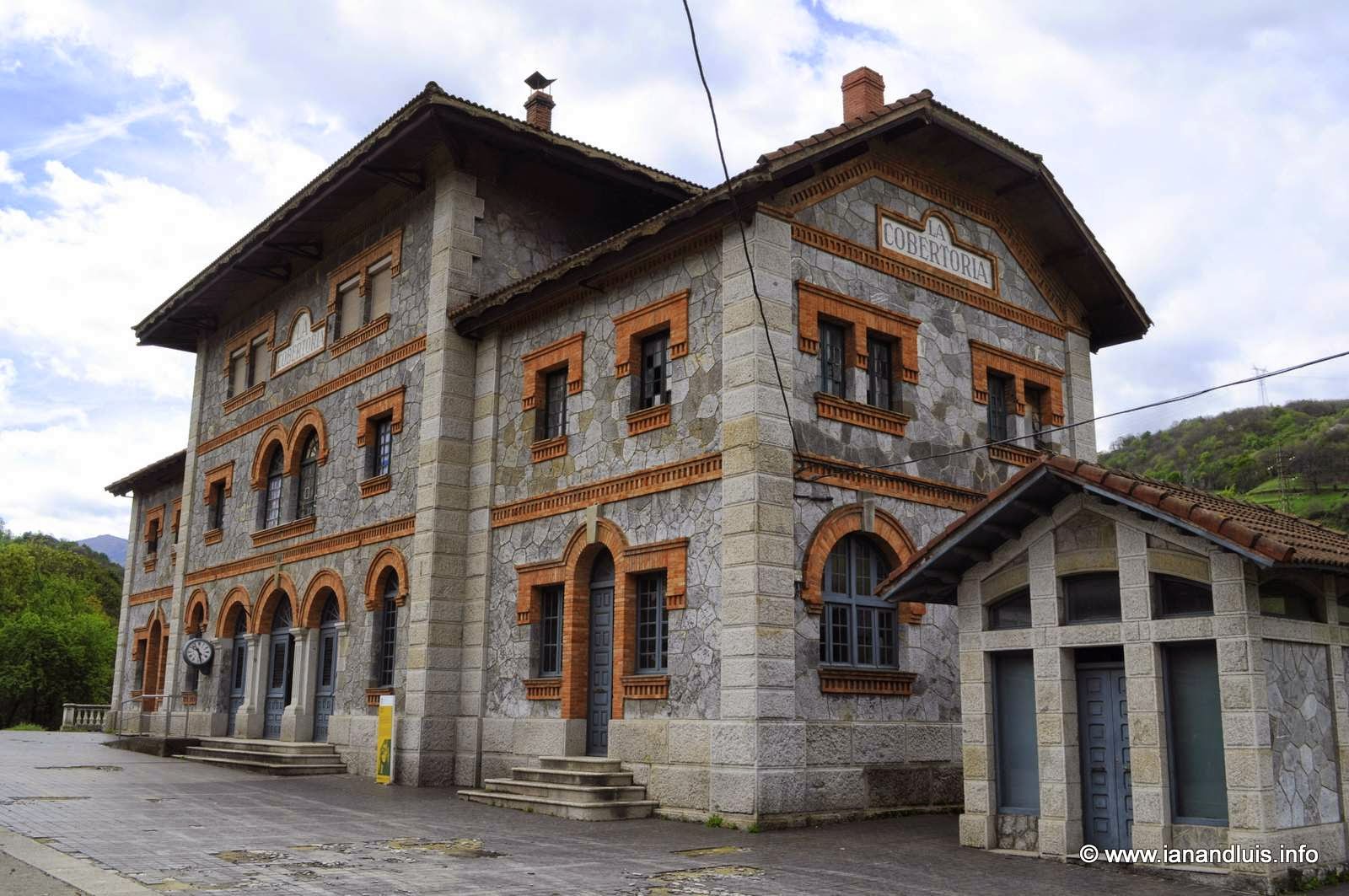
We called at the visitor centre which was housed in the old and rather dour looking railway station: La Cobertoria. This exhibition was particularly well executed with panels and photographs explaining the period in history and setting the context of the church within the other centres in Asturias and further afield in Europe. In addition, the panels had English translations which always helps.


We didn't know of any local picnic areas so we decided to head back to the coast and call at La Isla, always a favourite beach to wander. We ate a great lunch, watch the para gliders descend from the Sueve mountain range and with great precision land on the narrow strip of beach. We took a walk along the beach as far as we could (high tide) and looked at pebbles.


Simple pleasures...