Showing posts with label Bees. Show all posts

Sunday, May 18, 2014

Down on the vegetable plot in May

2 comments:
May is a busy month down on the vegetable plot. There are crops to be picked, seedlings to be cared for, compost bins to empty and beds to dig. Not to mention giving the tomatoes and potatoes their aspirin, weeding and caring for the young vegetable plants.


Seedlings grow strong against the south-facing wall of the workshop which has residual heat from the mid-day sun, also given out by the limestone of the rockery.

A lizard basks in the sunshine

The mange tout have cropped and continue to crop well, we have just had the remains of the ruby chard, leeks and fennel, and lettuce and radish are producing daily. Beetroot, spinach and elephant garlic thrive well together and will soon be offering up lots of fresh food we will enjoy.


Slow worms in the compost bins

We work on a crop rotation system that makes the use of our four large beds. Last years brassica bed is now being dug over compost and horse manure added. This bed will take the beans, squash and cucumber amongst other things.


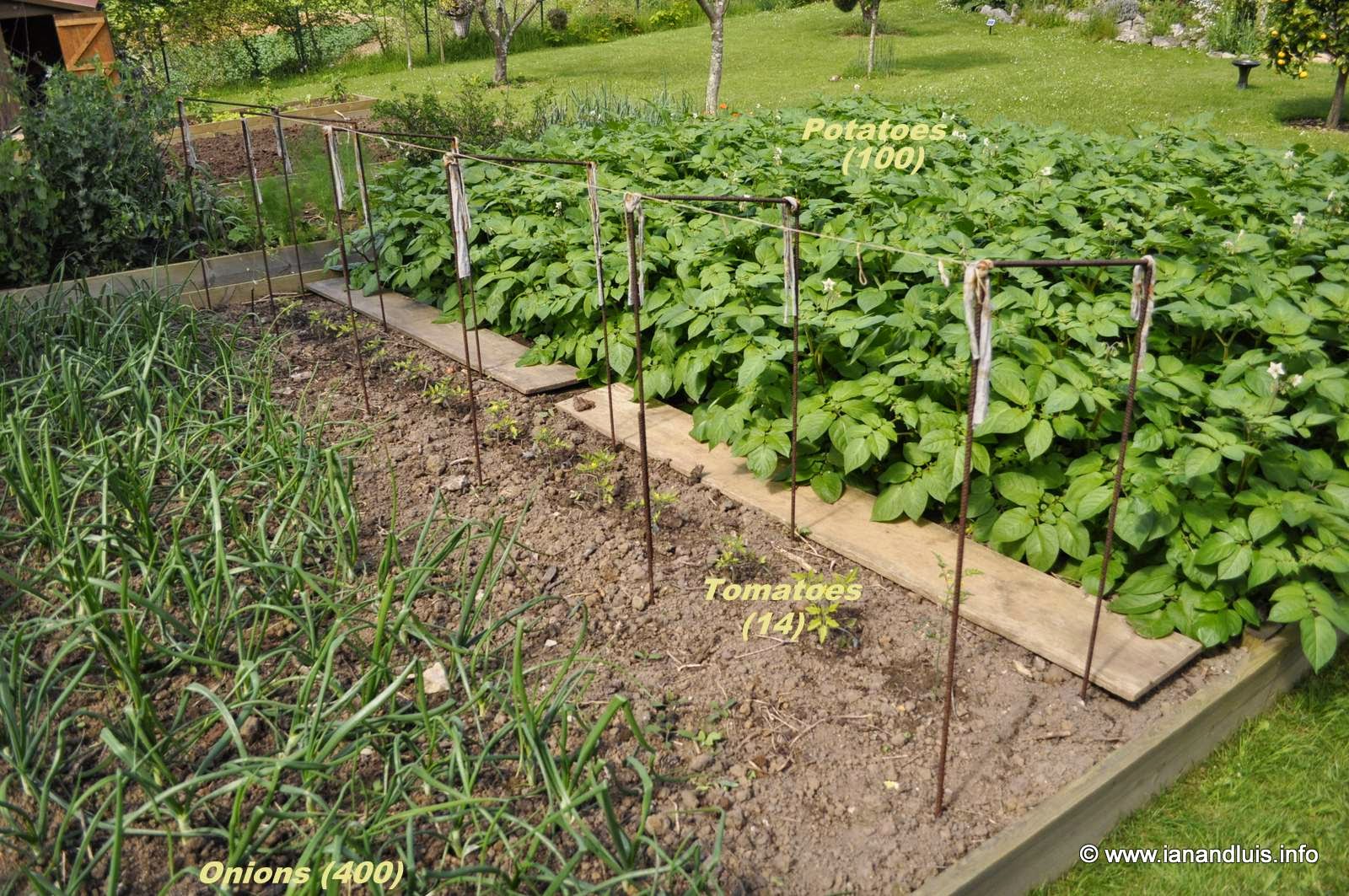
The kohlrabi is swelling and showing off its aubergine coloured body. The 100 early onions are fleshy and ready for using, from the plot to the kitchen. The later onions are growing well and making the most of the few wetter days we had earlier in the month.


In the potato bed we've seen a terrific growth spurt, the tomatoes have been planted and are ready to be semi-covered to keep out the sea mists we sometimes experience at this time of year. Both the potatoes and tomatoes have been sprayed with a weak solution of aspirin to help the plants strengthen their defences against virus and bacteria. Hopefully this will help them resist blight which can be a big problem here once it gets hold.


A solitary bee faces up to the camera


Friday, May 09, 2014

The flower garden in May

4 comments:
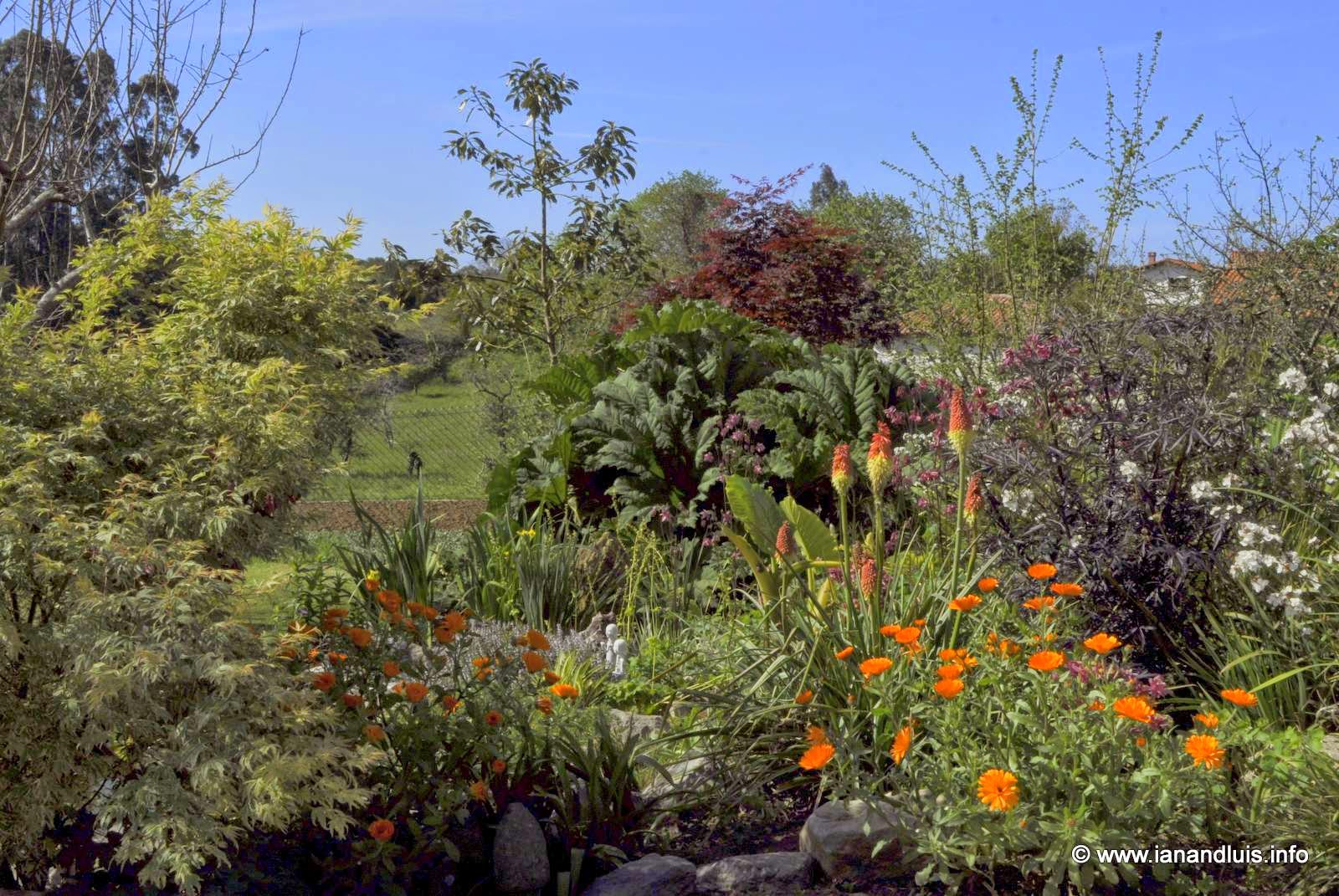
May is generally one of the best months for the flowers here in Asturias. The country lanes and meadows are ablaze with wild flowers and grasses attracting an abundance of pollinators.


The garden has several areas that are given over to flowers, shrubs and trees. We have tried, where possible, to keep the planting scheme low maintenance by using perennials and biennials however foxgloves, other biennials and self seeders do rather make order in the borders impossible.


We aren't expert gardeners by any means and have learnt over the years through trial and experiment, doing and daring. What I hope we have created is a peaceful space which we can enjoy along with the many insects, birds, amphibians and reptiles that will help maintain a balance in our small plot.


The herb garden at the front of the house is coming into its own now the plants are established and we are gathering plenty of rhubarb, fresh herbs for cooking and fresh herbs and flowers for infusions, drying and hand cream.


We use the garden a lot, walking around it several times a day and sitting in one of several areas we have created, each with a different feel and atmosphere. The back garden is tranquil and a great place to sit and take in the views or rest and contemplate, accompanied by the sound of the water fountain, bird song, shadows cast from the setting sun and the distant ring of cowbells.


Don't forget to check out our other wildlife photo blog at Smaller Tales from Toriello

Monday, September 23, 2013

Honey and the bees

No comments:
Luis has just returned from Palencia with our annual purchase of honey. We rarely use sugar these days apart from pickling and jams. The honey comes from a vet who keeps bees which harvest pollen and nectar from wild flowers, woodlands and some local commercial crops.


We stopped buying supermarket honey here are much of it was poor quality and glucose syrup had been added to many of the commercial varieties available. This year we have purchased 45 kilos which will last us for at least a year, maybe more. At €4.75c a kilo we think it is really good value and we know its origin and processing methods.


Those of you who are into honey will know that there is a vast range of flavours, consistency and colours depending on the flowers and conditions. This particular honey is not too strong in taste and is a rich light caramel colour. Luis was also given some beeswax for making hand-cream. This is pure, unprocessed beeswax and it smells divine.


We have also heard of a bee-keeper locally who has honey for sale so we might try and locate them and try theirs. Meanwhile we continue to enjoy the many different bees in the garden as they harvest and pollinate flower after flower. We have thought about keeping bees but we understand you have to undertake a compulsory course and be licensed here in Spain before you can become a bee-keeper.


Thursday, August 22, 2013

Smaller tales from Toriello

No comments:
We both take photographs and enjoy showing them on our various blogs. We get some brilliant feedback from people both in the comments and via messages or email and would like to thank all of those who take time to do so.


The garden at La Pasera is about 1500 sq meters and comprises various areas of manicured borders, rockery, wild areas, vegetable beds and orchard. The amount of life in the garden never ceases to amaze us both and we are constantly surprised by the variety of flora, fauna and insect life we see on a daily basis. There are far too many photographs to feature on Tales from Toriello so we have started another blog Smaller tales from Toriello where we will feature some of the photographs we take in and around the garden at La Pasera.


We hope you enjoy the new blog and subscribe to posts or share these pictures on your own blog, twitter or facebook. The permanent link can be found above. If you don't already do so, take a closer look in your garden whenever you get the chance, you just might be surprised what you find.


Wednesday, July 18, 2012

Honey Bees: a sting in the tale

3 comments:
We love bees, in fact we positively encourage them by leaving wild areas in the garden and by planting a good mix of flowering plants, bushes and trees. Our local honey bees thrive on the rich carpets of meadow flowers that are in continuous blossom from early spring through to late autumn.


With the decline of bee populations through pesticides, parasites and habitat destruction, it is encouraging to see the efforts people are making in bringing the issues into the public arena. Events here with a swarm of bees earlier in the week have left us feeling saddened and surprised. Let me explain...

Mid-afternoon whilst pottering in the garden we heard our friend Luis the farmer call out for us to come and look at a swarm of honey bees that had settled on a neighbours wall. Camera in hand we wandered up to find a rather large swarm gathered together on an old stone wall of a neighbours house. After taking a few pictures we posted a question on a forum to which we belong, asking if the bees would relocate by themselves as they were perilously close to where people walk and could be dangerous if antagonised. The consensus was that they would move on fairly quickly and should be left alone.


About an hour later we were in the kitchen when he heard a loud hum coming from the extractor fan above our oven hob. We went outside and it was obvious that the bees seemed to be making a new home in the chimney above the fan. We quickly took a large saucepan, switched on the extractor and lit newspaper and damp grass to make as much smoke as possible in an effort to deter their nest building.

After another 30 mins or so the bees seemed to have gone but to be safe we brought to the boil a small pan of vinegar in the hope that the acrid fumes would further dampen their efforts. It worked.

We love bees but didn't want them in the cooker hood or house.


About another 30 minutes later we heard a commotion just up the road and investigated. It was the fire service (Bomberos) scaling ladders onto the roof of a close-by neighbour. Apparently the bees had been going into their chimney since lunchtime and despite efforts to deter them by releasing smoke through their extractor fan, the bees had settled and were busy building comb.

The firemen were sealing the chimney ready to release poisonous gas to kill the bees. There was nothing we could do - that is the way they deal with such swarms. Very sad.

On a lighter note, on spotting me looking at our chimney through binoculars, another neighbour asked me if everything was OK. She was somewhat bemused when I told her we had sheep coming into our chimney - the words for sheep and bees are very similar and I got mixed up!!!


neighbours extractor fan light

We would love to keep bees in the future but it is tightly controlled here in Spain and anyone wanting bee hives has to attend a course, be certified and licensed, and their hives registered and numbered. Maybe one day, and if such a thing happened again we could take the swarm and give them protection in exchange for honey.