Showing posts with label Seeds. Show all posts

Friday, October 17, 2014

Beans - from plant to plate

2 comments:
Beans are big here in Asturias, not in a huge way but in usage in all kinds of cookery. One of the traditional dishes is Fabada which is white beans with chorizo, black pudding and fat. Really not our cup of tea but very popular amongst the tourists and served in most restaurants. Being vegetarian, beans provide us with much needed protein and a stock that can be used all year round.
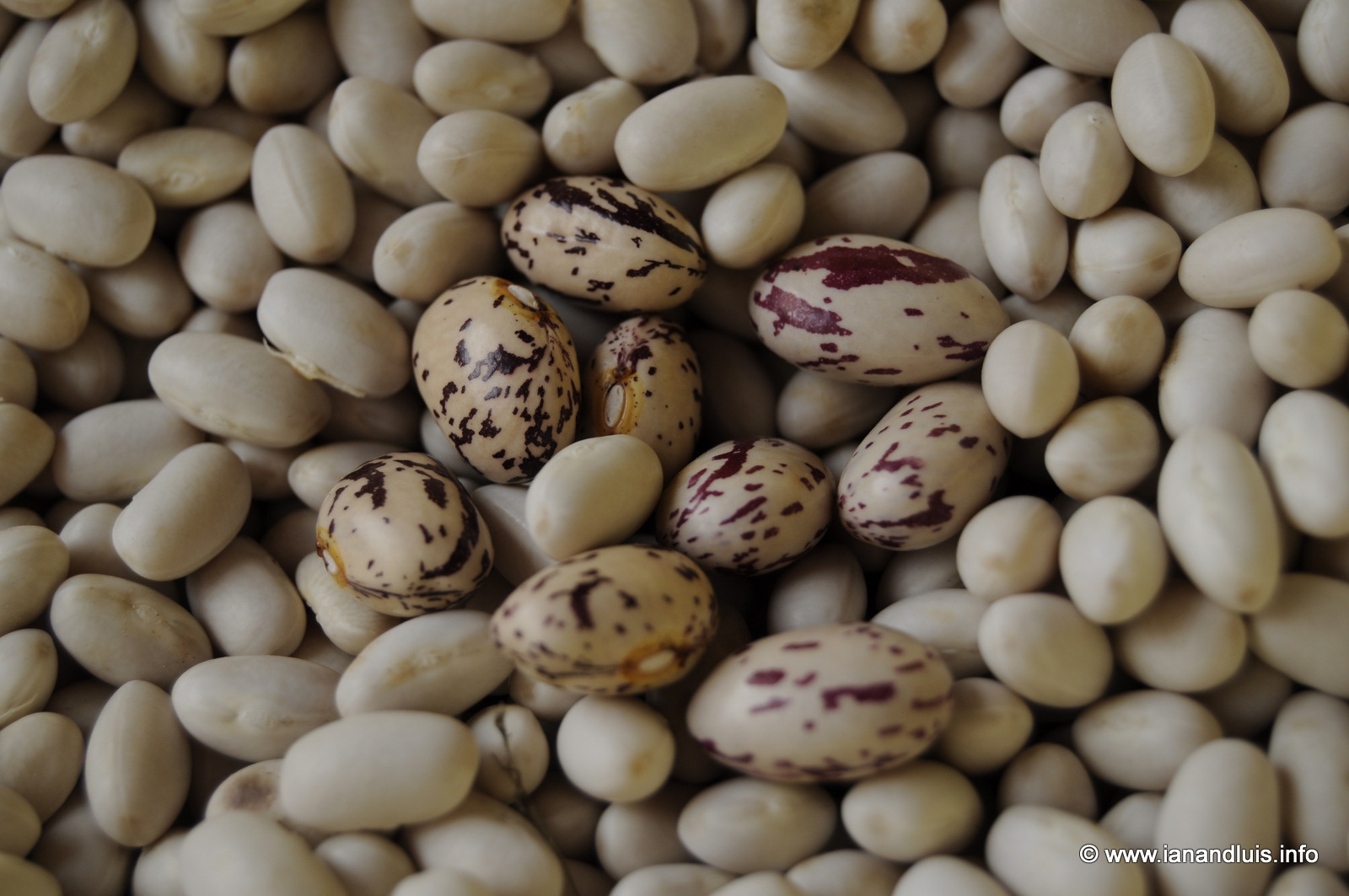

We sow our own bean seeds (dried from the previous year) in April indoors. These are then transplanted into soil when they germinate and put outside to grow on. We are fortunate in so much that we do not have frost and by April there is an ambient outdoor temperature throughout the night and day.


The young plants are put in the ground around the end of May. They are initially supported by an 'A' frame structure we construct out of locally sourced hazel. As they grow we may add additional support by introducing twiggy pea sticks.


Apart from ensuring that the plants wind their way through the support, they need very little attention apart from looking out for black fly which can be a problem if not caught early. We treat the black fly with soapy water with an additional spray of diluted alcohol if necessary: this usually works well.


The beans are eaten fresh as in green runner beans and dwarf kidney beans and what we don't use we leave on the plant to dry. When the outer casing is parchment-like we harvest, shell and leave to dry in the sun for a week or so. The dry beans are then frozen for 24 hours to kill any bugs and then re-dried before storing.


Our favourite dishes include home-made beans on toast, mixed vegetable and bean cassoulet, white bean and black olive pate, in salads and, bean and chestnut casserole. How do you eat yours?


The discarded bean plants are composted to provide much needed nutrients for the soil.

The insects are busy doing their work in the garden and helping, in their own unique way, the cycle of life, death and regeneration. More creatures from the garden can be found here:  Smaller tales .


Friday, November 08, 2013

The power of the flower

4 comments:
With the weather fluctuating between cold, blowy and damp through to warm, sunny and still, it is good to see some colour in the garden. Even on the dullest of days the sight of flowers, turning leaves and drying seed heads seems to lift the spirit.


The longer flowering season here at La Pasera results in having some flowers around most of the year, if not in the ground, then in pots and tubs.


The Christmas Cactus is in full glorious bloom at the beginning of November; flowering for the next 3-4 weeks if we are lucky. In past years it has had a second flowering around Christmas time so make of that what you will...


The Yucca is looking very regal at the moment with its long erect stem of jersey cream flowers contrasting sharply with the gold, red and deep purple leaves of the nearby acers.


The rockery plants have taken well and are beginning to spread amongst the crevices between rocks.


The insects are still visiting but in fewer numbers, a last ditched attempt to harvest reserves, lay eggs or find nesting grounds. Pollination continues.


The next opportunity you have, don't forget to look into the eye of a flower and let it lift your spirits.


Thursday, October 31, 2013

The garden in Autumn - chores to cherish

2 comments:
There is something rather beautiful about the onset of autumn. The growing season stalls as the days shorten, the sun and sky work together to cast the autumn glow.


The autumn crocus push through and bring a vivid blue and gold highlight amongst the leaves and grass. Where there were once was blossom, there are now seeds and berries. The leaves are changing shape and colour then will fall to the ground ready to be collected.

The leaves are disturbed by the strengthening southern winds that signal rain and storms. The winds can reach a balmy 26 degrees at any time of the day, evening or night-time.


The animals, birds and insects are preparing for wilder weather. Harvesting and nest building in readiness for a new season when hunters roam and resources fade.


Always something to harvest; apples, chillies, cauliflower, carrots, beetroot, kale...


A veil of wood-smoke drifts across the surrounding pastures as the sun sets and the temperature dips.


Autumn, the guardian of energy and new life.

And to finish, some beautiful words from Sarah Mathew at The Cailleach Writes...

Samhain blessing

As winter knocks upon your door and fires are lit within,
Open up your mind, your heart,
And let the seasons in;
Look past at bounty, harvests won,
Respect the earth, the moon, the sun
And when the winter seems too deep,
Remember close your friends to keep.
Take your peace and take your rest,
Live for now and know you're blessed.

Blessings


Wednesday, June 05, 2013

Fruit and vegetables we are growing this summer/autumn

2 comments:
It's been a cold start to the growing season with an exceptionally high rainfall and much cooler temperatures than normal for Asturias. Most seedlings and young plants are behind by a few weeks and we are hoping that now the warmer days are upon us, things will have a growth spurt.

2012

We run a crop rotation system and try to ensure that all the beds are given fresh nutrition from home-made compost. Most of our seedlings are started off in pots, seed trays or half pipes; this ensures we can give them the best start possible and protect them from slugs, disease and adverse weather conditions.

2012
So here we are, this is what is currently growing at La Pasera:

Cultivated Fruit: red currant, black currant, gooseberry, rhubarb, blueberry, raspberry, pear, apple, plum, peach, orange.

Wild fruit: piesco (wild peach), hazelnut, walnut.


Vegetables: potato, pea, mangetout, sugar-snap peas, fennel, chili and salad pepper, flower sprouts, cucumber, squash, marrow/courgette, lettuce (3 types), succession of beetroot, tomato, beans (2 types), red and white onions (400), kohlrabi, succession of carrots, butternut squash, spring onions...

Flower sprouts and tomatoes (under plastic)

Herbs: sage, dill, oregano, thyme, chive, mint, borage, comfrey, parsley, coriander, basil

and for later on in the season: cabbage, cauliflower, leeks, aubergine, broccoli, winter lettuce, swede, celeriac...


The good news is that most of the seedlings are now planted, protected and positioned to perform their best given good weather and appropriate attention. We will feed some crops with nettle juice and spray mildew prone plants with horsetail water. Insects will be kept at bay through symptomatic spaying with rhubarb leaf water or squishing by hand....ewe. Details of natural insecticide and fungicide here.

The slugs and the snails are on a late, hungry start this year also so we have added extra protection around young vulnerable plants by creating barriers of wood ash, broken eggshells or sheep fleece pellets.


The various pea crops are growing well but the Jays are enjoying early morning snacks and ruining the fattest pea pods. The scarecrow didn't seem to deter them but it took the cats two whole days before they approached it or dared to walk past it. They still give it suspicious looks when on their way to the bottom meadow.


Friday, September 07, 2012

Growing and eating carrots

2 comments:
Carrots are a favourite here at La Pasera. Until this year our efforts have failed miserably and we have had to use shop bought carrots which on the whole are tasteless and dull. Things have changed. Since we imported the 13 tonnes of sandy top soil, all the vegetables have improved beyond expectations and for the very first time, we have carrots, variety Nantes.


The first sowing didn't do anything so we think it was a bad batch of seed. The second and third sowing are doing amazingly well and we have now begun harvesting them.

We have so little rain in the past 10 weeks the ground is extremely dry and soon hardens so before harvesting we water the carrots to soften the soil. Give them 15 minutes or so and the with a gentle twist and pull, the whole fresh carrot comes out without snapping.

The texture and sweetness of the carrots is great. Not too sweet and a clean crisp bite allowing that true carrot flavour and aroma to come through.

The culinary use of carrots is endless and we will have a great time preparing new dishes in which to use them. Raw in salads or as a snack is one of our favourite ways to eat them so I doubt we will have many to store in the long run.


This following recipe is another great way of eating fresh raw carrot that we prepare on a regular basis, it'll be a real bonus now we will use our own carrots.

Carrot, Rice, Seed and Mint Salad

6 small to medium carrots - grated
2 sprigs of mint finely chopped
Boiled rice - wild or basmati
1 teaspoon of honey
75g raisins or sultanas (pre-soaked and drained)
Olive oil
Cider vinegar
Salt and pepper
30g Pumpkin seeds
30g Sunflower seeds

The key to making this salad is getting a mix of ingredients and flavours that do not overpower each other. Mix to your own individual taste. The sweetness of the honey, fruit and carrot is offset with the blandness of the rice and the acidity of the vinegar. Adjust quantities to suit your taste and mix.


Apart from Carrots, we are harvesting loads of aubergines, cucumber, marrow, beetroot, peppers, blackberries and fennel. Our harvests this year have been so good that we are sending out gift boxes to friends and neighbours who appreciate fresh, chemical free vegetables. Fruit hasn't done that well this year with few apples, no pears to talk off and no evidence of greengage. The wild peaches are struggling but there are a few to collect and use for jam. The walnuts and hazelnuts look to be laden with fruit so we might have a better nut harvest than last year.

The wild peach known as piesco


Tuesday, May 22, 2012

What's hot in the plot?

3 comments:
Asturias is renowned for it's unpredictable and changeable weather patterns. May this year has been unseasonally cool with lots of showers and days of chilling north easterly winds. This has resulted in plants and vegetables being a bit behind compared with other years but a few days of warm sunshine last week caused a sudden spurt of growth and vigour. The plot is looking hot and it's always exciting to see the results of planning and preparation.


In the vegetable garden, the addition of boards to create raised beds plus lots (but never enough) of well rotted manure and 8 tonnes of sandy top soil seems to have helped with the soil structure. Following where possible our crop rotation system, we were able to plan what goes where thereby minimising the chance of infections and poor growth. Luis keeps a record of germination dates, planting times and space allocation which helps a lot in keeping track of when to do what.

The potatoes are growing well and to date, there isn't much evidence of blight so fingers crossed they will continue to grow and produce a decent crop. The 400 onions are looking perky and beginning to swell and with a bit of regular weeding, they should do well over the next few months.


We are trialling 4 kinds of tomatoes this year and have planted 4 of each. Due to the climate and the possibility of sea mists, we grow the tomatoes under plastic supported by a metal frame. Just enough ventilation to keep an air flow but not constrained as to promote fungal infections. It seems to work well.

Coppiced hazel has been used to erect two sets of bean supports and we will be growing twice the amount we grew last year to harvest and dry. The peas, mange tout and sugar-snaps are still producing well and the challenge now will be to keep the Jays and Magpies away.

Sage flowers

Salad crops are blissfully happy and we have so much self seeded rocket, I might have a go at making some jars of rocket pesto for use on pasta and bean salads. Carrots are a first for us this year as until the soil was improved it was impossible to get them to grow in such heavy clay. They seem to be growing well and we look forward to fresh young carrots. There is still a lot to plant out including: squash, marrow, cucumber, aubergine, celery, fennel, peppers, celariac...and so on.


We have just ordered another 3 tonnes of sandy soil to complete the work needed on the vegetable beds and hopefully the weather will continue to improve so we can get the young vegetable plants in and established before the heat of summer.


Elsewhere in the garden the peach trees are setting fruit as are the apples. The pears this year seem disappointing but it is early days so we will see. The flower beds are looking good with lots of colour and many visiting insects to help with pollination. 


Thanks for the kind emails and messages, we do appreciate them. As always we would love to hear from you and hear about what's hot in your plot.


Monday, March 26, 2012

Potting up seedlings

2 comments:
If you are a regular visitor to this blog you will recall that this year we are trying to advance the vegetable growing season. We are thinking about investing in a greenhouse but until that day, all seedlings are raised in a small propagator against a south facing wall.

The seeds were sown in January and have been slightly slow to grow due to the colder weather we have experienced by the coast this year but eventually they sprang to life and needed potting up in a soil mixture we mix ourselves at La Pasera.


Our potting compost mixture varies according to the specific vegetable requirements in terms of drainage, moisture retention and fertility but the basic mixture contains a proportion of our own heavy clay soil, leaf mould we produce from the leaves we collect from the garden and perlite or vermiculite to improve drainage. If the are to be grown in the pots for more than a month, we add some fertility to the compost in the way of organic fertilizers. Our aim is to avoid the use of commercially produced compost and this year we are only using it for seed germination.


Our home-made compost was recently used to pot up the tomatoes, chilli peppers and Isla pepper (a fleshy pepper variety that does well in the cooler northern climate and that tastes sweet even when still green before it ripens).


In relation to the tomatoes, this year we are growing the Alicante tomato that we like and does well in spite of the high humidity we experience during Summer - being so close to the coast we can experience sea mists which can devastate tomato crops if not careful. In addition we are also trialling three further varieties of tomatoes that are supposed to be very tasty and that someone sent us in a seed exchange. This varieties include Marmande, Black Krimea and Ramallet a tomatoe variety from Mallorca that you harvest while the fruits are still green and hang up as if they were onions for them to ripen over several months. It will be interesting to see how they do with the high humidity. We will be spraying the tomato plants with a horsetail mixture and copper sulphate in an attempt to minimize the possibility of blight. So far the plants continue to grow slowly and over the next few weeks we will prepare the soil were the tomatoes will be planted and grown under partial cover. All this talk of tomatoes makes me start thinking of tomato and garlic or tomato and basil salads....Mmmm.


Tuesday, January 24, 2012

How to advance the vegetable growing season: germination of vegetable seeds.

3 comments:
Advancing the vegetable growing season at La Pasera without the use of a poly tunnel or greenhouse is something we have always worked towards. This year we are starting slightly earlier than previous years. Living close to the sea helps as we generally have much milder weather than further inland. We have already started to germinate beetroot, peppers, chilli peppers, tomatoes and sugar snap peas.

Germinating seeds outdoors from mid January without the aid of additional heat or protection is something we are trying this year. Normally a greenhouse or heated propagator would be required. In the past, we have started raising vegetables from seed in mid February. In essence we are advancing the season by 3-4 weeks.

This year we hope to start eating beetroot, peas, sugar snaps and mangetout from early April; we are hoping the milder than usual weather helps a bit. To crop so early, we start by kick starting the germination process indoors. The seeds are then sown in soil, in seed trays. The method we use loosely draws upon hydroponics. It is more time consuming than direct sowing or traditional seed sowing but it guarantees a greater rate of germination whilst advancing the season.

This is what we do:

The seed is soaked in a bowl of water at room temperature over night or until the seeds are rehydrated. Once the seeds have swollen, you need to sandwich them between the moist folds of a cloth that is then placed in a plastic covered container. This needs to be kept in a warm place, the kitchen is a good area for us. The cloth will keep the seeds moist and in a dark environment until the root starts to sprout. Once the seeds have germinated, sow the germinated seeds in a freshly prepared seed tray or half pipe taking good care not to break the tender root. Cover with soil, water and place against against a south facing wall. Once the seedlings are big enough to handle, you need to prick them out and plant in individual pots or plant directly into the soil in the vegetable garden.

Sprouted beetroot seeds

Sugar-Snap Peas

One disadvantage of this method, is the extra time it takes to raise vegetables, not a problem if you enjoy gardening like me and take the opportunity while working around the garden, to enjoy the birds singing in the background, witness the beauty of the first wild flowers in bloom and the scent of both wild and cultivated flowers at La Pasera and the surrounding meadows. The days are now getting longer and time spent in the garden will no doubt increase accordingly... and maybe we'll find the time to visit the local beaches for a bit of beach-combing.