Showing posts with label Rush. Show all posts

Tuesday, February 10, 2015

Restoring a suite of rush furniture

2 comments:
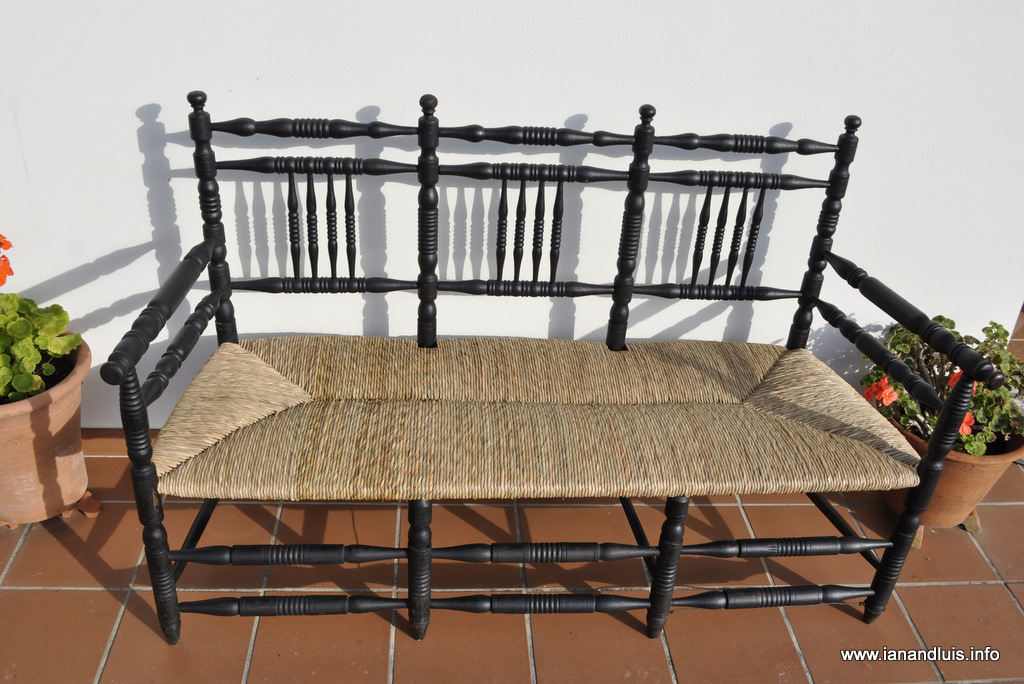
Rush chairs and benches are very comfortable and last many decades if used correctly and protected from the elements. Being a natural fibre it is prone to damp weather, mold, insects and breaking due to excessive weight. Most rush restoration is due to normal wear and tear following several decades of normal use. This custom made suite of furniture was brought for restoration by its owners; the suite is usually sited on an outside covered terrace. most of the rush had deteriorated due to damp and breakages. The structure of the chairs was not really appropriate for rush as the seat frame was very deep which would make forming the contours of the seat, difficult but possible with extra care and manipulation of the material.


The two benches, one with a detachable seat frame, had been designed for rush so were much easier to  craft into a comfortable seat.


After many hours of skilled craftsmanship the suite of cane furniture was re-rushed, re-waxed and collected by its owners who were delighted with the result. Advice regarding the care of the seating was offered and only time will tell if they heed it. All in all a lovely suite of furniture that would grace any dining area. Further information on restoration can be found at www.artesanialapasera.com


Monday, August 18, 2014

Demonstrating at a street market - Rastrillo

6 comments:
This past weekend we have been at a street market in a nearby village. It takes place every year and although small, it attracts a good number of people at this busy holiday time in Asturias. The proceeds from the pitch fees (6€ per meter) is donated to charity.


We use this particular market to publicise Luis' chair restoration skills. It is also an opportunity to sell some restored chairs and stools in cane and rush, the proceeds of which go to fund Luis' mosaic studies. We take a piece along to demonstrate how it is done, this time it was a seat from a barbers' chair. More often than not, a live demonstration always prompts people to stop or at least cast a glance in our stalls direction. We also took some pottery and bric-a-brac to reduce the amount of stock we have from when we used to sell at antique fairs in the UK. Any sales would be a bonus.


The stall-holders started to set up at 8am and the market was to run all day until 8pm, a long day giving us opportunity to watch the world go by in all it's different shapes, sizes, dress sense, style and pace. Following a slight dispute with our immediate neighbour who had invaded at least half a meter of our 4 meter pitch, we set up the stall and were open for action.


The Spanish, especially on holiday, rarely venture outdoors before 11am. The morning started slow with only a few passing pilgrims, locals shopping for fresh bread to have for breakfast, a few joggers, cyclists and walkers.


Before the street filled with eager browsers we took the opportunity to have a look around and see what was for sale. The majority of stalls are non-commercial, just ordinary people selling their excess. Some of the stalls are commercial such as artisans, antique dealers and jewelry makers whilst others are children selling toys and such they no longer cherish. Some children have stalls selling biscuits, cakes and tortilla that Mum or Granny has made. They have great fun throughout the day.


One special stall is run by two young girls who have a tank and display boxes with frogs, salamanders, slow worms, beetles, toads and other insects. They have a donation box and use the money to build habitats in their garden. Their brother used to run the stall but it seems other diversions have now distracted him. We usually donate to this as they are obviously very passionate and knowledgeable about wildlife which is impressive at such a young age.


One aspect of a Spanish street market like this (Rastrillo) that we cannot work out is why everything is so expensive, especially the commercial traders. Some of the tat on display was grimey and to be honest we would have been ashamed to display in such a dirty and unkempt state. Other pieces were outrageously expensive such as a couple of old and very large, glazed cooking pots. We enquired about one as they would have made brilliant free-standing ponds for the terrace... 150€ each!


We have a great day all in all and sold all of the chairs, and quite a bit of old pottery and glass. Many passersby took business cards and enquired about chairs to be restored so hopefully that will translate into future work. Surprisingly we didn't buy anything which is a good thing in a way as we are conscious that we have too much clutter and need to downsize further rather than accumulate things. The glazed cooking pots were still there at the end of the day as was most of his stock, I wonder why?


Despite looming dark clouds coming and going, the weather held and the wind stayed calm. We ate well, met loads of friends and neighbours, absorbed the atmosphere and watched in wonder as the world passed by...Until next year. Hasta luego.


Friday, January 31, 2014

Rushing chairs, a craft of restoration

3 comments:
The craft of chair rushing has always fascinated me. Some years ago, I could not let the opportunity pass to learn this craft. It all came about after visiting a Saturday craft fair held in Holmfirth when we lived in South Yorkshire.


I eventually got to know Heather Pearce, a stall holder who sold already restored chairs and who demonstrated chair caning and rushing. Heather kindly agreed to teach me how to re-cane and rush a chair. Over the Spring and Summer months, I joined her at her market stall and she kindly taught me these beautiful crafts.


I wanted to learn these crafts as it was something I could do when we eventually bought a home here in Asturias. One of the initial challenges was how to promote myself and to this effect I started writing a blog in Spanish: www.artesanialapasera.com. I also started demonstrations during crafts fairs locally.

I soon started getting some work after handing out business cards during demonstrations and through the blog and local furniture and antique restorers.

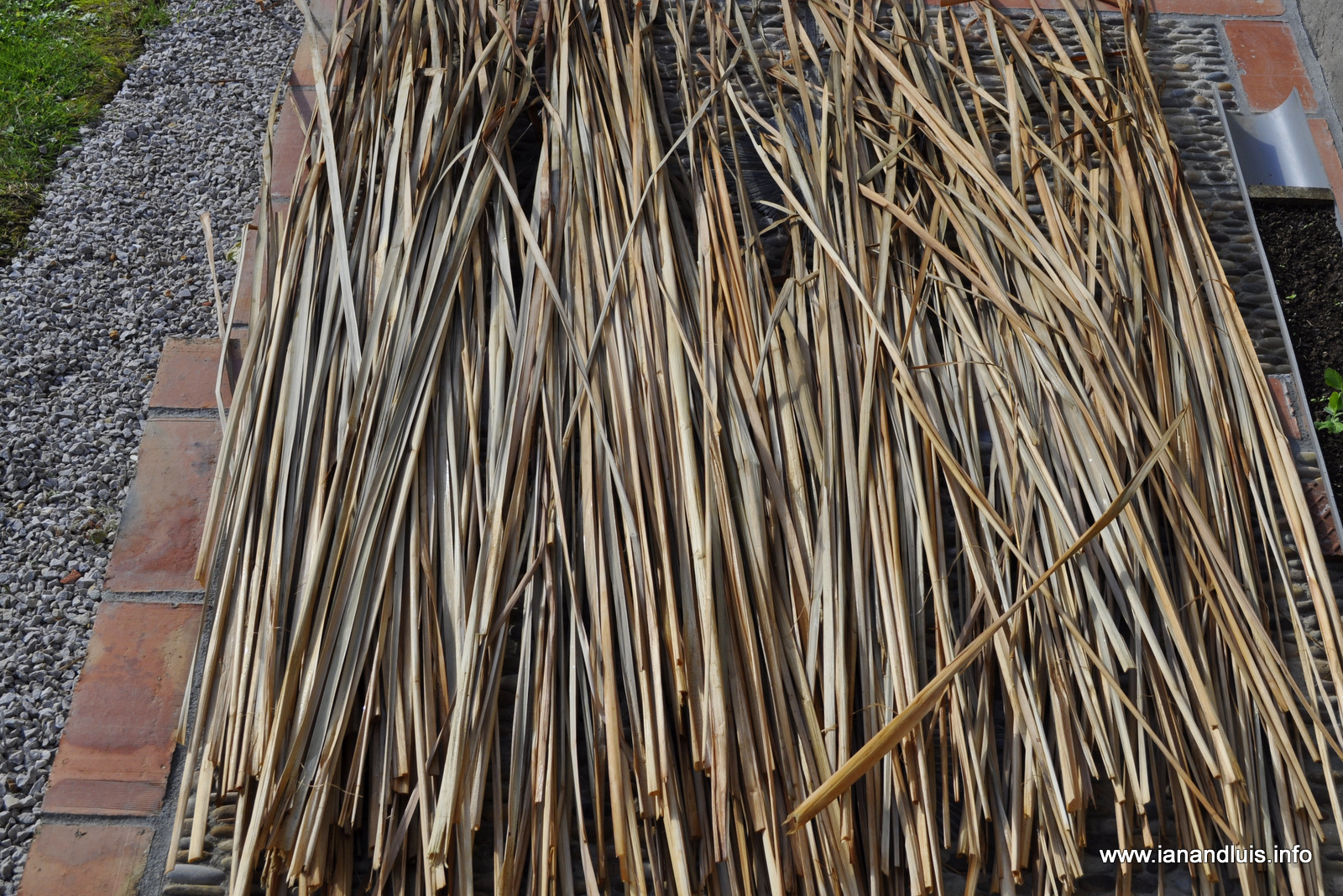
Another of the challenges I found was to obtain the rush. In the UK, it was available through various outlets, imported from Holland but in Spain it took some effort to find who would sell it in the small quantities I usually require. It is getting harder to get good quality rush in Spain as those who used to harvest it no longer feel it is financially worth their while and the authorities are reluctant to grant the required permits. I recently found out about a company that may be willing to post to Spain so we will see what the quality is like.


Rushing a chair is a craft that takes its toll on your hands but I always celebrate the beauty of a newly rushed chair and being able to give a second lease of life to the beautiful chairs, stools and benches I have had the opportunity to re-rush over the years.


Good quality antique chairs are fairly uncommon in Spain for a variety of reasons and most of them show sings of neglect, woodworm infestation and very often, structural damage with bad repairs. Having said that, it is still worth restoring them and after the new rush seat is woven they look fantastic with their shabby chic appeal as is the case of these two chairs I recently was asked to re-rush.


When I got the chairs, first of all, I had to treat for woodworm even when there was no signs of it being active - just in case. I also had to dust them and even clean some bird droppings before I considered re-glueing some of the joints.


The decoration was very damaged in parts but its style and structure reminded me of a chair I re-rushed some years ago and that was decorated by one of the Uria Aza brothers, artists from Ribadesella who in the 1950's finished painting the beautiful frescoes in Ribadesella's St Mary Magdalene's church that were started in the 1920's.


Monday, May 06, 2013

Restoring rush seating

No comments:
There is nothing more beautiful than a newly rushed seat on a good quality or older frame. You can totally understand why it was used as far back as the ancient Egyptians. In addition to cane seating, Luis learnt to re-rush chairs and benches from the same lady who taught him bergere cane work in Holmfirth in the UK.


Rush is a difficult material to work and takes quite a bit of mastering before you get good results. Each batch of rush is different depending on the quality and whether it is sea water or fresh water rush. Each chair or bench varies and the stretchers are not always equal thereby making the meet in the middle problematic.


With Luis' blog www.artesanialapasera.com , many people contact him to restore chair seats, not all enquiries result in work. To re-rush a seat is time consuming and decent rush is difficult to source. Each chair can take many many hours and therefore it isn't cheap. Rush work is also tough on the hands and fingers as you need to retain tension and twist to form the strands for weaving. The rush is worked wet/damp which adds to the problem.


This bench, recently completed for a house locally took a total of 30 hours to finish to this standard, not including the packing of the seat and drying.


We recently collected two chairs that need renovating with new seats. The chairs have old woodworm that seemed no longer active but we never take the risk and always treat immediately any pieces we bring to the workshop.


We wouldn't normally restore the frames of chairs and if active woodworm was present we would ask that the chairs be autoclaved first. In this case the chairs have old inactive woodworm so the treatment is just precautionary and the loose arm is a straight forward glue and clamp job which isn't a problem. We will post pictures of the finished chairs in a subsequent post.

Friday, December 14, 2012

A restored antique rush bench

4 comments:
Luis has just restored a beautiful antique rush-seated bench, a three seater, for a gentleman in a nearby village. The piece is normally housed in an Asturian palace which is absolutely wonderful, full of stone floors, elaborate stonework and an impressive internal courtyard. Now restored, the bench will sit well  in a gallery or landing.


The seat had completely gone and new rush was required. We source our rush from Spain after stockists in the UK no longer have it. We have a few problems with quality control and have to carefully examine a delivery of new stock. Sometimes the rush is of very poor quality and impossible to use for a high standard finish.


The rush is probably harvested in Spain or maybe Holland and imported. There are tight controls on commercial gathering of rush and suppliers not that easy to identify. There are two main types of rush: fresh water and salt water. This rush was probably salt water but flat reeded instead of round. It is not the easiest of rush to use but Luis has done a great job with this piece.