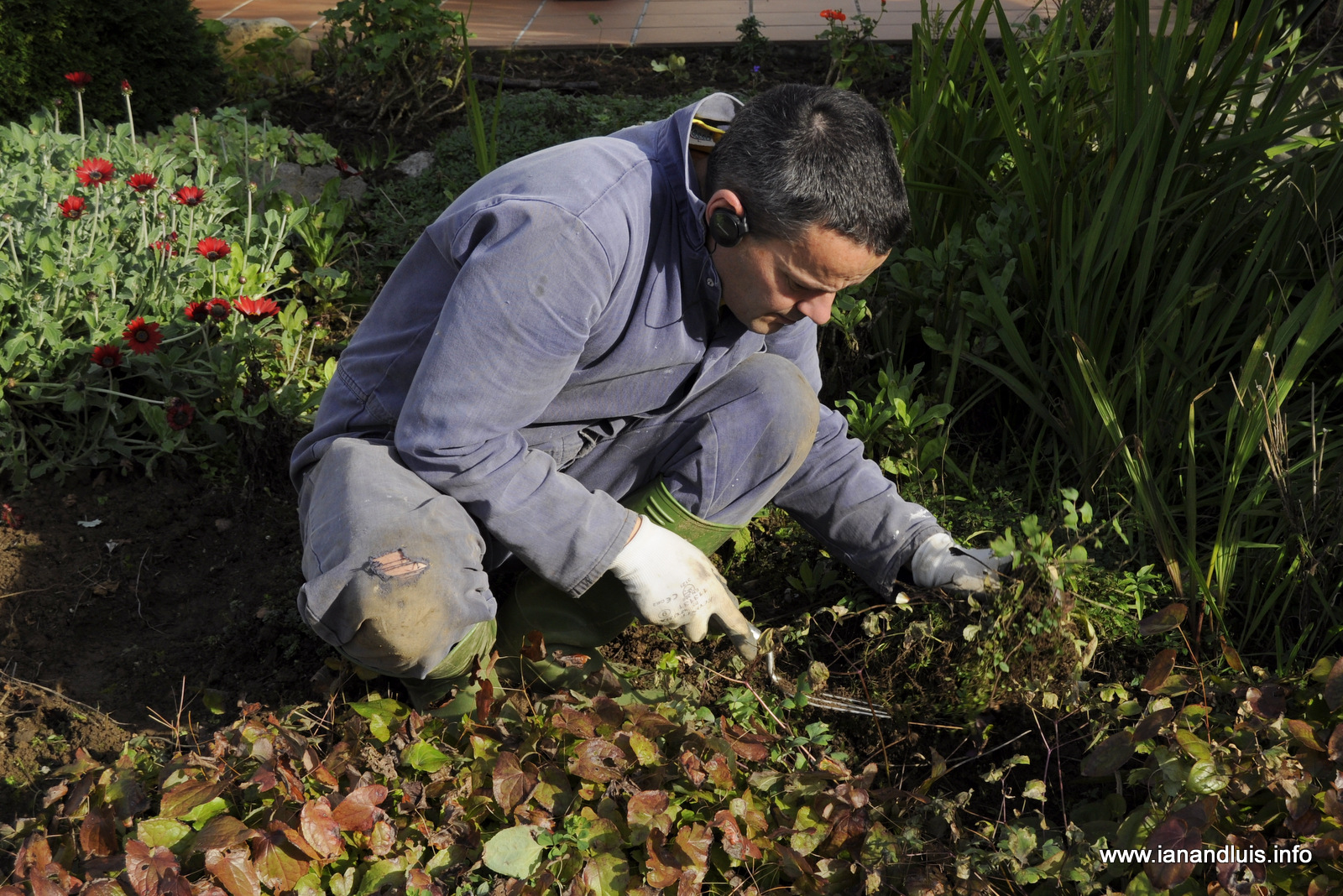
The weather continues to be cooler than usual with several days of prolonged drizzle and low cloud. Sunny days have been few and far between but never-the-less the garden is looking colourful and filling out at a pace; sadly, the flowers do not last long enough when they get saturated in the persistent drizzle. We tend to wander around the garden daily to spot what is happening, to see what's in flower, prioritise weeding and spot any potential problems such as infestations and damage. We noticed several heavy infestations of aphids on the fruit trees. We had been told about a soap based product (soft potash soap) that is supposed to help eradicate such infestations so we bought some and have sprayed all the fruit trees to see if it works (50g/litre of water). We will let you know how efficient it is.


There are several spectacular flowers and plants in bloom at the moment including: The bird of paradise which we rescued from a house in the next village. It was constantly on the floor, dry and in a bad way so we knocked on the door and asked if we could take care of it. The lady said yes and with a bit of tender, loving care, it is back in great shape. It just needs re-potting now in something appropriately splendid.

The bee orchid is common in these parts but we have found some in the garden amongst the flowers - We are not sure if it is a bee orchid or a woodcock ophry (thanks Nigel) as they are almost indistinguishable, they are truly lovely and we will encourage their spread. We now have at least four types of wild orchids that grow in the garden.

The Alliums are in full spectacle. As you approach they appear like miniature galaxies suspended in green space. Their structure and form are fascinating and a wonderful distraction.

A few years ago we planted a series of terracotta roof tiles with succulents. These were easy to make by blocking off the ends with pebbles and cement, filling with soil, adding plants and a few decorative pebbles and topping off with fine gravel. We have lined the steps down into the garden with them and they make a lovely addition and need very little attention.


Luis has been busy making mosaics in between all the other things we get up to. He has just completed two column bases for a mosaic table he made some time ago. They are designed so that they can be used independently but we will use them with the top as intended. The are a lovely addition to the terrace. We will feature them in-situ once fully dry (currently sealed and awaiting positioning).

Elsewhere the garden continues to keep us occupied with lots of fruit and vegetables to sow, maintain and harvest as appropriate. The lawns need regular cutting and the flower borders need dead-heading to prolong the flowering season. There is always something to do but it brings with it the opportunity to savour the beautiful colours, shapes and structures that nature provides. What do you enjoy in your garden?


There are several spectacular flowers and plants in bloom at the moment including: The bird of paradise which we rescued from a house in the next village. It was constantly on the floor, dry and in a bad way so we knocked on the door and asked if we could take care of it. The lady said yes and with a bit of tender, loving care, it is back in great shape. It just needs re-potting now in something appropriately splendid.

The bee orchid is common in these parts but we have found some in the garden amongst the flowers - We are not sure if it is a bee orchid or a woodcock ophry (thanks Nigel) as they are almost indistinguishable, they are truly lovely and we will encourage their spread. We now have at least four types of wild orchids that grow in the garden.

The Alliums are in full spectacle. As you approach they appear like miniature galaxies suspended in green space. Their structure and form are fascinating and a wonderful distraction.

A few years ago we planted a series of terracotta roof tiles with succulents. These were easy to make by blocking off the ends with pebbles and cement, filling with soil, adding plants and a few decorative pebbles and topping off with fine gravel. We have lined the steps down into the garden with them and they make a lovely addition and need very little attention.


Luis has been busy making mosaics in between all the other things we get up to. He has just completed two column bases for a mosaic table he made some time ago. They are designed so that they can be used independently but we will use them with the top as intended. The are a lovely addition to the terrace. We will feature them in-situ once fully dry (currently sealed and awaiting positioning).

Elsewhere the garden continues to keep us occupied with lots of fruit and vegetables to sow, maintain and harvest as appropriate. The lawns need regular cutting and the flower borders need dead-heading to prolong the flowering season. There is always something to do but it brings with it the opportunity to savour the beautiful colours, shapes and structures that nature provides. What do you enjoy in your garden?