Showing posts with label compost. Show all posts

Sunday, March 29, 2015

The first grass cut of the season.

4 comments:
The grass has taken a bit of a beating over winter with excess rain and a few rare frosts. The growth has remained stunted but it has given dandelions and daisy plants time to gain a strong-hold and proliferate now the better weather is here. After a couple of warmish days and light breezes, the grass is ready to be cut; the first of the season.


The grass cuttings are layered with dry material in the compost bins and overtime it will rot down and be put back into the garden. We try to make as much compost as possible; if you grow vegetables, you need as much compost as you can produce and more.


We don't have a lawn as such, the land used to be an old neglected orchard and meadow. It would be impossible to create the perfect lawn as we are surrounded by fields and meadows, plagued by land voles, abused by the wild boar and use the garden as a work, rest and play area. This suits us and as long as the grass/weeds/mosses are kept in check, it really doesn't look too bad.


We have just had the strimmer serviced and it is starting and stopping when it should, I think we really should have the petrol lawn mower serviced and sharpened as well as it is chugging along at times and takes some battering.


We have left most of the borders as they are filled with celandine's, primroses and narcissus. We also have a few wild orchids that are yet to show their heads so we will probably leave the grassy borders until May or June when we will strim or scythe and let the grasses and seed heads dry and fall before collecting.


It is a real pleasure to feel the warmth of the sun on your back again after what has seemed a really long and dull winter. We are looking forward to the months ahead in the garden and hope to finally finish the front gardens and driveway.


Thursday, November 27, 2014

Autumnal jobs around the garden - the working area

2 comments:
Every season brings with it the need to keep on top of work in and around the garden. Autumn is especially busy for us. Surrounded by mature trees, we have many fallen leaves to collect which provide us with leaf mold for the following year. The colours of autumn are especially vivid this year prompted by an extended warm and dry period followed by cooler and damper weather.


Our main working area in the garden is down by the potting shed. When we first came here we built a partition hedge/fence around it made out of coppiced twigs, branches and logs: an idea we saw first used at Worsborough Reservoir in Barnsley, UK. This has worked well for us and has not only provided a natural looking compound around the working area but also a haven for wildlife including slow worms, beetles, lizards, birds, amphibians, mice and many moths and other insects which are so important in maintaning the natural balance in and around our vegetable beds and small orchard. We call this creation a fedge for want of a better word.


The fedge has served us well and each year we add more and more surplus branches and used bean poles and such which over time rot down and provide a valuable habitat - a functional and manicured wood pile. From time to time we have repaired it with new supports cut from coppiced hazel and last year we added discreet iron bars to help hold its shape and substance.


This year we will have a lot of coppiced hazel to add to the fedge so we decided to purchase some treated posts which will increase the height of the fedge and enable us to add a lot more material.


At the same time of renovating the fedge we decided that the leaf bin needed replacing as it had begun to rot and break apart. Fortunately we had a few pallets in stock from recent building work so with a bit of tweaking, a few nails and a staple gun we were able to produce a replacement leaf bin which is much stronger, slightly bigger and that will last us a good few years.  We will need to think about replacing the compost bins next year and we still need to re-treat the shed with preservative but for now, the working area is once again fully functional and will serve us well in the coming weeks as the autumnal garden jobs are tackled.


More creatures from our garden can be found on Smaller Tales from Toriello

Sunday, May 18, 2014

Down on the vegetable plot in May

2 comments:
May is a busy month down on the vegetable plot. There are crops to be picked, seedlings to be cared for, compost bins to empty and beds to dig. Not to mention giving the tomatoes and potatoes their aspirin, weeding and caring for the young vegetable plants.


Seedlings grow strong against the south-facing wall of the workshop which has residual heat from the mid-day sun, also given out by the limestone of the rockery.

A lizard basks in the sunshine

The mange tout have cropped and continue to crop well, we have just had the remains of the ruby chard, leeks and fennel, and lettuce and radish are producing daily. Beetroot, spinach and elephant garlic thrive well together and will soon be offering up lots of fresh food we will enjoy.


Slow worms in the compost bins

We work on a crop rotation system that makes the use of our four large beds. Last years brassica bed is now being dug over compost and horse manure added. This bed will take the beans, squash and cucumber amongst other things.


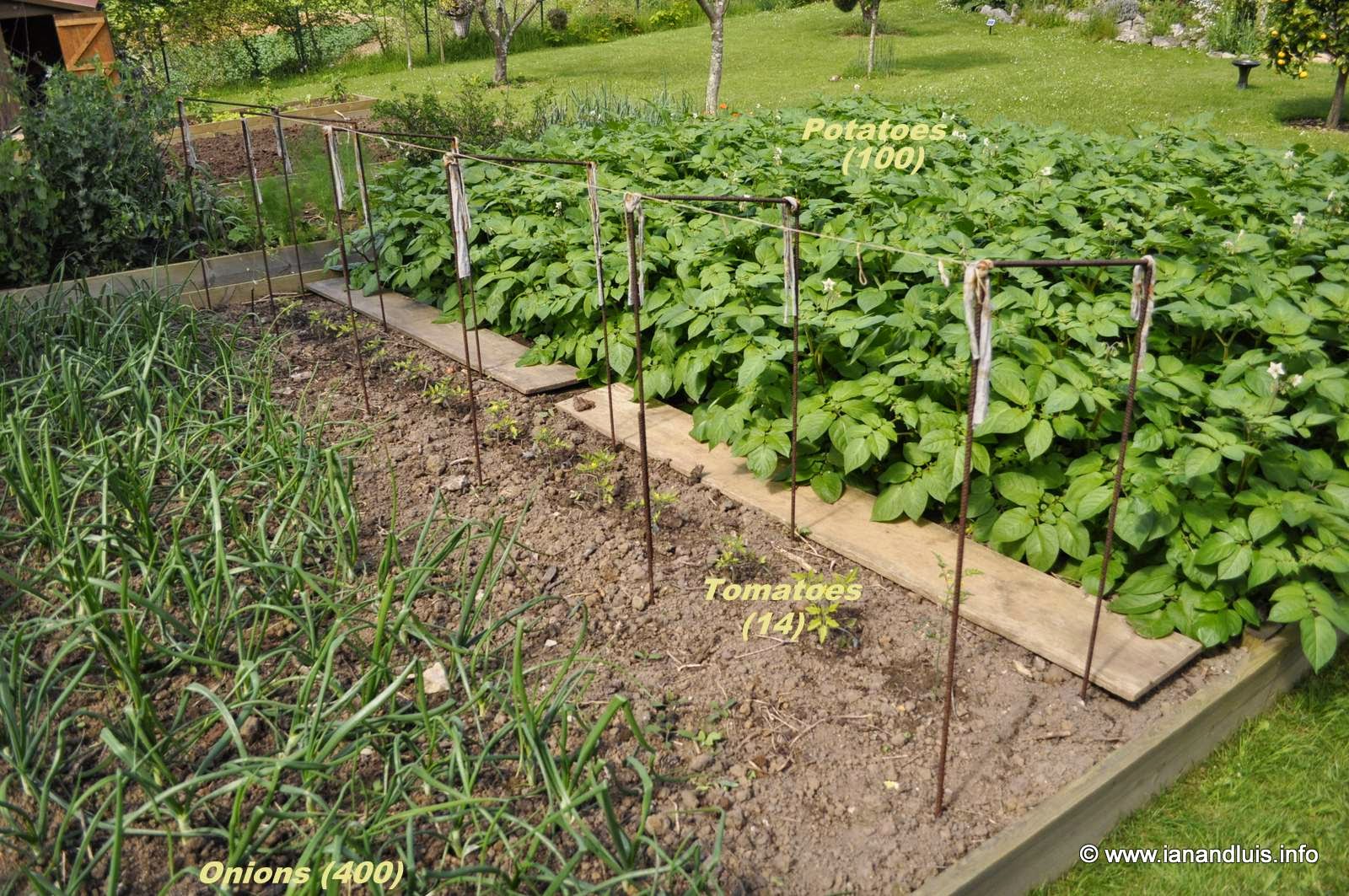
The kohlrabi is swelling and showing off its aubergine coloured body. The 100 early onions are fleshy and ready for using, from the plot to the kitchen. The later onions are growing well and making the most of the few wetter days we had earlier in the month.


In the potato bed we've seen a terrific growth spurt, the tomatoes have been planted and are ready to be semi-covered to keep out the sea mists we sometimes experience at this time of year. Both the potatoes and tomatoes have been sprayed with a weak solution of aspirin to help the plants strengthen their defences against virus and bacteria. Hopefully this will help them resist blight which can be a big problem here once it gets hold.


A solitary bee faces up to the camera


Saturday, March 22, 2014

How we grow onions

2 comments:

Onions are a vegetable we simply adore and with the exception of last year when due to adverse weather conditions we lost the entire crop, we tend to be self sufficient throughout the year. We use lots of onions in salads, cooking and in the home-made pickles and chutneys we enjoy and share with friends and family.


Growing onions is relatively easy as they are a fairly trouble free vegetable provided that you use a rotation system so that you avoid growing them in the same spot for at least 3 years. The rotation system we follow at La Pasera means that it is on the fifth year that we plant them in the same spot. Avoiding growing them in the same spot on consecutive years helps to minimize the chances of onion fly infestation not only destroying your crop but also of your soil becoming depleted of specific nutrients.

Onions can also be susceptible to downy mildew in particularly wet seasons as it was the case here at La Pasera last year. In spite of applying a fungicide based on horse tail they failed to thrive and we lost the entire crop so this years we are hoping for a better growing season. Time will tell.


Onions can be grown from seeds sown by late September, alternatively you can buy onion plants or small bulbs (onion sets). We normally buy young onion plants at the local weekly market from a local grower who grows varieties that will better withstand our temperate but humid climate during the Summer months; besides, the little plants are already used to our local climate conditions as opposed to those grown in other parts of the country.

We grow four hundred onions, enough to see us through the season and to share with friends and family after they get strung in mid Summer. We find that the red and white onions (150 of each variety) keep very well and usually are ready to be harvested by mid July while the early ones will start cropping in May.

This year we will soon start cropping the ones the planted in November, so far they look great.


We aim to have dug the green manure in the bed where we plan on planting the onions by late January or early February. After 3 weeks we also dig in our own compost. This ensures a good supply of nutrients and will maintain soil humidity during the hotter Summer months.


We also collect some bags of very well rotted farm manure from a farmer who lives in a nearby village. This is a very crumbly and black substance with lots of worms that will provide fertility to the small onion plants and also helps to improve the soil structure.


Planting onions is a job I enjoy in spite of the effort and few hours it takes to complete. The day we plant the onions, we use some wooden planks  to avoid compacting the soil by walking on it and after creating a shallow drill we add some of the well rotted farm yard manure before we water the soil with rain water we collect from the shed roof. The onions will then be gently pushed into the wet ground before their roots get covered with soil. This is the only time we will water the onions as the rain fall will provide the moisture the onions need. Local farmers say that onions are a crop that should not benefit from rain fall during August. In other words, in Asturias it is advisable to harvest the onions before August. Ours have never lasted past mid July.


This year, both Wentworth and Gawber came down the vegetable garden as I was working and provided me with a good excuse to have a break. Wentworth enjoyed rolling over the soft soil before going onto the shed's roof and Gawber filed his nails on a wild cherry tree before going hunting and coming back to present me with the land vole he had caught.


Sunday, May 12, 2013

Slow Worm: Anguis fragilis - Coitus Interuptus

4 comments:
As regular readers of our blog know we love Slow Worms. They are a legless lizard and are known to be semifossorial (burrowing) in their nature but spend a lot of time, especially at twilight, looking for food i.e. slugs and worms. They enjoy basking in the warm sun and especially like damp places such as long grass and cavities in rocks. Like other lizards, they have the ability to shed their tails if captured by predators (autotomise) but it will re-grow, only smaller.


Our compost heaps are like magnets to the local population of Slow Worms. They love the warm and damp conditions and can often be found under the black plastic covers. This week we were just about to empty one of the compost bins when Luis screeched as he unveiled a pair of magnificent specimens in the middle of mating. On first sight he thought it was a snake (he hates snakes but loves Slow Worms).


Needless to say we couldn't move them and left them to carry on with their Friday afternoon affair. Later in the day we returned, they had finished their coupling and we carefully moved them to another compost bin where they could lie back, listen to a bit of Barry White and whisper sweet nothings to each other.


They give birth to live young so we eagerly await their arrival and the future decimation of our slug population. More about Slow Worms here.


Thursday, February 28, 2013

Crop rotation and companion planting in the vegetable beds

3 comments:
Since we first started growing vegetables at La Pasera we have always made notes on what was grown where and when. As the beds have developed, we have kept small diagrams of them with brief notes indicating crops. Salad crops and spare seedlings are often put in empty spaces in-between the main crops.


I suspect that as we don't grow mono-crops, crop rotation makes very little difference but we do it anyway. Unfortunately we don't produce enough home-made compost to replenish the beds on a yearly basis nor do we have a great supply of manure but the compost, manure, leaf mould, ash, and green manure that we do have access to seem to keep the beds in good condition and healthy.


We try and remain organic in our approach to food production and will only use natural pest controls and organic products on the garden. Where possible we make our own including nettles or comfrey as a natural fertiliser, garlic and soap spray, rhubarb leaf and horsetail concoctions for insecticides and fungicides.


It's all a question of balance at the end of the day. Our methods try and encourage natural cycles, attempt to promote the natural food chain and do as little harm as possible in doing so. A healthy garden is one that works with nature not against it. We encourage the birds and we have created a range of habitats for insects, amphibians and small mammals. The pond, fedge, wild areas, woodpiles and bog garden all contribute to the control of pests to maintain and nurture a natural balance.


We are lucky with the climate here in Asturias as it is mild enough on the coast to grow throughout the year. The recent addition of sandy topsoil and making raised beds has been a real help in producing all-year-round crops as we are no longer struggling with clumpy clay which inhibited winter crops.

2012 

This year we are expanding our companion planting as last year's efforts seemed to pay off. We will plant nasturtiums amongst the beans to attract the black fly, carrots amongst the leeks and onions and marigolds for general help. We might try some borage but I doubt if we'll manage to source it here.


Do you have any tips on companion planting? What grows well with what? Get in touch or send us a link, we welcome tips and experience.


Monday, November 05, 2012

Preparing the vegetable beds for winter

No comments:
There is a break in the weather and although still cool out of the sun and in the evening, the rain has stopped and the wind is helping dry out the soil and garden. It is an ideal time to clear the vegetable beds as they come to the end of their producing cycle.


After a very productive year in the vegetable garden, it is time to give the empty beds a little tender loving care. The bed we concentrated on today had grown: beans; courgettes; marrows; radish; parsnips; carrot; beetroot; herbs; squash...It had produced well and now needed attention.


The old plants were removed and composted. We have two main general compost bins which in turn will be allowed to break down and then dug back into the beds. The fuller bin will be ready for using in a few weeks time before we plant potatoes and onions. We never have enough compost so we compost everything we possibly can.


Luis added more sandy top soil to the bed and dug it over lightly. The addition of the new soil has really helped break-down the heavy clay and it is much more manageable. Oats were then scattered and then raked in. The oats will grow over the next three months then they will be dug back into the soil as a green manure. The cats also love to eat the fresh green shoots of oats so they will be pleased.


If we manage to source any manure, that will also be added to the bed.

Elsewhere in the garden we are continuing to clear the leaves, tidy up for winter and we have begun to survey and prioritise the building work we are yet to do but hope to start soon. We have had a leak in the newly built garden tap so that has had to be partially demolished, repaired and is awaiting re-build.
Wentworth and Gawber are out more during the day, hunting land voles in nearby meadows and generally enjoying the warming rays of the sun.


Thursday, May 31, 2012

Top soil and manure

No comments:

This last week saw the delivery of a further 3 tons of top soil. That makes 13 tons in total we have added to the vegetable beds. It sounds a lot but it doesn't go that far. We are trying to improve our heavy clay beds by adding a sandy top soil, well rotted manure and home-made compost from the bins. It is working but we could do with more manure.

Many of the small dairy farms with antiquated faciities have been closed down by the EU, so our local supply has dried up. There are no stables nearby or any that can readily supply an accessible supply of manure however we have found a huge mound of black gold. We walked past one day and Luis spotted a 3 meter high pile of around 25 sq m. It was overgrown with weeds but one corner had been dug so we could see the layers of extremely well rotted manure crumbling away. Luis asked the owner of the plot if we could have some. He just happened to be related to a lady in our village (so he already knew of us), he said we could take as much as we wanted at any time and was pleased to be making space to add yet more. We have bagged and transported a couple of estate cars worth and need to continue collecting over the coming months.

Spot the cat...

We have two large compost bins that take grass clippings, fruit and vegetable waste, cardboard, dried grass or straw and anything else that remains from vegetable growing, pruning or reduction. Two bins for leaf collection provides a source of nutrient rich leaf mould.

Preparations for young vegetable plants

Our two neighbouring houses are holiday homes and the gardens are mainly lawns. Both sets of neighbours are happy for us to have their grass clippings which will help increase the volumes. A third supply of grass clippings is delivered by some other neighbours from the village who visit their Asturian home regularly otherwise it would be binned as they have no use for it.

Since boarding the vegetable beds and adding sandy topsoil we have noticed less slug and snail activity and fewer problems from land voles.