Showing posts with label Organic. Show all posts

Friday, April 10, 2015

Knowing your onions...

6 comments:
When something works, why meddle? 


Onions have always cropped well for us, granted, some years have been better than others but on the whole we usually grow enough onions to last us most of the year. We use a lot of onions in cooking, in chutneys and pickles and in salads. This year like previous years we have planted 150 early onions, 150 red and 150 white. Together with spring onions and leeks we will, mother nature willing, have enough at harvest time to last throughout the year.

The ground is prepared by ensuring it has lots of compost and green manure dug in and left for a few weeks for the worms and micro organisms to start their work. We buy our main onion crop as small plants from a local grower who has a stall in Ribadesella market. Although they are not organic, we will grow them on using organic principals. We bought 400 onions and 12 lettuce from him for 20€.


We look for a good green and strong plant that has been well watered and not left to grow too leggy in the plant module. We have always been pleased with the quality of his stock.

We give the onions a good start in the ground by supplementing the rich soil with extremely well rotted manure. We have found a source near to us from a local farmer who has a few cows and horses. Over the years he has just piled up the manure and it has turned into black gold. We usually drop him off a bottle of home made liqueur based on Orujo and orange which we know he likes. We take the car up, fill a few sacks and off we go.


Heaps of black gold

A small trench is dug and filled in the base with black gold and then watered. The onions are laid out about 15cms apart, the trench filled and the onions bedded in. A final watering is pretty much all there is left to do and apart from a bit of light weeding from time to time and spraying with a natural fungicide, the onions will grow and swell without little interference from us.


Knowing our onions, the conditions they like, when and when not to spray and when to harvest works for us and results in a year round supply of delicious red and white onions for cooking and preserving. What are your tips on onion growing, maybe leave us a comment below or a link to your blog and we'll check them out? I bet they're not as big as ours.... ;-)


Thursday, November 06, 2014

How we prepare the vegetable plot for Winter

7 comments:

As the days get shorter we start noticing a drop in the temperatures, especially first thing in the morning, that contrast with the hot sunshine we experience in the middle of the day. This warmth encourages a spur of growth not only in the vegetable plot but also in the garden and miniature gardens where the Lithops or pebble plants start to bloom.


The hot and dry weather we tend to get by the coast at this time of the year encourages the last of the aubergines and peppers to ripen whilst the Winter crops start coming into their own. In another post I will write about what is happening with the crops that we will be harvesting as Autumn deepens and Winter becomes closer.


The red peppers will be bottled, we freeze the green ones to use later in cooking whilst the aubergines we will be frozen after they are grilled or made into a pate.


In the vegetable plot, one of the main jobs we normally undertake at this time of the year is the clearing and composting of all those vegetable plants that have come to an end and digging of the soil in readiness for sowing oats as green manure.

Home made compost is a valuable resource and you can never have too much. This year the Summer months were unusually dry and as a result the garden produced a much smaller amount of organic matter that goes into the compost bins. At the beginning of Autumn, one of our compost bins was only half full and the other completely empty rather than both been bursting to the rim. We brought a few barrow loads of dry grass from a nearby meadow that our neighbour would have otherwise burnt. This grass comes from a meadow where animals graze and no chemicals have been used.


An important health and safety aspect to take into account when dealing with drying grass is the amounts of spores that semi rotten grass produces. These spores are a respiratory sensitisers and can lead to chest problems if breathed, hence the use of a mask. 

With the several barrow loads we brought in, we should have enough compost to dig into the soil when the next growing season starts in late February or early March. As the grass was rather dry, we had to water it to ensure it rots over the Winter months. 


Another of the big jobs that we normally undertake before the wet and cold weather season starts is the preparation of the soil in the areas now empty of growing plants in readiness to sow the oats as a green manure.

We considered buying a mechanical rotovator but decided against this once we found out that using these devices would kill most of the earthworms, an invertebrate whose benefits to the soil are numerous as they help the break down of organic matter and improve soil structure with the tunnels they create which also help improve soil compaction and aeration. Consequently, we use a spade or garden fork to dig the soil. It is nice to see how the earthworm population appears to increase year after year and as a result of the organic matter added to the soil.


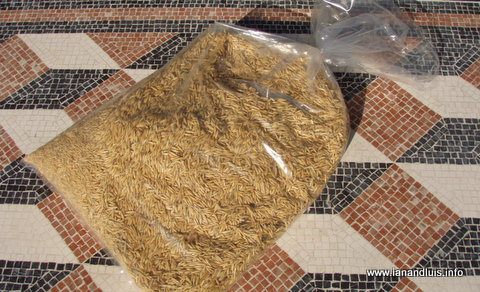
Once the soil is dug over, a light sprinkling of oat seeds is applied over the whole surface before the seeds get gently raked into the soil. Some people leave the oat seeds to germinate whilst they lay on the soil surface. We favour covering them lightly with soil by raking them in.

As the oats grow, their roots reach deep into the soil breaking it up and thus improving its structure. With the oats covering the surface of the soil, seeds from weeds are less likely to germinate. The benefits from sowing oats or any other type of green manure at this time of the year are many.


We will often see Gawber and Wentworth eating tender oat shoots to purge themselves, another good reason to continue sowing oats at this time of the year. We find the oats will start germinating within 7 to 10 days depending on weather condition such as warmth and humidity.


Saturday, March 22, 2014

How we grow onions

2 comments:

Onions are a vegetable we simply adore and with the exception of last year when due to adverse weather conditions we lost the entire crop, we tend to be self sufficient throughout the year. We use lots of onions in salads, cooking and in the home-made pickles and chutneys we enjoy and share with friends and family.


Growing onions is relatively easy as they are a fairly trouble free vegetable provided that you use a rotation system so that you avoid growing them in the same spot for at least 3 years. The rotation system we follow at La Pasera means that it is on the fifth year that we plant them in the same spot. Avoiding growing them in the same spot on consecutive years helps to minimize the chances of onion fly infestation not only destroying your crop but also of your soil becoming depleted of specific nutrients.

Onions can also be susceptible to downy mildew in particularly wet seasons as it was the case here at La Pasera last year. In spite of applying a fungicide based on horse tail they failed to thrive and we lost the entire crop so this years we are hoping for a better growing season. Time will tell.


Onions can be grown from seeds sown by late September, alternatively you can buy onion plants or small bulbs (onion sets). We normally buy young onion plants at the local weekly market from a local grower who grows varieties that will better withstand our temperate but humid climate during the Summer months; besides, the little plants are already used to our local climate conditions as opposed to those grown in other parts of the country.

We grow four hundred onions, enough to see us through the season and to share with friends and family after they get strung in mid Summer. We find that the red and white onions (150 of each variety) keep very well and usually are ready to be harvested by mid July while the early ones will start cropping in May.

This year we will soon start cropping the ones the planted in November, so far they look great.


We aim to have dug the green manure in the bed where we plan on planting the onions by late January or early February. After 3 weeks we also dig in our own compost. This ensures a good supply of nutrients and will maintain soil humidity during the hotter Summer months.


We also collect some bags of very well rotted farm manure from a farmer who lives in a nearby village. This is a very crumbly and black substance with lots of worms that will provide fertility to the small onion plants and also helps to improve the soil structure.


Planting onions is a job I enjoy in spite of the effort and few hours it takes to complete. The day we plant the onions, we use some wooden planks  to avoid compacting the soil by walking on it and after creating a shallow drill we add some of the well rotted farm yard manure before we water the soil with rain water we collect from the shed roof. The onions will then be gently pushed into the wet ground before their roots get covered with soil. This is the only time we will water the onions as the rain fall will provide the moisture the onions need. Local farmers say that onions are a crop that should not benefit from rain fall during August. In other words, in Asturias it is advisable to harvest the onions before August. Ours have never lasted past mid July.


This year, both Wentworth and Gawber came down the vegetable garden as I was working and provided me with a good excuse to have a break. Wentworth enjoyed rolling over the soft soil before going onto the shed's roof and Gawber filed his nails on a wild cherry tree before going hunting and coming back to present me with the land vole he had caught.


Sunday, October 20, 2013

The vegetable garden as Autumn deepens.

2 comments:

As the season progresses we are still having high temperatures and in spite of the early morning chill, the midday sunshine is still hot enough and thus the vegetable garden continues to provide us with a variety of Summer vegetables that are slowly coming to an end. This is the case for the aubergines, marrows and the three different types of peppers we grew this year.

One of the crops that surpassed our expectations was the butternut squash and out of two plants, we have harvested 30 fruits that are left to dry for a few days against a south facing wall. They will soon be stored away to be used in cooking throughout the year. One of our favourite ways of cooking it is simply roasted with sage, salt and pepper. Delicious!

There have been crops that were a disappointment due to adverse weather conditions. This was the case with the onions, we normally are self sufficient but this year the bulbs failed to grow and the ones we harvested were the size of a golf ball at best. Still, they were delicious in cooking. Green beans usually perform well here at La Pasera but the cold and wet weather earlier on in the season significantly decreased the amount we were able to leave to dry to be used later on as a legume in soups and stews. I recently heard the locals saying that the better taste of legumes this year compensates for the low yield.


Ruby Swiss chard is a vegetable we are trying this year for the first time and we find it to be far superior both in taste and texture than those varieties with light green stems. We tend to harvest it when still young and tender.

On the pest front, the brassicas normally get attacked by caterpillars towards the end of September and we just go around removing them by hand. This year this pest was noted during August and in greater number. We persisted with our mechanical control method, a gloved hand and it is now that the brassicas start picking up. It seems the drawing days herald the end of this pest.


Roots vegetables are coming up and will hopefully continue to provides with fresh produce during the Winter months when there is little else growing. We look forward to continue harvesting leeks, beetroot and carrots while the Winter lettuce is coming on well.

Fennel usually does well in our vegetable plot and we feel more positive about the crop of celeriac that this year is already showing signs of root growth. Celeriac is a vegetable that needs to have old leaves removed to encourage root growth rather than vigorous foliage and a mat of fibrous roots as was the last year's case when we did not remove old leaves regularly.


Our crop rotation system will free up the soil over the nest few weeks by which time we will remove the plants that have finished cropping and will dig over the soil before is sown with green oats as a green manure.
At times, is it hard not to follow Gawber's example and thus sit or lie on the pebble mosaics that adorn the garden and enjoy the hit that radiates from the pebbles. This is something I love doing while the sun sets.


L

Saturday, September 28, 2013

Making marrow and chilli spicy pickle

4 comments:
We make a lot of pickles and jams of fruits and vegetables in season; enough to see us through the year and to gift a few jars to friends and family. We came across this wonderful pickle last year after being given a jar by our friend Cal. We were given another jar this year which prompted us to have a go at making it.


Cal and Rob brought us some wonderful chillies from their plant and together with home-grown marrows, further chillies from our plot and some bought fruit, ginger and sugar, we were ready to get hot in the kitchen.


We made double quantities to this recipe and eagerly await for it to mature. We compared the taste with Cal's as we adapted the recipe by adding more fruit and slightly less chilli. We also chopped the ginger very finely and left it in whereas Cal removed hers after cooking; cooking time was reduced. They are strikingly similar of course but there is a difference in when the heat strikes but both are sweet and spicy; wonderful.


We of course sampled it with freshly cooked tortilla and sautéed peppers and, again with some cheese and crackers. Absolutely delicious. I can't wait to try it with a fruit and veg based curry. Have a go and maybe adapt it to your own tastes.

HOT MARROW AND CHILLI CHUTNEY

2 kilos finely chopped and de-seeded marrow
3-6 hot chillies to personal taste
2 kilos soft brown sugar
300mls of vinegar
60 gm fresh ginger
60 gm fresh garlic
120-240 gm raisins
40 gm salt

1. Gently simmer marrow and sugar for approximately one hour.
2. Add finally chopped chillies, garlic and raisins plus the salt and vinegar.
3. Add chopped bruised ginger
4. Boil gently until thick – approximately 2+; depends on sugar used and moisture content.
5. Leave or remove ginger and bottle.


Sunday, August 25, 2013

Tomato wars

9 comments:
We are never that successful growing tomatoes down here on the North coast. The sea mists, high humidity in spring and early summer, and frequent rainy spells are just not conducive to healthy plants and high crop yields. This year we had a poor start with blight infection early on. We grow under plastic but have recently changed to grow under half a plastic shelter to increase air flow whilst giving partial protection from the mists. This seems to have helped.


We are really pleased with their progress in the past few weeks. We sprayed with a natural fungicide, stripped the affected parts of the plant and continue to remove any diseased leaves immediately. They are producing well considering and we have already eaten about 3 kg of them.


We normally rely on Luis' sister Rita for the main supply of tomatoes as she grows about 150 plants and we can take as many as we wish. We would make our year's supply of tomato pesto and pisto which is brilliant. Sadly, this year her crop was ruined with a massive hail storm with hail stones the size of golf balls destroying most crops over several square miles in Palencia. Fortunately she also grew some in the new poly tunnel which was also damaged in the storm but at least she will have some for her own family's needs. In the mean time we'll be thankful for the few tasty toms we have managed to grow at La Pasera.


Wednesday, June 05, 2013

Fruit and vegetables we are growing this summer/autumn

2 comments:
It's been a cold start to the growing season with an exceptionally high rainfall and much cooler temperatures than normal for Asturias. Most seedlings and young plants are behind by a few weeks and we are hoping that now the warmer days are upon us, things will have a growth spurt.

2012

We run a crop rotation system and try to ensure that all the beds are given fresh nutrition from home-made compost. Most of our seedlings are started off in pots, seed trays or half pipes; this ensures we can give them the best start possible and protect them from slugs, disease and adverse weather conditions.

2012
So here we are, this is what is currently growing at La Pasera:

Cultivated Fruit: red currant, black currant, gooseberry, rhubarb, blueberry, raspberry, pear, apple, plum, peach, orange.

Wild fruit: piesco (wild peach), hazelnut, walnut.


Vegetables: potato, pea, mangetout, sugar-snap peas, fennel, chili and salad pepper, flower sprouts, cucumber, squash, marrow/courgette, lettuce (3 types), succession of beetroot, tomato, beans (2 types), red and white onions (400), kohlrabi, succession of carrots, butternut squash, spring onions...

Flower sprouts and tomatoes (under plastic)

Herbs: sage, dill, oregano, thyme, chive, mint, borage, comfrey, parsley, coriander, basil

and for later on in the season: cabbage, cauliflower, leeks, aubergine, broccoli, winter lettuce, swede, celeriac...


The good news is that most of the seedlings are now planted, protected and positioned to perform their best given good weather and appropriate attention. We will feed some crops with nettle juice and spray mildew prone plants with horsetail water. Insects will be kept at bay through symptomatic spaying with rhubarb leaf water or squishing by hand....ewe. Details of natural insecticide and fungicide here.

The slugs and the snails are on a late, hungry start this year also so we have added extra protection around young vulnerable plants by creating barriers of wood ash, broken eggshells or sheep fleece pellets.


The various pea crops are growing well but the Jays are enjoying early morning snacks and ruining the fattest pea pods. The scarecrow didn't seem to deter them but it took the cats two whole days before they approached it or dared to walk past it. They still give it suspicious looks when on their way to the bottom meadow.


Thursday, May 09, 2013

Top of the crops - Peas

No comments:
If our vegetable garden is like many others, there are probably a couple of crops that seem to do much better than anything else. I suspect it is due to several local factors such the soil, fertility, weather, position, pests and diseases as well as other factors such as seed viability, variety, compatibility with local growing conditions and general care, and of course the perfect twiggy pea stick.


One crop that never disappoints at La Pasera is the humble pea in it's many forms. Each year we grow 3 or 4 types of pea crop including: Mange Tout; Sugar Snap Peas; Pod Peas x 2. This year, in addition, we are trialling a purple podded pea (Mr Bethal) sent to us by a friend.


Currently we are harvesting about half a kilo of Mange Tout a day and they are delicious. We eat them raw in the main with salads and as a snack but they are equally wonderful in stir-fry, soups and curry. What we can't use we will give away, freeze, feed to some local pygmy goats or compost.

peeeeaaass...peeeeaaass...


We eagerly await the new purple podded peas to see how they shape up for taste and cropping, early signs suggest they will fare well.


What crops well for you?