With winter just around the corner it is always comforting to know that the pantry is full, that there are fresh vegetables in the garden and that the freezers are packed with this year's crops. Despite the long drought of summer we have had a good year for growing crops and where possible we have feasted on fresh from the plot produce, shared excess with friends and preserved or composted the remainder.

The vegetable plots are still producing well and we are currently harvesting large white bulbs of Florence fennel, swede, carrots, ruby chard, winter lettuce, leeks, the last of the beetroot and bundles of fresh herbs. Still to come anytime soon is celeriac (one of our favourite vegetables), flower sprouts, cauliflower and broccoli.


Luis has just returned from his sister's (Rita) where twice a year they slaughter the pigs and process the meat into joints, cured ham, chorizo, salami and black pudding. In Spain this is known as the matanza. We have written about this in the past and you can read about it here if you want to know more and see pictures of some of the work. We are always offered goodies to bring home but being vegetarian we of course decline apart from a couple of packs of chorizo we keep in stock for visitors. Rita always sends loads of food for us as she produces enough to feed half of Castilla y Leon. This time we have 4 dozen eggs, 20 butternut squash, 30 jars of tomato pisto, sack of red peppers, 15 kilos of quince, cabbages, pears.... (we won't be going hungry).


We also have a wonderful rich Christmas cake baked by my Aunt in the UK which we will continue to nourish with a tot of brandy from time to time and coffee and walnut cakes and a box of delicious chocolate biscuits my Mum sent...I doubt they will last long.


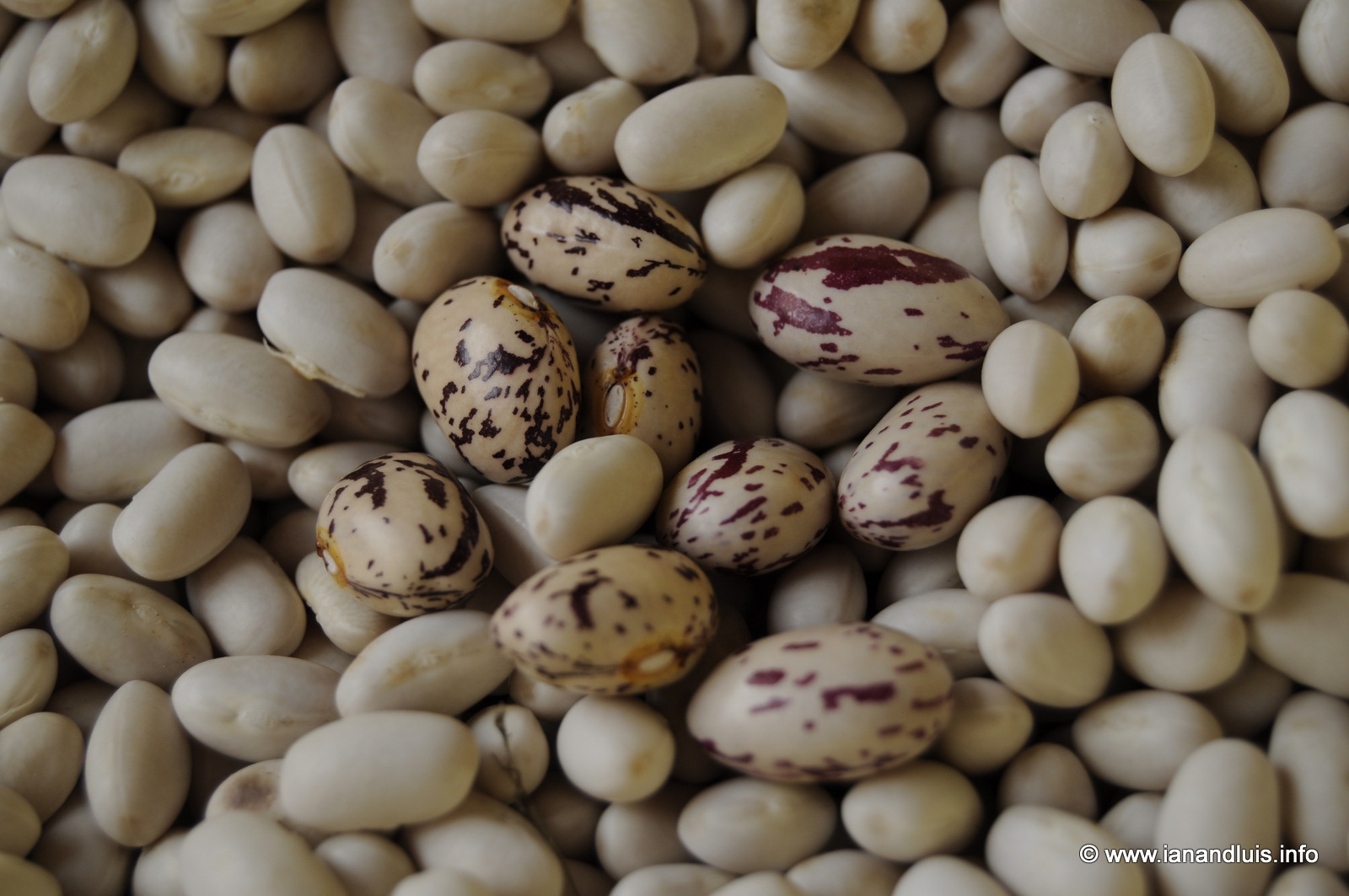
Whilst in Castilla, Luis bought locally produced honey (30 Kilos) which we use mainly in place of refined sugar. At 5€ a kilo it is such good value and we know for certain it has not been adulterated with glucose syrup. He also bough quite a few kilos of chickpeas, lentils and beans which are grown in that region and that we know to be of good quality and freshly dried. Ruben, Luis' younger brother brought us 10 kilos of sweet unwaxed and undyed oranges and 5 kilos of manderine oranges he sources direct from growers in Murcia, the oranges are so sweet and what we don't eat will be made into jam.

All in all our winter pantry is at full capacity and our gifts of food, what we grow and what we forage will sustain us, our visitors and our friends over the coming winter months. We have a lot to be thankful for and an awful lot to look forward.

And finally, a photograph of Luis and his new niece, Ruben and Veronica's daughter, Sara (8 weeks). So cute...

The vegetable plots are still producing well and we are currently harvesting large white bulbs of Florence fennel, swede, carrots, ruby chard, winter lettuce, leeks, the last of the beetroot and bundles of fresh herbs. Still to come anytime soon is celeriac (one of our favourite vegetables), flower sprouts, cauliflower and broccoli.
Luis has just returned from his sister's (Rita) where twice a year they slaughter the pigs and process the meat into joints, cured ham, chorizo, salami and black pudding. In Spain this is known as the matanza. We have written about this in the past and you can read about it here if you want to know more and see pictures of some of the work. We are always offered goodies to bring home but being vegetarian we of course decline apart from a couple of packs of chorizo we keep in stock for visitors. Rita always sends loads of food for us as she produces enough to feed half of Castilla y Leon. This time we have 4 dozen eggs, 20 butternut squash, 30 jars of tomato pisto, sack of red peppers, 15 kilos of quince, cabbages, pears.... (we won't be going hungry).
We also have a wonderful rich Christmas cake baked by my Aunt in the UK which we will continue to nourish with a tot of brandy from time to time and coffee and walnut cakes and a box of delicious chocolate biscuits my Mum sent...I doubt they will last long.
Whilst in Castilla, Luis bought locally produced honey (30 Kilos) which we use mainly in place of refined sugar. At 5€ a kilo it is such good value and we know for certain it has not been adulterated with glucose syrup. He also bough quite a few kilos of chickpeas, lentils and beans which are grown in that region and that we know to be of good quality and freshly dried. Ruben, Luis' younger brother brought us 10 kilos of sweet unwaxed and undyed oranges and 5 kilos of manderine oranges he sources direct from growers in Murcia, the oranges are so sweet and what we don't eat will be made into jam.
All in all our winter pantry is at full capacity and our gifts of food, what we grow and what we forage will sustain us, our visitors and our friends over the coming winter months. We have a lot to be thankful for and an awful lot to look forward.
And finally, a photograph of Luis and his new niece, Ruben and Veronica's daughter, Sara (8 weeks). So cute...