Showing posts with label Restoration. Show all posts

Tuesday, February 10, 2015

Restoring a suite of rush furniture

2 comments:
Rush chairs and benches are very comfortable and last many decades if used correctly and protected from the elements. Being a natural fibre it is prone to damp weather, mold, insects and breaking due to excessive weight. Most rush restoration is due to normal wear and tear following several decades of normal use. This custom made suite of furniture was brought for restoration by its owners; the suite is usually sited on an outside covered terrace. most of the rush had deteriorated due to damp and breakages. The structure of the chairs was not really appropriate for rush as the seat frame was very deep which would make forming the contours of the seat, difficult but possible with extra care and manipulation of the material.


The two benches, one with a detachable seat frame, had been designed for rush so were much easier to  craft into a comfortable seat.


After many hours of skilled craftsmanship the suite of cane furniture was re-rushed, re-waxed and collected by its owners who were delighted with the result. Advice regarding the care of the seating was offered and only time will tell if they heed it. All in all a lovely suite of furniture that would grace any dining area. Further information on restoration can be found at www.artesanialapasera.com


Monday, August 18, 2014

Demonstrating at a street market - Rastrillo

6 comments:
This past weekend we have been at a street market in a nearby village. It takes place every year and although small, it attracts a good number of people at this busy holiday time in Asturias. The proceeds from the pitch fees (6€ per meter) is donated to charity.


We use this particular market to publicise Luis' chair restoration skills. It is also an opportunity to sell some restored chairs and stools in cane and rush, the proceeds of which go to fund Luis' mosaic studies. We take a piece along to demonstrate how it is done, this time it was a seat from a barbers' chair. More often than not, a live demonstration always prompts people to stop or at least cast a glance in our stalls direction. We also took some pottery and bric-a-brac to reduce the amount of stock we have from when we used to sell at antique fairs in the UK. Any sales would be a bonus.


The stall-holders started to set up at 8am and the market was to run all day until 8pm, a long day giving us opportunity to watch the world go by in all it's different shapes, sizes, dress sense, style and pace. Following a slight dispute with our immediate neighbour who had invaded at least half a meter of our 4 meter pitch, we set up the stall and were open for action.


The Spanish, especially on holiday, rarely venture outdoors before 11am. The morning started slow with only a few passing pilgrims, locals shopping for fresh bread to have for breakfast, a few joggers, cyclists and walkers.


Before the street filled with eager browsers we took the opportunity to have a look around and see what was for sale. The majority of stalls are non-commercial, just ordinary people selling their excess. Some of the stalls are commercial such as artisans, antique dealers and jewelry makers whilst others are children selling toys and such they no longer cherish. Some children have stalls selling biscuits, cakes and tortilla that Mum or Granny has made. They have great fun throughout the day.


One special stall is run by two young girls who have a tank and display boxes with frogs, salamanders, slow worms, beetles, toads and other insects. They have a donation box and use the money to build habitats in their garden. Their brother used to run the stall but it seems other diversions have now distracted him. We usually donate to this as they are obviously very passionate and knowledgeable about wildlife which is impressive at such a young age.


One aspect of a Spanish street market like this (Rastrillo) that we cannot work out is why everything is so expensive, especially the commercial traders. Some of the tat on display was grimey and to be honest we would have been ashamed to display in such a dirty and unkempt state. Other pieces were outrageously expensive such as a couple of old and very large, glazed cooking pots. We enquired about one as they would have made brilliant free-standing ponds for the terrace... 150€ each!


We have a great day all in all and sold all of the chairs, and quite a bit of old pottery and glass. Many passersby took business cards and enquired about chairs to be restored so hopefully that will translate into future work. Surprisingly we didn't buy anything which is a good thing in a way as we are conscious that we have too much clutter and need to downsize further rather than accumulate things. The glazed cooking pots were still there at the end of the day as was most of his stock, I wonder why?


Despite looming dark clouds coming and going, the weather held and the wind stayed calm. We ate well, met loads of friends and neighbours, absorbed the atmosphere and watched in wonder as the world passed by...Until next year. Hasta luego.


Thursday, May 15, 2014

Should we restore or plant this pine chest?

4 comments:
Each year we demonstrate chair caning, rush work and seat weaving at a street market (Rastrillo) organised to raise funds for charity. Last year we bought an old pine chest for €20. It is zinc lined and fairly intact apart from a piece of wood missing from one of the base rests which can be easily repaired.


It has old woodworm and has been painted white in the past although some of this is now wearing off. The pine is of good quality and I know that if it is stripped, waxed and polished it will make a wonderfully rich, handy little seat with storage for a sheltered spot on the terrace.


Alternatively, I was thinking of leaving it pretty much as is apart from drilling a few holes in the bottom and planting up with a mixture of trailing plants and accessories with the lid propped open - a sort of shabby chic garden planter. I realise that even with the zinc liner, the pine on the base will only last a few years.


I don't particularly want to use and have to dispose of harsh chemical strippers and it would possibly damage the surface if sanded down to remove the paint. I wonder if there is a green paint stripper?

The chest below was my Grandad's tool box and covered in layers of paint and varnish. I restored it many years ago and it has made a characterful coffee table for the lounge. Hmm...what to do?


Over to you....seriously looking for advice and guidance on this one. Maybe you have other ideas...What would you do?

Friday, January 31, 2014

Rushing chairs, a craft of restoration

3 comments:
The craft of chair rushing has always fascinated me. Some years ago, I could not let the opportunity pass to learn this craft. It all came about after visiting a Saturday craft fair held in Holmfirth when we lived in South Yorkshire.


I eventually got to know Heather Pearce, a stall holder who sold already restored chairs and who demonstrated chair caning and rushing. Heather kindly agreed to teach me how to re-cane and rush a chair. Over the Spring and Summer months, I joined her at her market stall and she kindly taught me these beautiful crafts.


I wanted to learn these crafts as it was something I could do when we eventually bought a home here in Asturias. One of the initial challenges was how to promote myself and to this effect I started writing a blog in Spanish: www.artesanialapasera.com. I also started demonstrations during crafts fairs locally.

I soon started getting some work after handing out business cards during demonstrations and through the blog and local furniture and antique restorers.

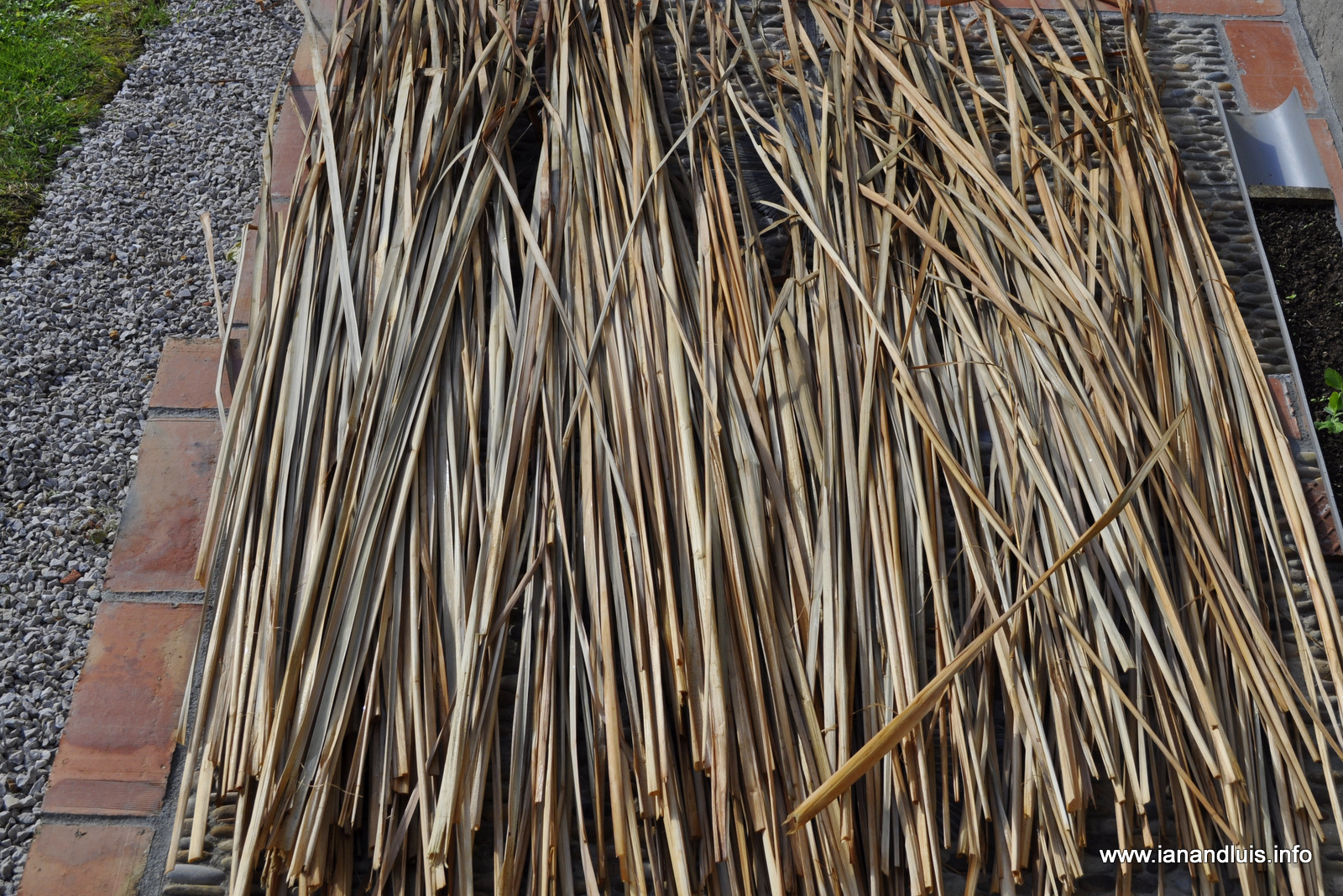
Another of the challenges I found was to obtain the rush. In the UK, it was available through various outlets, imported from Holland but in Spain it took some effort to find who would sell it in the small quantities I usually require. It is getting harder to get good quality rush in Spain as those who used to harvest it no longer feel it is financially worth their while and the authorities are reluctant to grant the required permits. I recently found out about a company that may be willing to post to Spain so we will see what the quality is like.


Rushing a chair is a craft that takes its toll on your hands but I always celebrate the beauty of a newly rushed chair and being able to give a second lease of life to the beautiful chairs, stools and benches I have had the opportunity to re-rush over the years.


Good quality antique chairs are fairly uncommon in Spain for a variety of reasons and most of them show sings of neglect, woodworm infestation and very often, structural damage with bad repairs. Having said that, it is still worth restoring them and after the new rush seat is woven they look fantastic with their shabby chic appeal as is the case of these two chairs I recently was asked to re-rush.


When I got the chairs, first of all, I had to treat for woodworm even when there was no signs of it being active - just in case. I also had to dust them and even clean some bird droppings before I considered re-glueing some of the joints.


The decoration was very damaged in parts but its style and structure reminded me of a chair I re-rushed some years ago and that was decorated by one of the Uria Aza brothers, artists from Ribadesella who in the 1950's finished painting the beautiful frescoes in Ribadesella's St Mary Magdalene's church that were started in the 1920's.


Sunday, August 11, 2013

How we restore cane seated chairs in Bergere cane work. Part 2.

No comments:
If you follow our blog you will recall that In July we posted about restoring cane seated chairs. These Victorian chairs had seen quite a lot of wear and tear over the years and sometime in the 20's or 30's had their seats replaced with plywood when the cane had broken.


We purchased these and many other chairs back in the UK to restore here in Asturias. We will take them to a local street fair and market later this month where we will demonstrate cane work. We will also take several other cane or rush chairs and hope to sell them.


I cleaned and restored the chair frames and Luis has re-caned them in a seven weave pattern; the stronger of the possible patterns. The chairs have been waxed and with care and attention they should last another 40 years before they need restoring once more. I wonder if Luis will still be doing it then?

The restored chairs - repaired, cleaned, waxed and re-seated.


Tuesday, July 09, 2013

How we restore cane seated chairs in Bergere cane work. Part 1.

3 comments:
Some of you will already know that Luis restores cane and rush chairs. He learnt how to do it whilst in the UK and has continued both skills out here in Asturias. We brought a large stock of old chairs from the UK to Spain in anticipation of continuing demonstrations and restoration work.

Iris Publishing Ltd. MCMXCII


This pair of chairs we purchased at Newark Antique fair a few years ago, probably about £10 for both if that. As you can see they had been altered some years ago when the original cane seat was damaged. In the 20's, travellers would travel round and either repair the cane work, which was probably expensive, or nail in place a pre-formed replacement plywood seat. I stripped and repaired this pair in preparation for Luis to re-cane for an upcoming street market in August.


Mostly these seem to have been manufactured throughout Northern and Eastern Europe. Most are decorated or perforated as can be seen in these two examples.


The chairs were given a new seat over the remaining cane and have not been restored since. The backrest on one of the chairs had partially snapped but this was easily repaired. The cane holes are cleared and ready for re-caning with new rattan cane in a seven-weave pattern.


They will be cleaned with linseed oil and white spirit, waxed and polished, re-caned and put on sale at the market along with a few rush chairs already completed.

Bookmark or subscribe to this site now and we'll update you on the finished chairs in a couple of weeks time, including photographs.
 If you'd like to take a look at some other restored chairs, click here:  http://artesanialapasera.com/

Sunday, February 03, 2013

Beach-combing for driftwood on Santa Marina beach

13 comments:

Each year in winter the beach at Santa Marina, Ribadesella becomes littered with tonnes and tonnes of driftwood and river wood. It is an amazing sight. After the pristine sand that the beach presents us with for 10 months of the year, from now until Easter time, the beach is awash with wood.


Most of the wood comes down the Rio Sella during periods of high tides, heavy rains and rising river levels. Other rivers and tributaries also contribute their fair share of wood in its many forms. There are however, some strange and incongruous finds that tell another story.

Ribadesella Council make a start on clearing the beach 

This week we made a trip down to the beach with the specific intention of finding wood to replace the cat's scratching posts that we have in the garden. The existing ones were originally from the beach a few years ago but with lots of use and natural decay they needed replacing.

Think before you throw your plastic

Needless to say we had a lot to choose from. Amongst the detritus washed ashore were single flip-flops, plastic bottles, way too many plastic bottles, a pair of badly scratched Tommy Hillfiger sunglasses, a yellow rubber duck and too many pieces of cast-away rubbish.


This year we have seen many more local people collecting firewood from the beach, a good use for it for those who are able to process it.


Our finds included several pieces of oak and chestnut that we will use for mosaic art, a carved and decorated piece of a grain store (Horreo) about 150 years old we think, a piece of oak with a carving of a bear stood on a rock, two fine scratching posts, a weathered and characterful plank and a well-washed and almost polished tree-stump.

Notice the antique nail in the top left hand corner

We will find uses for all this reclaimed treasure and enjoy it in the process. Beach-combing, well wrapped up on a fine winter's day, there is nothing better. We may be back for more, we have until mid march when it is cleared by the local council in readiness for horse racing on the beach that takes place around Easter-time.


Friday, December 14, 2012

A restored antique rush bench

4 comments:
Luis has just restored a beautiful antique rush-seated bench, a three seater, for a gentleman in a nearby village. The piece is normally housed in an Asturian palace which is absolutely wonderful, full of stone floors, elaborate stonework and an impressive internal courtyard. Now restored, the bench will sit well  in a gallery or landing.


The seat had completely gone and new rush was required. We source our rush from Spain after stockists in the UK no longer have it. We have a few problems with quality control and have to carefully examine a delivery of new stock. Sometimes the rush is of very poor quality and impossible to use for a high standard finish.


The rush is probably harvested in Spain or maybe Holland and imported. There are tight controls on commercial gathering of rush and suppliers not that easy to identify. There are two main types of rush: fresh water and salt water. This rush was probably salt water but flat reeded instead of round. It is not the easiest of rush to use but Luis has done a great job with this piece.