Showing posts with label Bog Garden. Show all posts

Sunday, June 21, 2015

The first day of Summer

4 comments:
It is a bright sunny day with blue skies punctuated by white and pale grey Columbus clouds. It is warm bordering on hot in the sun but with plenty of shaded places to keep cool, it is a lovely first day of Summer.


The first peaches were harvested today and although the tree doesn't produce much fruit, what it does produce is sweet, very peachy and juicy if left to ripen naturally. One or two have already been pecked at by the birds and then plundered by the ants but as today was getting breezy I decided to harvest the first of the undamaged crop before they fell in the gathering winds.


The mosaic terrace table top has been united with its long-awaited bases and it not only looks great, it is also functional and perfect for the glass of red as the evening sun sets. Needless to say, Luis has started another mosaic project and the list of projects in mind continues to grow apace.


One of the showiest plants we have is in full bloom near the edge of the pond. The angels fishing rod is heavy with bright pink flowers that droop towards the water and encourage lots of bees and insects.


Another plant that gives all it has when flowering is the cactus. This one is in full glorious flower, sadly they last only very few hours so to get to witness their show is a true privilege.


Other worthy contenders for showiest bloomer are the air hyacynth and the bottom meadow, both of which are at their prime.


The cats are spending most of their day in the deep shade of the bog garden where it is damp and cool but occasionally venture out from the shade of the giant Gunera leaves and soak up the warmth of the sun for a few moments but soon return to the cool and welcome shade. They are brushed daily from now on as it is flea and tick season and regular grooming means we can keep an eye out for attacks. They are also fast loosing their winter coats so they seem to welcome a daily brush.


You might have heard of the Andrex puppy? Well we seem to have an Aubretia pussy who has taken to finding comfort when relieving himself resulting in large dying patches...I won't publicly name and shame, I'll leave it up to you to decide who is the guilty party!


Tuesday, January 27, 2015

Come rain or shine, there is work to be done...

2 comments:
We've had a couple of weeks of very mixed weather here in Asturias. One day bright sunshine and the next, torrential rain, hail and strong winds. There is snow in the mountains but at least here on the coast, that never causes us problems apart from the chill factor. The fields around us are flooded, there are several trees down and on the coast there has been damage to the promenades and tonnes of wood has been brought down stream in the swollen rivers and has now been deposited on the beaches.


It is always depressing to see such a large volume of plastic amongst the wood on the beach. Why can't people just dispose of water bottles and such, responsibly rather than just tossing them into the void that is apparently also their brain?


The rain in Asturias is relentless at times. Last week we had around 106 litres of rain (per square meter) with most of that coming down in short sharp bursts.


At this time of year we try and coppice the hazel that borders our land on the north side. We have a fence that was installed when the house was built sited just inside of an old limestone wall that has now fallen into disrepair; this wall is the actual boundary. One day we will restore it and remove the fence. About half way along, this wall becomes a retaining wall for our garden which drops down nearly two meters into the field below - hence the name La Pasera meaning the stepping stones. Along this dividing wall, hazels are prolific and thick but provide something of a wind-break from the storms that hit the north coast from the Atlantic and bay of Biscay. Never-the-less they need keeping in check or they become too impenetrable and a nuisance. We are about half way through now and when the weather allows we will continue behind the shed and compost bins. The coppiced wood will be chopped, left to dry and used for firewood or for plant supports in the garden.


In between the storms we have made a start on thinning out the hazel and where possible just leaving a few main branches to break the wind and prevent damage. The cats love the coppiced hazel and spend their time pouncing on the dried catkins, scent marking the twigs by rubbing their noses along the length and hiding from each other amongst the piles of cuttings ready to pounce when the opportunity arises.


On wet days, Wentworth and Gawber take refuge inside but use every opportunity on finer days to explore the surrounding fields and cuetos (rocky outcrops) in search of mice and lizards. Come rain or shine, there is always work to be done.


Thursday, August 14, 2014

The watering hole - attracting birds into the garden.

No comments:
La Pasera is situated on the edge of a rural village surrounded by fields and meadows. There is little reason for birds to flock to our garden for food as the entire countryside is like an over-stocked larder.
There are plenty of untended fields, hedges, woodlands and meadows from which they can feed.


Water is a different issue. The area is punctuated with limestone outcrops, caves and caverns which results in very little water collecting above ground. In addition, as there are no fresh water supplies in the immediate vicinity (the nearest being Rio Guadamia), in dry periods, water is in short supply for birds.


We have several birdbaths and receptacles dotted around the garden for the birds to use including, 5 free-standing bowls, a garden pond, a half barrel pond and what we call a watering hole i.e. a small shallow lined pond sited in the quietest part of the garden.


The bird baths attract a wide variety of small birds who jostle and fight for position and dominance, usually the blackbirds are the more aggressive visitors, chasing away smaller birds as they approach.


The larger garden birds such as Jays, Green and Lesser Spotted Woodpeckers and Wood Pigeons rarely venture to the bird baths but they do visit the watering hole regularly. Although still nervous and wary, they make the most of the peaceful setting, away from prying eyes and open enough to spot any predators (Wentworth and Gawber).


Here is a short film (4 minutes) we took with the Bushnell camera of our most frequent visitors to the watering hole... See how many you can name, the first two birds are Jays (just to get you started. (The music is by Ian)

Thursday, June 12, 2014

The march of the midwife toads

16 comments:
The midwife toads (alytes obstetricans) are on the move. They were spotted carrying their eggs, navigating the limestone rockery, trailing plants and inquisitive cats. Here in Spain they are currently listed as 'Near Threatened' on the ICUN Red-list (International Union for Conservation of Nature).


We are lucky that the midwife toad is plentiful here at La Pasera, the rockery is a perfect habitat for them as there are many moist crevices where they can hide from the heat of the day. Most of the year we can hear them sing out once the afternoon sun starts to set. Their high pitched whistle-like sound: poo...poo...poo is repeated every one or two seconds and other toads will join in, signalling their presence.


If you are unfamiliar with this toad it may come as a surprise to learn that it is the male of the species that carries the eggs; up to 170 eggs at a time, sometimes originating from different females. They have peculiar mating habits with the female and male engaged in a mating ritual, the male inserting a toe into the females cloacae thereby enabling the release of eggs which he then sticks his legs through, sprays them with urine and sperm and carries them for 3-6 weeks until he finds a safe spot to release the eggs.


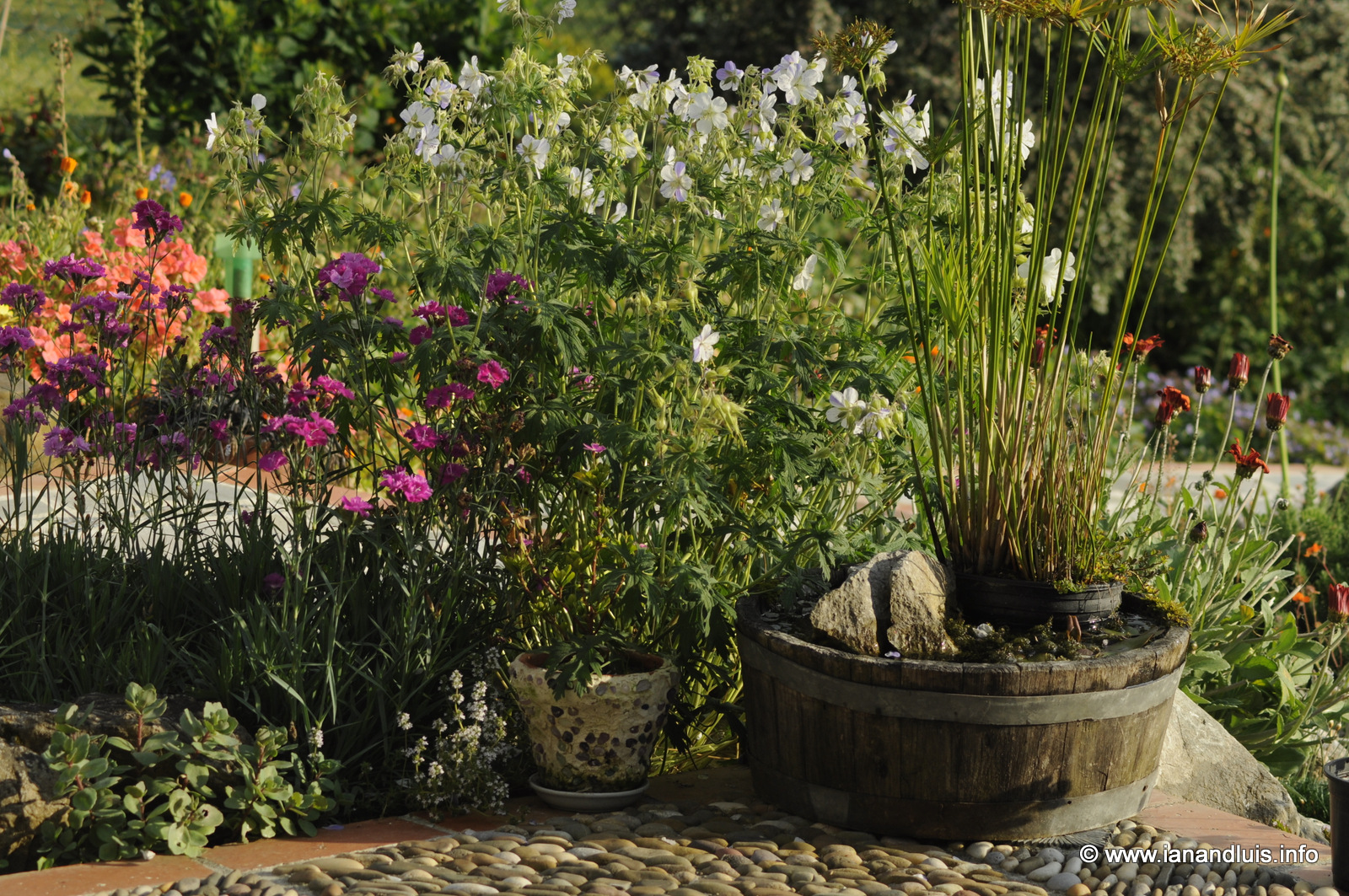
We have several water sources in the garden but the one the midwife toads prefer is a small half barrel filled with water, plants and a rock. It is permanently teaming with tadpoles thereby ensuring the next generations of this wonderful creature.


The midwife toad is small, 4-6 cm in length with the males being slightly smaller than the females. They live approximately 5 years if not consumed by their natural predator, the viper or large birds. Their diet is mainly spiders and beetles with a few flies and worms when available.


Further information can be found here:

IUCN Red-List


ANIMALTALES

Friday, May 09, 2014

The flower garden in May

4 comments:
May is generally one of the best months for the flowers here in Asturias. The country lanes and meadows are ablaze with wild flowers and grasses attracting an abundance of pollinators.


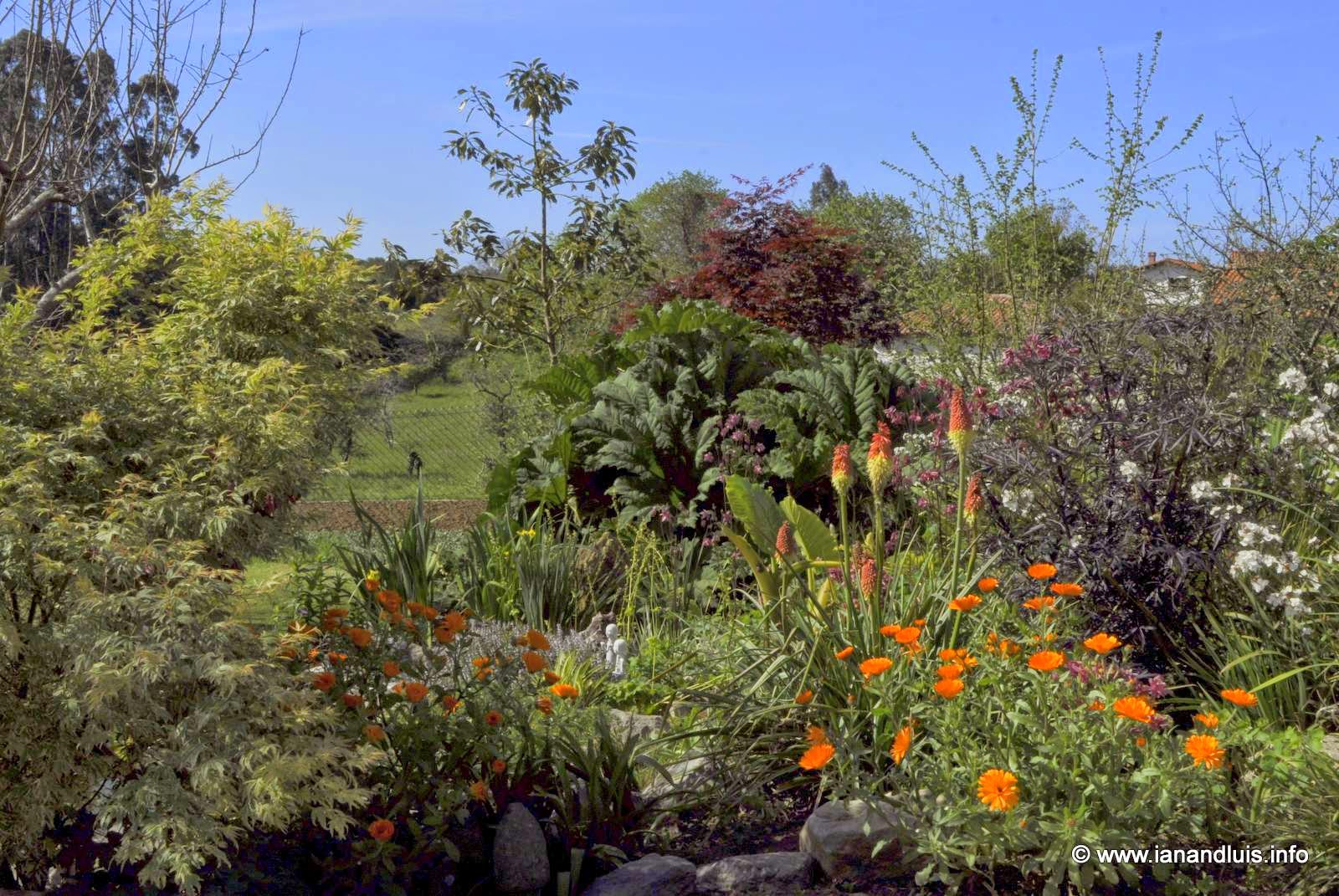
The garden has several areas that are given over to flowers, shrubs and trees. We have tried, where possible, to keep the planting scheme low maintenance by using perennials and biennials however foxgloves, other biennials and self seeders do rather make order in the borders impossible.


We aren't expert gardeners by any means and have learnt over the years through trial and experiment, doing and daring. What I hope we have created is a peaceful space which we can enjoy along with the many insects, birds, amphibians and reptiles that will help maintain a balance in our small plot.


The herb garden at the front of the house is coming into its own now the plants are established and we are gathering plenty of rhubarb, fresh herbs for cooking and fresh herbs and flowers for infusions, drying and hand cream.


We use the garden a lot, walking around it several times a day and sitting in one of several areas we have created, each with a different feel and atmosphere. The back garden is tranquil and a great place to sit and take in the views or rest and contemplate, accompanied by the sound of the water fountain, bird song, shadows cast from the setting sun and the distant ring of cowbells.


Don't forget to check out our other wildlife photo blog at Smaller Tales from Toriello