Showing posts with label Wildlife. Show all posts

Saturday, December 27, 2014

A walk through time: on the edge of Ribadesella town

4 comments:
We frequently walk around Ribadesella and never tire of the narrow, quiet streets and interesting buildings even though it is a very small town. It doesn't take much to see how the town has developed over the years and how the once, small cluster of sea-front fishermen and merchant houses has expanded as more land has been reclaimed from the sea and the estuary. The town has ancient roots and has been a settlement of sorts for at least the past 35,000 years, possibly much longer.


One walk we regularly take is on the edge of town along a narrow road that leads up to La Guia: a once important defensive position where cannon were  positioned ready to repel any unfriendly visitors. There is a small church and fortress dating back to the 1700s  that was built to provide spiritual and physical protection to the defenders. Today, the small chapel and remnants of defences remain. The chapel is now dedicated to Our Lady of La Guia, the patron Saint of fishermen and houses a small but wonderful collection of models of sea-going vessels.

Sociedad Etnográfica de Ribadesella SER


The vantage point of La Guia enables you to see the mouth of the River Sella as it winds its way through the lush landscape down to the estuary and into the Bay of Biscay. From here you can see the grand Indianos-style houses that were built on re-claimed land that borders the Santa Marina beach. The houses date mainly from the early 20th century when rich emigrant traders returned from the South Americas and built grand houses and estates. Many are now hotels but a few remain private residences.


Looking further up the Estuary there is a large expanse of rock which houses probably one of Ribadesella's greatest treasures: the caves of Tito Bustillo. Discovered in the 1960s, the network of caves and paleolithic cave art dates back at least 29,000 years. It is easy to imagine how small groups of humans occupied this estuary, with the caves offering protection and the sea and the rich flood plains offering up food in abundance. As an aside, in the next village to us about 5km from Ribadesella, they have recently discovered a bone pit containing fine examples of Woolly Rhinoceros, Hyena, Deer and Bison. The pit has undergone preliminary investigation and has now been sealed until finances can be secured to undertake a full archaeological investigation.


At the far end of Santa Marina beach along the promenade, there are some fine examples of dinosaur footprints in the sedimentary rocks that have been displaced by time and seismic land movement. Over 100 million years have passed since a small family group of dinosaurs passed over mud flats and left impressions for time to seal and eventually reveal.

 I often wonder what else lies undiscovered?


Scanning the landscape and pondering times gone by makes me wonder what footprints we might leave and how the archaeologists of future times might interpret our impact, presence our legacy.


Friday, September 05, 2014

In search of sciurus vulgaris... the red squirrel

4 comments:
On several occasions we have seen a red squirrel in the garden here at La Pasera but they are very shy, quick and eager to climb high to avoid the cats Wentworth and Gawber who wouldn't think twice about trying to capture one. This picture is from a rare chance I got to photograph one in the garden after Gawber had chased it up a tree.


Luis had business in Gijon recently and I was aware from previous visits that there were a small colony of red squirrels in and around the park of  Parque de Isabel La Católica  : a perfect opportunity to try and get close up and personal. The park has a large lake and several aviaries. The lake is inhabited by various wild birds, geese, ducks and swans. Peacocks and peahens roam freely and put on great displays even when resting.


The park has a large number of very mature deciduous and coniferous trees, a range of fruiting bushes and fungi thereby making it the perfect habitat for red squirrels. Camera in hand I soon spotted a young squirrel, probably this years kitten, bounding across the path and onto the grass into the bushes quickly followed by a larger deep red adult which ran up the nearest large conifer.


I stood quietly in the shade of a walnut tree and watched as several squirrels appeared and disappeared, checking me out and assessing the threat level.


I spotted a young adult squirrel leaping from branch to branch making its way towards the water's edge. It was unfazed by a nearby gull and spent 30 seconds or more drinking from the lake before taking off again into the trees.


At eye level, an adult squirrel beginning to eat a walnut, probably dug up from last season's hoard as the shell was covered in a fine dusting of earth.  I decided to make my way towards it at a slow pace whilst taking photos. Typically I had the wrong lens on but with stealth I managed to change lens' mid-way and get closer step by step.


Throughout my advance the squirrel devoured its nut but kept a close eye on me. I knew that at some stage it would retreat.


I took one last step closer, it shreaked and ran up the tree out of sight and out of reach.


I was happy with my photographs and with watching the squirrels as the traversed their territory, happy for me to join them for a short while but equally happy when I left them in peace.


The squirrel that comes into our garden has long ear tufts whilst the ones in the park had none. I wonder why that is, seasonal, gender, age, regional...?  

Thursday, July 03, 2014

July in bloom

No comments:
Flowers are an important aspect of any garden, from the insignificant to the big, bright and bold, flowers are special.


Flowers attract insects, aid pollination, create scent, display colour and provide structure and form and, they are beautiful to look at.


The flowers at La Pasera change throughout the months but July is certainly a time when the brightest, boldest and showiest blooms arrive. So much so, the smaller, delicate flowers often get overlooked.


The next time you are in the borders, look a little closer, stare a little deeper and you just might see a diamond amongst many other gems, a bit like life really...


Thursday, June 12, 2014

The march of the midwife toads

16 comments:
The midwife toads (alytes obstetricans) are on the move. They were spotted carrying their eggs, navigating the limestone rockery, trailing plants and inquisitive cats. Here in Spain they are currently listed as 'Near Threatened' on the ICUN Red-list (International Union for Conservation of Nature).


We are lucky that the midwife toad is plentiful here at La Pasera, the rockery is a perfect habitat for them as there are many moist crevices where they can hide from the heat of the day. Most of the year we can hear them sing out once the afternoon sun starts to set. Their high pitched whistle-like sound: poo...poo...poo is repeated every one or two seconds and other toads will join in, signalling their presence.


If you are unfamiliar with this toad it may come as a surprise to learn that it is the male of the species that carries the eggs; up to 170 eggs at a time, sometimes originating from different females. They have peculiar mating habits with the female and male engaged in a mating ritual, the male inserting a toe into the females cloacae thereby enabling the release of eggs which he then sticks his legs through, sprays them with urine and sperm and carries them for 3-6 weeks until he finds a safe spot to release the eggs.


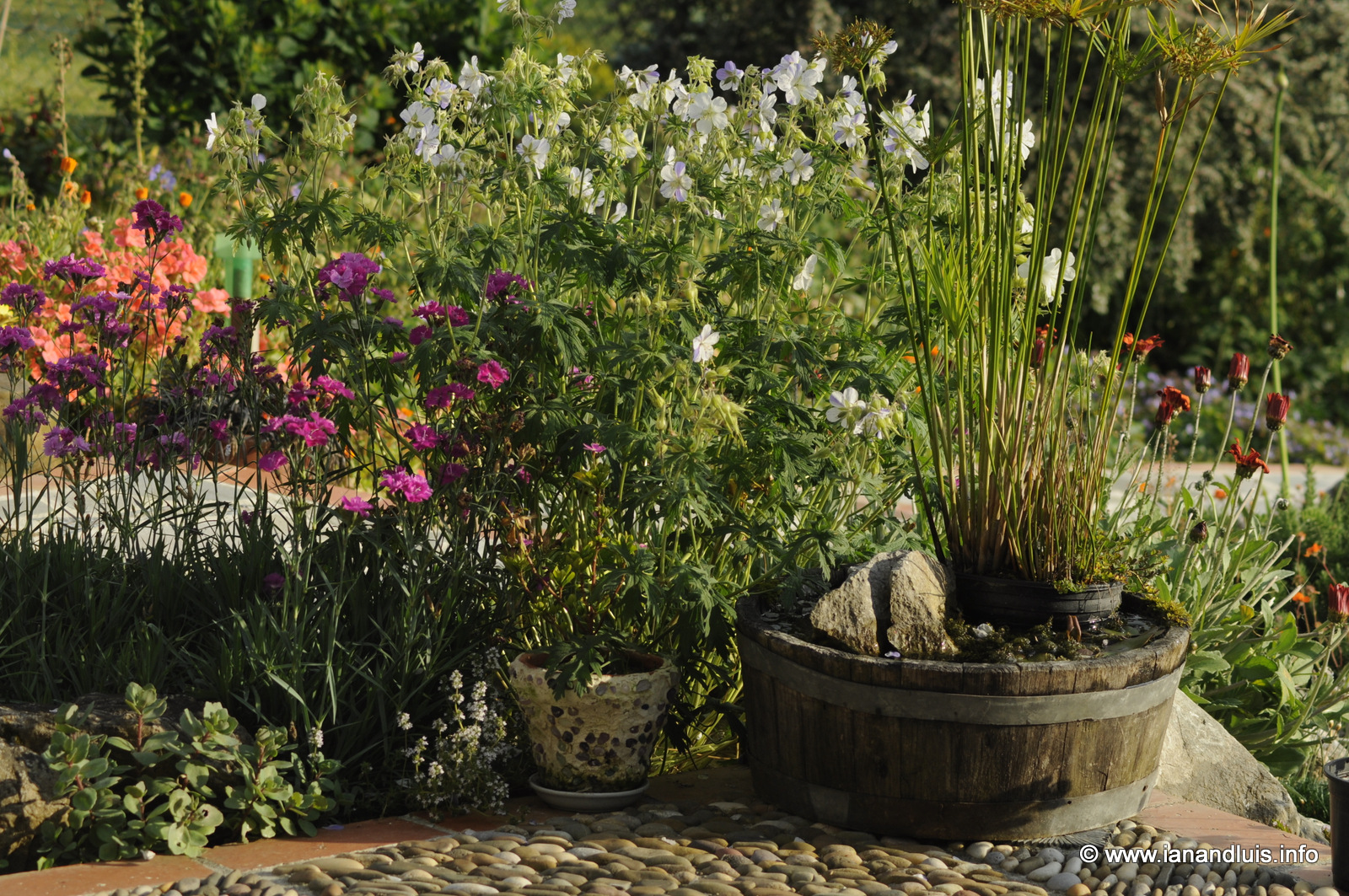
We have several water sources in the garden but the one the midwife toads prefer is a small half barrel filled with water, plants and a rock. It is permanently teaming with tadpoles thereby ensuring the next generations of this wonderful creature.


The midwife toad is small, 4-6 cm in length with the males being slightly smaller than the females. They live approximately 5 years if not consumed by their natural predator, the viper or large birds. Their diet is mainly spiders and beetles with a few flies and worms when available.


Further information can be found here:

IUCN Red-List


ANIMALTALES

Thursday, June 05, 2014

Whales and Dolphins in the Bay of Biscay

2 comments:
We have recently returned from a trip to the UK via ferry. Always preferable to flying (in my opinion), the ferry takes approximately 24 hours from Santander to Portsmouth. I find the journey a little dull, especially when you have made it numerous times. There is on-board entertainment, several bars, a couple of restaurants and a cinema: apart from that there are several decks you can wander and stretch your legs. The saving grace is the probability of spotting a large range of cetaceans.


In the Bay of Biscay it is possible to find a third of the species of cetaceans in the world including many species of whale, dolphin and porpoise. Having made the crossing many, many times over the years I find myself increasingly drawn to observing the vast sea from deck 10 of the ship with the hope of seeing one or more of these beautiful creatures.


This year we were fortunate enough to be accompanied by volunteers from ORCA who are monitoring the bay for cetacean activity, numbers and trends. You can find out more about their work by following the link.


On both the outbound and inbound leg of our journey Luis and I were fortunate enough to see: bottle nose dolphins, common dolphins and pilot whales. The ORCA volunteers and other cetacean spotters spend much more time on deck and are better equipped and dressed to see so much more including Fin Whales, Yellow-fin Tuna, and numerous pods of dolphin and porpoise.


They are not easy creatures to photograph as they dive and skim the surface, darting from side to side, under the bow of the ship and in and out of deep waves. One couple from Portsmouth who regularly do the crossing simply to spot cetaceans estimated that from 7am in the morning until 7pm evening time they had spotted up to 150 dolphins in various size pods and 6 whales... they were however dressed in warm clothing and had a range of equipment with them including GPS, binoculars, scopes and cameras with long, long lenses. Ten decks up, they seem tiny despite the dolphins being 2 meters in length.


There is something rather special about seeing these creatures in their natural habitat and their inquisitiveness brings them near the ship as it traverses the deep shelf that hosts the fish, plankton, krill, octopus and squid on which they feed. It is sad to know that irresponsible disposal of plastic is a major cause of their demise, often mistaking it for food, the cetaceans are slowing killed as their stomachs and gullets are filled with non-digestible and poisonous plastics.


Wednesday, May 21, 2014

The Kingfisher has flown its nest - mosaic

11 comments:
A few weeks ago Luis was asked to design and create a mosaic intended as a gift for a birthday. The brief was: a Eurasian Kingfisher. Working with the people involved they agreed on a design and composition, size (quite large 70cm x 85cm), how it would be constructed to suit the position it was to be hung and what materials it would be made from.

A pencil sketch was used to agree the main design elements but they very much left it up to Luis to interpret their idea.


The next task was to source the appropriate materials, choose the colour palette, prepare the base and plan the construction methods. He decided to use a mixture of marble, limestone and Orsoni Smalti from Italy as this would give him the colour palette he required to capture the beauty of this wonderful bird. Materials were sourced and work commenced.


Mosaic work on this scale and with such detail is labour intensive. Long hours were spent studying kingfishers and refining the design, planning the project, cutting the tesserae and reviewing methods and techniques. The mosaic is worked in reverse so you never know what the finished surface will look like until it has been set, dried and turned.


Once the mosaic is complete, the worrying times commence as cement glue is spread carefully across the surface of the mosaic and onto the cement backing board on which it will be mounted.


Several days later the mosaic is turned, cleaned and closely examined.


The next stage is to grout elements of the picture, seal, polish and generally put the finishing touches to it including a hanging device and more weather-proof sealant and wax.


Phew, all was well and the 130 hours he put into the mosaic was well worth the effort, it looks magnificent. Needless to say the recipients were very pleased with it and will now have the pleasure of seeing it proudly displayed on the wall of their cottage and garden.

There is always a sadness to see such a piece fly the nest but on the other hand there is a sense of achievement and consolation knowing that it is going to a place where it will be cherished.


A big thank you to Jeannot Leenen and Ornella Martens, two mosaic artists from Belgium for their generosity and guidance throughout the project.

Anyone interested in Luis' work can view his range of work here: www.mosaicoslapasera.com

Email: artesanialapasera @ gmail.com (remove spaces)