Tuesday, August 17, 2010

New Life

No comments:
The simple pleasures of living in Asturias include the opportunity to witness acts of nature that otherwise our busy lives would not allow us to share. The pond has become a haven for wildlife and the biodiversity of the area has increased dramatically over recent months. Late last summer we introduced 4 fish to the pond in the hope of controlling larvae of mosquito (should they take up residence in the water). One fish disappeared - probably died or eaten by dragonfly nymph. Much to our surprise we now have at least 15 baby fish (although very hard to count) and three adults. We hope to relocate at least some of them to a much larger pond up at El Paraiso del Burro later in the summer when they have grown.


Another surprise was the discovery of lizard eggs - tucked away in the gravel under one of Luis' mosaics. We have come across similar eggs before in soil but never in a 'nest' type setting in gravel. They are the size of mint imperials but slightly elongated/oval in shape. We carefully place the mosaic back in position and disturbed it as little as possible. On the couple of occasions we lifted it to check on progress we were fortunate to see one of the little critters emerging and then some time later the same (we like to think so) little lizard making its way into the big wide world.....we called her Elizabeth (only joking honest).


Click on picture to enlarge your view:


This young Buzzard has been screeching and calling for its parents for a couple of weeks now - it is flying low around the neighbouring fields and perching on trees and fence posts. Not the best picture but the nearest I can get to this nervous, young bird. It is learning to hunt and gaining its independence from its parents who are no doubt near at hand.

Saturday, August 07, 2010

74th International Descent of the Sella

No comments:
Today has been the 74th International Descent of the river Sella from Arriondas to Ribadesella. Think Oxford and Cambridge boat race with canoes (over 900 of them), rapids, crowds well into 100,000's, TV crews, Live music and sound stages, 1000's of bottles of cider, outside urinals, camping, litter, young people sleeping in cars, on the streets, in the gutter and on the beach.......get the picture?
74th International Descent 
This long-standing event draws huge volumes of visitors for the weekend, many of whom are young and in a party mood. The canoe descent is secondary for some (well most of the under 25s)  but an important event in terms of the economy and employment.

We walked into town from here as the roads are far too congested with foot traffic, unsuspecting tourists in cars and police and security patrols. About 1 km from town the fields become camp sites and rubbish bins. The roadside becomes a car park and village fountains become wash rooms.


Despite the large numbers of young, predominantly worse for wear teenagers and young people, there is never sign of trouble or aggression. Most happy with the merriment of a cider induced stupor and over-priced greasy snacks.


The highlights of the descent are the passenger train that brings spectators from the start to the finish - decked out with paddles and greenery, much quieter this year I might add, the winning K2 canoeists as they head for the line after a 22km descent - pumped up and filled with adrenaline, and the hoards of tourists who are generally having a great time, drinking in the outside bars, browsing the many exotic market stalls and merry making their way through the heat of the day.

Wednesday, August 04, 2010

Walking in Asturias 5 - The Cares Gorge

No comments:


Today I would like to tell you about the first walk we ever did in Asturias, it is without a doubt the most famous walk in the Picos mountains. It is a walk along the "Divine Gorge of the Cares River" or more commonly referred to as the "Cares Gorge trail". It is a linear walk along a path 1.5 m wide that was cut into the mountain in the second half of the 1940s to maintain a canal that takes water to a hydro-electric station. The walk is about 30k long and takes you from the village of Poncebos in Asturias to Posada de Valdeon in the province of Leon with the small village of Cain about half way. To walk the full length of this trail in the same day you need two cars, one to drop you off at the start of the walk and a second to pick you up at the other end; it is for this reason that most people start either in Poncebos or Posada de Valdeon and return the same way after reaching Cain. We usually start this walk from Poncebos as it is the nearest villages from La Pasera.


Starting from Poncebos, you have a 1 hour climb until the path levels out. At this point you are well into the trail that offers you some spectacular views of a gorge dotted with grassland and wooded areas, the clear waters of the river Cares running 1000 m below and the impressive mountains tops that reach over 2.600m. At times you can enjoy the view of numerous birds of prey gliding in the thermals.

The sound of the river water rushing through the gorge never leaves you and provides a soothing background noise to accompany the song of the many songbirds that are difficult to spot amongst the vegetation. There is a variety of wild alpine flowers that change with the different seasons.

The most spectacular part of this walk when you start walking from Poncebos is to be found just before you reach the village of Cain as the river runs very fast in the narrowest point of the gorge, you cross over two bridges and walk through a short tunnel cut into the rock with few windows cut into the rock to provide enough light to find your footing and offer you some stunning views of the surrounding area and a couple of water falls.

The village of Cain is a good spot to stop to have your picnic and build up your energy levels before you trace back your steps. The first time we ever walked this path, we sat to rest in one on the alpine meadows and suddenly the village dogs started barking as a wolf was howling in the distance. You could not have wished for more other than a sight of one of this magestic creatures running free.

Thursday, July 15, 2010

Shopping in Asturias

2 comments:

One of the biggest challenges since relocation has been to alter our mindset from one of "I want something - I'll go to the shop and get it now" to, "I need something - I'll put that on the list for future reference". The shopping experience is a completely different concept to what Luis and I are both used to. Partly this is due to the cultural differences i.e the economy (consumerism happened much later here), opening times (most shops close at 1pm until 5pm and do not open after lunch on Saturday for the rest of the weekend), perception of food (fast food and food on the hoof is just taking off), and partly due to our location, living an hour away from a largish city means that larger or unusual purchases have to planned for. I use the word challenge as it has meant learning a whole new way of thinking and behaving.

Ideally it would be great if we no longer had to use shops and were totally self-sufficient but that is unlikely to happen although increasingly we rarely have to buy fresh vegetables and provide for most of our needs though growing our own or receiving food as gifts from villagers and family (there is an informal network of excess food exchange). This can include: eggs, fresh rabbit, fruit, cider, vegetables, meat, and preserved food such as Pisto and chorizo.

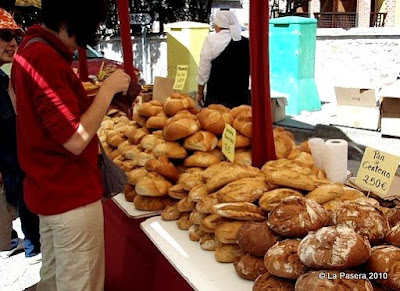
Markets are plentiful in and around Asturias and although interesting to wander through and browse they tend to be expensive for fresh foods such as cheese and fruit so we source cheese from a local factory outlet where it is about half the price. Flour, we buy in bulk - organic, in sacks, 25Kg a time sourced from a local organic farmer who buys in bulk. A number of specialist markets visit throughout the year including artesan/craft, clothing and jewellery. Vans offering various goods still visit the villages either daily or weekly - the bakers, frozen goods, fruit and vegetables and ice cream van (9pm on a Thursday evening!)to name a few. Scrap collection vans tour the villages weekly calling out for metal and machines and every couple of months the whistle of the peddling knife and scissor sharpener can be heard advertising his services around the lanes.


Local supermarkets are small and have limited stock but useful for a small weekly shop. The larger supermarkets and superstores (DIY, Electrical and Clothing) tend to be in the larger cities such as Oviedo or Gijon. We tend to plan our trips to these shops and purchase bulk and/or items that are difficult to source locally.

One of the joys of shopping here is the plethora of small independent shops like I remember from my childhood in the UK, the hardware shops (Ferrateria) where you can buy just 6 screws if you wanted all neatly wrapped up in paper or the numerous bakeries, each known for their own speciality cakes or bread. There are local butchers selling fresh, good quality locally produced meat and products, haberdasheries, dressmakers who will shorten trousers or repair clothing, old fashioned shoe shops where you have a choice of 10 styles, barbers where the menfolk gather to gossip, the agricultural cooperative where you can buy seeds/seedlings, plants and fruit trees, plus a range of local craftsmen producing anything you like in wood, metal, glass...Each shop with it's own quirky character (note the sign for the Ferreteria held together with masking tape!) and ambience, some helpful, some not so helpful, most well stocked however dated it may be, all in all much preferred to the faceless chains and large corporations. Fish can be bought fresh from the docks if you are discreet (fishmongers and restaurants take priority).


What this means to us is that we need to plan much more than we used to, we need to shop around for best prices and higher quality, and we are much more aware of the mindless shopping and consumerism we were seduced by back in the UK. Breaking away from the large supermarket culture has its downside but supporting smaller local businesses and enterprise certainly makes life more interesting.

Tuesday, July 06, 2010

The vegetable garden so far

2 comments:

In the vegetable garden things look very good and as the years pass by we gain a greater knowledge of how to grow vegetables within this specific climate and the soil conditions that we have at La Pasera. As you may see from the picture, we grow a mixture of vegetables, flowers and herbs. The lavender hedge is starting to bloom and is much appreciated by a range of beneficial insects that come to gather its nectar. I personally like its visual impact and to walk passed it in the midday sun when its scent perfumes the whole area.

This year we constructed two rustic arches out of green bamboo canes for the sweet peas to climb over, they have been in full bloom for few weeks and provide us with such profusion of colour and perfume to be enjoyed not only when we are in the garden but also inside the house as we use them as cut flowers.
French beans are growing well over the sturdy bean pole system that we designed to withstand the occasional day of strong winds that we tend to get later on in the season.

The potatoes are ready to be dug up any time now and it will not be much longer before the main crop of onions is ready to be harvested.

We continue to enjoy salad leaves, French beans, courgettes and spring onions as well as early cooking onions. The varieties of beetroot (detroit 2 and Globe 2) that we grow this are particularly tasty and sweet - the best we have had so far and will certainly aoim to grow them next year.

The grass islands, that have been spectacular over spring and early summer, have now been cut, left to dry and drop seed, then the dry grasses and flowers collected and the islands left to grow and bloom again in late summer. The dried vegetation does not go to waste and is used as valuable 'brown' matter to add to the compost heaps. This helps with the overall mix and humidity of the heap and provides us with a great source of nutritious compost that is added to the vegetable plots in winter and spring.


Monday, July 05, 2010

Summer Fruits

No comments:

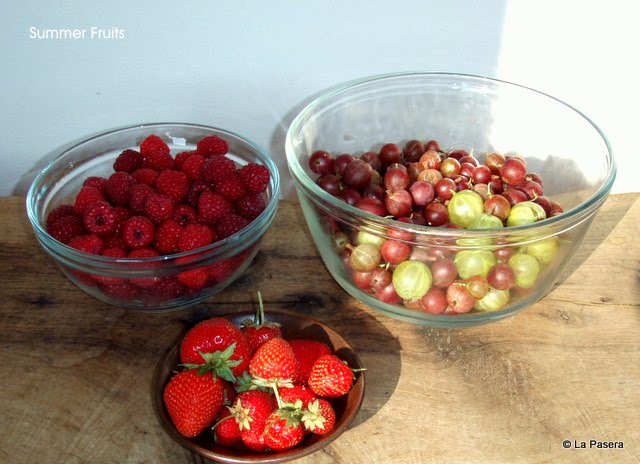
Raspberries, Gooseberries and Strawberries, freshly picked and ready for eating and for relish. The raspberries produced about this much every two days and will continue to do so for a few weeks yet. We eat them fresh or freeze them for use later in the year. The strawberries are new this year and as we only have the four plants, this amount is produced about twice a week, but of course the season is much shorter than for raspberries. We will aim to plant more next year.

The gooseberries have been collected from two of our four bushes, all of which are new additions in the past two years. Although they'd be great with a block of vanilla ice cream, this year I am using them to make a favourite relish - Spicy Mustard Seed and Gooseberry Relish.

Gawber and Wentworth are doing well and Gawber seems to have fully recovered from his paw injury thank goodness. With the warmer, humid weather they do little during the day except laze around on the shed roof until it gets warmer and the dew has dried, then they either head for the beans or woodstore where it is cooler and shaded.

Wednesday, June 30, 2010

Walking in Asturias 4

1 comment:

One of our favourite short walks that takes you into the Picos national park with stunning mountain views, different types of native trees and beautiful flora and fauna, is the path along the river Dobra; reported to be one of the cleanest rivers in Europe due to the lack of human activity along its short course. The river rushes down the mountains through a narrow gorge and slows down towards the end of its course and before it empties its waters into the river Sella.

The route is an easy walk along a well established path that starts in the village of Tornin, a 30 minute drive from La Pasera. After leaving the car park, you soon start walking along meadows full of grass to be harvested any day now and teaming with wild flowers and butterflies. You soon encounter numerous wells and small water falls where the colours of the water and the rock formations are very impressive.


The views of the mountains through the clearing in the woodlands helps you to remember that you are walking in the national park and which often gives you an occasional sighting of a raptor riding the thermals.
After about 1 hour and 30 minutes you reach St Vincent's Well, a wide lagoon of clear water reflecting light, the blue skies and the greenery of the trees that surround it.


A few meters further up you can sit by the impressive waterfall from where you can jump into the lagoon below for a dip if the water is not too cold. We recently took a picnic with some friends and forgot the passage of time, an easy and relaxing way to spend a Summer afternoon.

Wednesday, June 23, 2010

Summer Honey

No comments:

The events of the past few days seem to have faded into the distance with life getting back to normal and the big clean up in full force. Blue skies and brilliant sunshine certainly help and people are busy getting their lives and businesses back to 'normality' ready for the onslaught of summer tourists.

The Bees are busy around the garden collecting pollen and our own minds turn to our annual order for honey. We source our honey from a collection of hives owned and managed by a vet who lives close to Luis' village in Palencia. The honey is set and has a rich and rounded taste. We normally substitute sugar for honey in drinks and cooking and as a consequence we get through a lot. This week we will contact our supplier and order 70kgs of honey... Not all of it is for us! We also buy on behalf of friends and family. Last year the honey was €4,50c per kilo which is a very good price for unadulterated honey.

Saturday, June 19, 2010

Sending out an SOS

No comments:
We have experienced very heavy and persistent rain recently. Initially, it was the western part of Asturias where the heavy rain fall concentrated,causing some localised floods and land slides with temporary disruptions in some of the roads and the railway line.
On Wednesday the rivers burst their banks, including the river Sella that passes through our municipal district, it coincided with a particularly high tide resulting in major floods and disruption. We promptly responded to an SOS call from some friends who live in the town of Arriondas which has since been declared a "natural disaster zone". They live in a fourth floor apartment next to the river and had to evacuate it when the water got up to 1 m high in their lobby and they lost the power and water supplies. Unfortunately, their car was in a two storey underground car park and they were unable to get to it in time. In spite of three of the 4 roads from our home to Arriondas being blocked by overflowing rivers or land slides, we eventually managed to collected them and trace our steps back before the road we were travelling was also closed to traffic as there was a danger of the bridge being washed away. It was very disheartening to see so many homes, business and meadows flooded by water with very big trees uprooted and floating away. We went for a walk later on in the afternoon to the beautiful beach in Ribadesella to discover it covered with lots of debris and that the sea was full of brown murky water.
Their home remained without water for 5 days and they eventually managed to get their insurance company to tow the car out of the garage and away to be assessed, it is expected to be a total write off. It took the best part of three days to pump out the basement garages and store rooms. Everything has been penetrated by a fine silt-like mud, diesel and sewage.


It was devastating to see many people disposing of many of their damaged belongings some of which will never be replaced such as photographs and books. The local hospital, health centre and schools are some of the buildings worst affected by the flood and it will be a while before they are fully operational again. We hear that 7 people lost their lives (not confirmed)along with the loss of much livestock. Many homes, business and local services have been badly affected.
Many of the local business had just stocked up in readiness for the beginning of the tourist season in the very near future.
In spite of all the damage, it has been encouraging to see a community coming together to help and support each other in such times.
We have recently learnt that during the past few decades many buildings have been built on the natural flood plains - not a good plan with or without changing weather patterns.
The clean-up begins:


Natural disasters are always unpredictable, all we can do is look to the future, try to rebuild our lives and hope that if there are lessons to be learnt we do not miss that opportunity. Let us hope the future is bright. Fortunately, we live above the flood plains but only 47m above sea level so if sea levels do rise dramatically in the near future.....

A short news item on the flooding: click here

Tuesday, June 15, 2010

Bird song

No comments:

Early morning and dusk are great times to sit in the garden and listen to the chorus of bird song. The song continues during the day but to a lesser degree, or is it that we stop listening as we make our way through the day?

Wednesday, June 09, 2010

Nymphs and Nibbles

No comments:


The pond attracted a lot of interest from dragonflys last year. We witnessed many dragonflys depositing eggs in the water whilst perching from a rock or plant. This week we have just witnessed the aquatic water nymph of the dragonfly emerge from the water and metamorphose into the most beautiful flying creature. I took the opportunity to try our a bit of macro photography and fairly pleased with the result. If you zoom in on the picture you can see much more detail - give it a go...they really are beautiful.


The empty shell underneath the dragonfly is the outer skin/membrane of the nymph that it has emerged from. It is a good time to photograph them as they need to dry their wings and gain warmth in the morning sun before flying away into the distance.

The vegetable garden is looking good with great crops of mange tout, peas and salad. The peas however, are under attack from the mice....Wentworth and Gawber please note.

Tomatoes protected from the sea mists.

Saturday, June 05, 2010

Gunnera Spectacular

No comments:

The Gunnera has come into its own this year with magnificent 1m wide leaves and alien-like flowers up to 40cm long. Sited in the bog garden, it has taken a couple of years to become established and although it suffers sometimes in the heat of the midday sun, generally it copes well and likes the lush warm climate. Protected in winter, by covering the crown with its dried leaves, it has resisted the small amount of frost we have here on the coast. It provides shelter from the sun for the cats and it has recently become home to another bright green lizard.


Sunday, May 09, 2010

Cats and wildlife

No comments:

It is a fact that La Pasera as a natural space has been affected and changed since we came to live here and introduced Gawber and Wentworth, our two cats. Both are very good hunters and there are many times we are presented with a variety of prizes such as lizards, shrews, slow worms, birds and mice to mention few. In spite of the changes imposed by the presence of predators such as the cats, we are experiencing an increase in the numbers and variety of wildlife that we find at La Pasera. We recently discovered tiny toads that are a good indicator that the garden is a good environment for them to reproduce. As the garden matures, the bird population is also becoming more visible. Generally speaking, Asturias is a region where you can hear a wealth of songbirds but they are often difficult to spot amongst the hedges and lush vegetation, however we are hearing and seeing many more birds than what we used to, especially since we created the wildlife pond.

With the cats, we have adopted a "no intervention" policy other than in very few cases. One example is the time when the cats were in the workshop and after noticing a young family of fledging blue tits we kept them there until the young birds had left the garden.
Another example was the other day when a beautiful green lizard was seen in the garden for the first time, unfortunately Gawber discovered it and would have had it if I have not picked it up and put safely away from his eager claws.

I was unable to take a photograph but the following day while on a short walk, I had the opportunity to take these photographs It seems the lizards were warming themselves with the residual heat from the stones when the weather suddenly changed and become overcast and cooler with the north wind. Since we have noticed the lizard is now resident in and around the pond area and bog garden.


Friday, May 07, 2010

Spring showers

2 comments:

Lately we are experiencing typical Spring, and variable weather with some hot and sunny days to contrast with others when we experience a drop in temperatures and some rain.
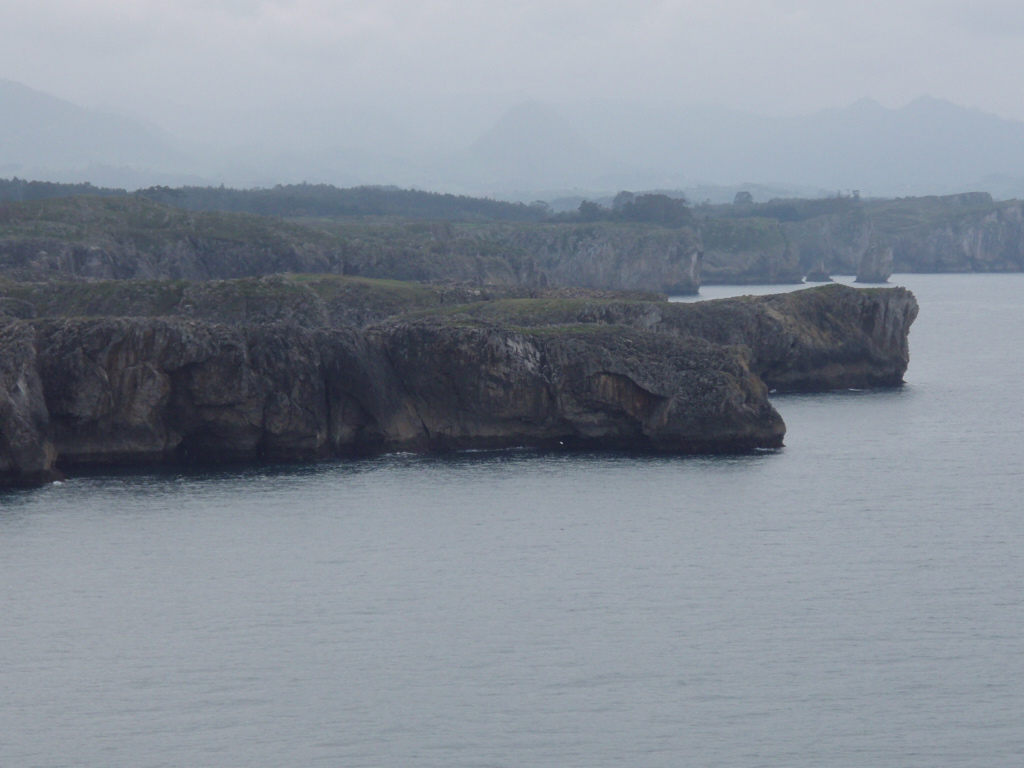
Today was one of the warm and cloudy days with passing light showers. I decided to have and afternoon walk. Armed with an umbrella, I made my way to the coast to sit for a while in my favourite spot on the cliffs. It is a while since I last was there - it was was very relaxing and peaceful to sit at the edge of the cliffs with such wonderful views, the sound of the crashing waves below me and no other soul around other than a small flock of sheep grazing nearby . As always, the views of the coast are very impressive from this vantage point and as you can appreciate from the following photographs the wild flowers and lichens on the limestone cliffs are wonderful at this time of the year.


Saturday, May 01, 2010

Walking in Asturias 3

3 comments:


Asturias is a great walking area and there are many nice walks without setting off into the mountains or the Picos National Park. One of these walks is very near home and it starts in Ribadesella by Tito Bustillo caves with some wanderfull prehistoric cave paintings. The walk is locally known as "the water mills path". After leaving the car outside the caves, you walk along the river Sella and its estuary towards the nice village of Cueva which you can only access by walking or driving through a cave, about 200 m long, with impressive stalactites and stalagmites. As you cross the village, there are several horreos (Asturias wooden granaries on wooden or stone columns) and some traditional old houses for you to see. As you leave the village you pass an organic kiwi farm and start the beautiful walk up the river and along numerous water mills in different stages of disrepair.


The flora and fauna are abundant along the way. You may de lucky enough to see an otter along the river Sella, the raptors are easily spotted in the sky and there are deer and wild boar in the woods. The woodland wild flowers provide a colourful carpet if you do the walk in the Spring.
Eventually you reach the village of Tresmonte, with only an elderly couple living there, before you continue up a very quiet road to a viewing point with fabulous views of Ribadesella town, the river Sella´s estuary and the coast.